


Seagate Technology Holdings PLC Stock (STX) Moved Down by 4.37% on Jun 25: Drivers Behind the Movement
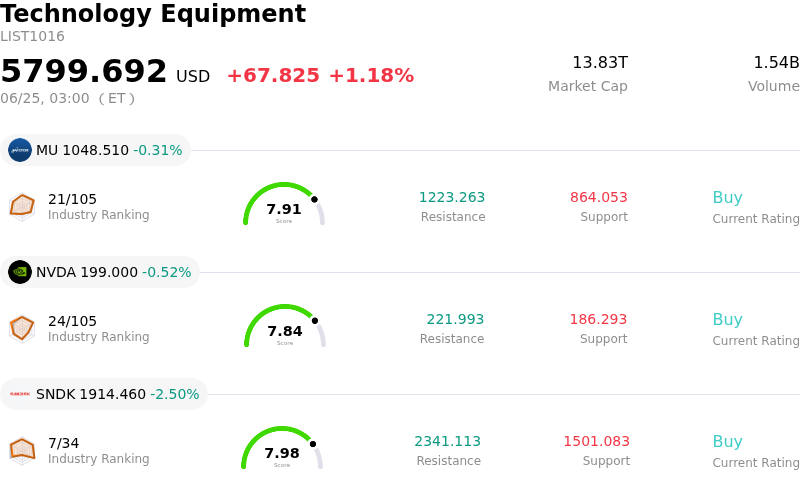
Seagate Technology Holdings PLC (STX) moved down by 4.37%. The Technology Equipment sector is up by 1.18%. The company underperformed the industry. Top 3 stocks by turnover in the sector: Micron Technology Inc (MU) down 0.31%; NVIDIA Corp (NVDA) down 0.52%; SanDisk Corporation (SNDK) down 2.50%.
What is driving Seagate Technology Holdings PLC (STX)’s stock price down today?
Seagate Technology is experiencing notable downward movement and heightened intraday volatility, driven initially by technical adjustments and scheduled corporate actions. The stock is trading ex-dividend following its recent declaration of a quarterly cash dividend. The standard market practice of adjusting the stock price downward to reflect the cash payout on the ex-dividend date introduced a baseline level of negative price action. Additionally, technical adjustments were triggered by the company's redemption call for its exchangeable senior notes, where the conversion terms were adjusted to account for the dividend distribution, creating shifting trading and arbitrage dynamics in the debt-to-equity space.
Compounding this technical drop is a broader correction sweeping through the semiconductor and hardware storage sectors. Global chip markets, particularly in South Korea, experienced a leverage-driven rout where major players plunged, triggering automated deleveraging and asset-rebalancing across global technology exchange-traded funds. While strong earnings reports from sector peers like Micron Technology briefly provided overnight optimism, the relief was short-lived during regular trading hours. Persistent anxiety regarding the concentration of capital in artificial intelligence-related trades has triggered a widespread positioning flush. This shift in market sentiment is pulling down high-performing hardware names, leaving Seagate exposed to sector-wide risk offloads.
Beneath the market mechanics lies a growing skepticism regarding the sustainability of artificial intelligence infrastructure capital expenditures. Investors are increasingly questioning whether major cloud hyperscalers can sustain their aggressive build-out budgets. Since Seagate’s primary growth narrative relies heavily on hyperscaler demand for its next-generation, high-capacity Heat-Assisted Magnetic Recording nearline hard drives, any perceived slowdown in data center investments directly challenges its valuation. Given the stock's massive rally earlier in the year, which drove its valuation multiples to historic highs, this capex anxiety has prompted significant profit-taking. High-multiple stocks are highly sensitive to momentum shifts, and some analysts have begun downgrading the stock, citing stretched valuations relative to long-term fundamental models.
Macroeconomic headwinds are further suppressing investor risk appetite. Hawkish signals from the Federal Reserve, alongside market expectations of additional interest rate hikes in the near term, have raised the cost of capital. Higher interest rates make heavy, debt-funded technology capital expenditures more difficult for companies to justify, which directly threatens the long-term demand curve for storage and semiconductor hardware. The combination of monetary tightening, valuation compression, and the cooling of the crowd-pleasing AI infrastructure trade has collectively driven Seagate's stock price lower while sparking elevated intraday volatility.
Technical Analysis of Seagate Technology Holdings PLC (STX)
Technically, Seagate Technology Holdings PLC (STX) shows a MACD (12,26,9) value of 7.376, indicating a buy signal. The RSI at 59.657 suggests neutral condition and the Williams %R at 44.228 suggests buy condition. Please monitor closely.
Media Coverage of Seagate Technology Holdings PLC (STX)
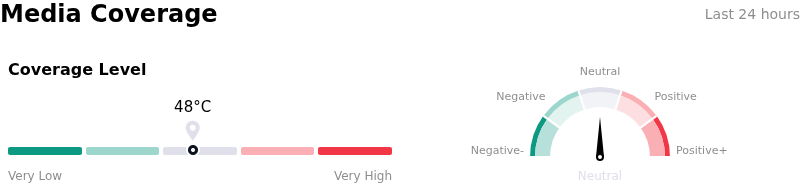
In terms of media coverage, Seagate Technology Holdings PLC (STX) shows a coverage score of 48, indicating a moderate level of media attention. The overall market sentiment index is currently in neutral zone.
Fundamental Analysis of Seagate Technology Holdings PLC (STX)
Seagate Technology Holdings PLC (STX) is in the Technology Equipment industry. Its latest annual revenue is $9.10B, ranking 9 in the industry. The net profit is $1.47B, ranking 5 in the industry. Company Profile
Over the past month, multiple analysts have rated the company as Buy, with an average price target of $899.77, a high of $1150.00, and a low of $545.00.
More details about Seagate Technology Holdings PLC (STX)
Company Specific Risks:
- **Multiple Compression and Valuation Headwinds:** Following a parabolic year-to-date rally, Seagate's valuation has become extremely stretched, trading at a trailing P/E of roughly 100x. This premium multiple has prompted analyst downgrades—specifically from Fox Advisors to Equal Weight—triggering sharp profit-taking and exposing the stock to severe technical corrections.
- **Hyperscaler Capex Scepticism and AI Demand Vulnerability:** Seagate’s current growth narrative is highly dependent on hyperscalers purchasing nearline HDDs for AI data training. Recent industry reports that South Korean chipmaker SK Hynix is slowing its high-bandwidth memory (HBM) expansion have ignited investor fears that overall AI data center infrastructure spend is cooling, causing significant intraday volatility and selling pressure on STX.
- **High Debt Load and Hawkish Interest Rate Pressures:** Seagate's elevated leverage remains a key structural risk. A recent hawkish repricing of Federal Reserve interest rate expectations under new Chair Kevin Warsh has made debt-funded capital expenditure far more expensive, directly threatening both Seagate’s financial model and the borrowing capacity of its enterprise customer base.
- **Disruptive Technological Competition:** Despite temporary capacity constraints supporting HDD pricing power, Seagate faces persistent long-term execution risks from competing SSD and QLC NAND flash technologies. As these alternative high-capacity storage formats improve in cost-efficiency, they threaten to erode Seagate's market share in the critical enterprise and cloud storage sectors.
Recommended Articles


