


Philip Morris International Inc Stock (PM) Moved Down by 3.21% on Jun 22: What Signal Does It Send?
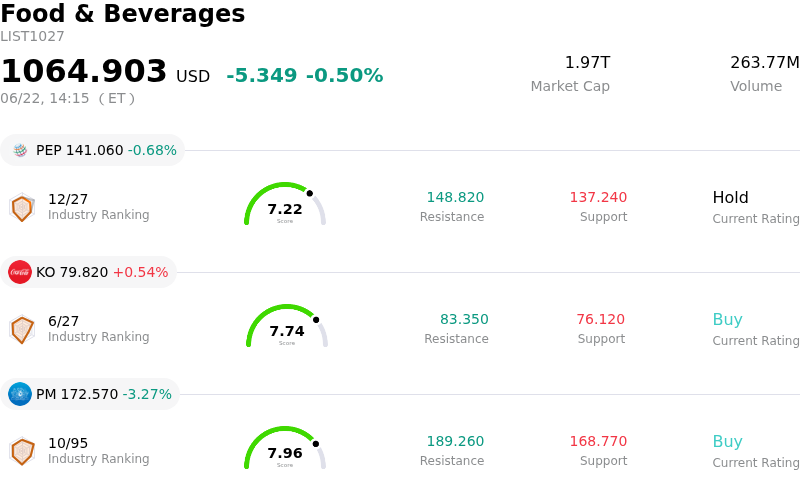
Philip Morris International Inc (PM) moved down by 3.21%. The Food & Beverages sector is down by 0.50%. The company underperformed the industry. Top 3 stocks by turnover in the sector: PepsiCo Inc (PEP) down 0.68%; Coca-Cola Co (KO) up 0.54%; Philip Morris International Inc (PM) down 3.21%.
What is driving Philip Morris International Inc (PM)’s stock price down today?
The notable downward pressure and intraday volatility experienced by Philip Morris International during today's trading session can be attributed to a combination of rising macroeconomic headwinds, sector-specific challenges, and broader shifts in investor sentiment. As markets react to shifting yield environments and upcoming inflation data, defensive dividend-paying equities have faced a challenging trading landscape.
At the macro level, a key driver of today's sell-off is the persistent rise in U.S. Treasury yields. The 10-year Treasury yield has continued its upward trajectory, fueled by ongoing concerns over sticky inflation and geopolitical tensions that have kept energy prices elevated. With traders increasingly speculating that the Federal Reserve may have to keep interest rates higher for longer, or even consider further hikes later in the year, high-yield defensive stocks like Philip Morris have lost some of their relative appeal. For institutional investors, rising risk-free rates raise the hurdle rate for holding dividend-reliant consumer staples, prompting portfolio adjustments away from defensive sectors.
On the industry front, the tobacco sector is navigating a demanding operational climate. Traditional combustible cigarette volumes continue to face secular decline, while manufacturers contend with inflationary pressures across primary inputs, including tobacco leaf, packaging, and labor. While Philip Morris has successfully established itself as a leader in the smoke-free segment, with platforms like IQOS and ZYN driving robust revenue growth, the transition requires substantial and continuous capital investment. These heavy commercialization costs, paired with a recently announced $500 million non-cash impairment charge related to its Canadian affiliate, RBH, for the second quarter, have kept pressure on the company's reported earnings guidance and near-term margin expectations.
Additionally, market caution ahead of key macroeconomic data releases later this week, including the personal consumption expenditures price index, has amplified volatility across major indices. Although Philip Morris's long-term transformation toward reduced-risk alternatives remains favored by many analysts, the immediate headwind of rising interest rate expectations and sector-wide cost pressures has catalyzed today's decline. Investors are also closely monitoring the upcoming ex-dividend date later this week, contributing to the stock's elevated intraday volume and downward movement.
Technical Analysis of Philip Morris International Inc (PM)
Technically, Philip Morris International Inc (PM) shows a MACD (12,26,9) value of -0.670, indicating a neutral signal. The RSI at 49.061 suggests neutral condition and the Williams %R at 48.212 suggests neutral condition. Please monitor closely.
Media Coverage of Philip Morris International Inc (PM)
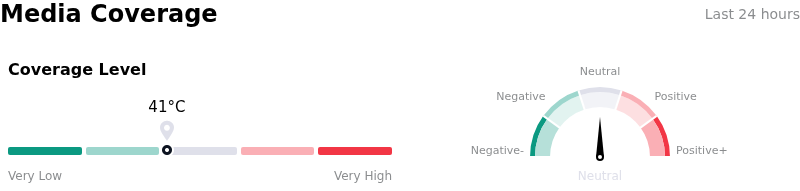
In terms of media coverage, Philip Morris International Inc (PM) shows a coverage score of 41, indicating a moderate level of media attention. The overall market sentiment index is currently in neutral zone.
Fundamental Analysis of Philip Morris International Inc (PM)
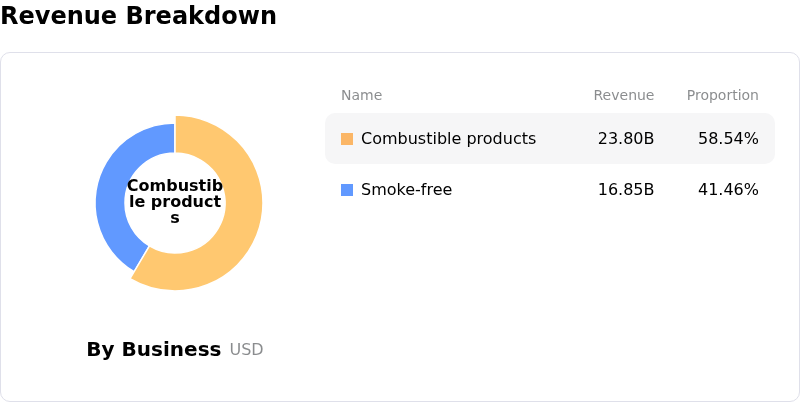
Philip Morris International Inc (PM) is in the Food & Beverages industry. Its latest annual revenue is $40.65B, ranking 5 in the industry. The net profit is $11.32B, ranking 1 in the industry. Company Profile
Over the past month, multiple analysts have rated the company as Buy, with an average price target of $191.82, a high of $210.00, and a low of $151.00.
More details about Philip Morris International Inc (PM)
Company Specific Risks:
- Massive Non-Cash Impairment and Downward Guidance Revision: Philip Morris recently revised its full-year 2026 reported diluted EPS guidance down to a range of $7.18 to $7.33 (from $7.56 to $7.71). This reduction is driven by an impending $500 million non-cash impairment charge (approximately $0.33 per diluted share) scheduled for Q2 2026, which stems from deteriorating long-term industry projections for its Canadian affiliate, Rothmans, Benson & Hedges (RBH).
- Surging Illicit Counterfeiting and Black-Market Trade in Europe: A comprehensive June 2026 KPMG study commissioned by PMI revealed that illicit cigarette consumption has reached 10.3% of the total EU market—the highest level since 2014—costing governments €16.7 billion in lost taxes. Localized counterfeit manufacturing within the EU grew by more than 20% year-over-year, threatening to systematically erode PMI's legal tax-paid shipment volumes and weaken its pricing leverage in key Western European countries.
- Intensifying Regulatory Restrictions and Generational Tobacco Bans: Despite PMI's strategic pivot to alternative nicotine products, next-gen devices are facing aggressive regulatory crackdowns. In June 2026, New York lawmakers introduced a bill to implement a permanent, lifetime generational ban on tobacco and vapor sales, while several European nations like France have already moved to completely ban tobacco-free nicotine pouches, restricting the future growth runway of flagships like IQOS and ZYN.
- Pricing Pressures and Margin Dilution within the Nicotine Pouch Portfolio: To combat market share erosion to competitors like British American Tobacco and Altria, PMI is introducing "ZYN Ultra" in the U.S. in June 2026. However, this product is being launched at a lower list price-per-pouch compared to the flagship dry ZYN portfolio, which risks cannibalizing sales of premium lines and diluting the brand’s historic pricing premium in its high-margin oral category.
Recommended Articles


