


How to Invest in Private Space Companies in 2026
SpaceX grew and achieved its milestones for over a decade as one of the leading private space companies. Each successful launch and landing increased the appetite for the still-private stock. Retail was blocked from access without accreditation, including a dedicated marketplace account and a five-digit minimum purchase.
In 2026, anyone with a brokerage app can trade the now-public SpaceX (Nasdaq:SPCX). The sudden shift also drew attention to other private space companies and the opportunity for early ownership. Some private space companies may repeat the listing process of SpaceX, but for others, potential traders are still facing steep limitations and the strict thresholds for accredited investors. Previous IPO decisions also do not guarantee a similar access level. Pre-IPO opportunities also come with various risk levels and no guaranteed access to owning the actual shares. Pre-IPO pitches do not overrule the existing limitations on accredited buyers.
Quick Comparison
| Company | Status | What it does | Last reported valuation | Where it’s listed | Minimum to participate | Main constraint |
| Sierra Space | Private (Verified Aug 2026) | Builds commercial space stations, orbital habitats, and the reusable Dream Chaser spaceplane. | $8.0B (March 2026, Series C round led by LuminArx & Coatue) | Private secondary marketplaces (Forge Global, EquityZen, HiIVE) | $10,000–$25,000 (varies per secondary platform) | High regulatory and capital requirements for human-rated space station hardware. |
| Axiom Space | Private (Verified Aug 2026) | Manufactures commercial space station modules and next-generation NASA lunar EVA spacesuits. | $5.0B (June 2026, Series D round) | Private secondary marketplaces (Forge Global, UpMarket, Augment) | Accredited only (typically $10,000+ minimum) | Heavily dependent on NASA contracts and government agency funding timelines. |
| Relativity Space | Private (Verified Aug 2026) | 3D-print fully reusable orbital rockets (Terran R) using autonomous metal additive manufacturing. | $6.03B–$6.5B (Latest official Series F round; secondary implied near $4B–$6B) | Private secondary marketplaces (Forge Global, Notice.co, EquityZen) | Accredited only (typically $5,000–$10,000+ minimum) | Terran R is still in development, facing intense market competition from SpaceX. |
| Stoke Space | Private (Verified Aug 2026) | Building 100% reusable, rapid-turnaround rockets designed for daily low-Earth orbit access. | $9.0B (Latest valuation following its Series E round) | Private secondary marketplaces (Forge Global, Caplight) | Accredited only (platform-specific, typically $10,000+) | High technical execution risk in proving 100% full upper-stage reusability. |
| Blue Origin | Private (Verified Aug 2026) | Develops heavy-lift launch vehicles (New Glenn), lunar landers, and rocket engines. | $130B–$140B (July 2026 outside funding round led by Coatue) | Pre-IPO secondary brokers (Forge Global, Rainmaker Securities) | Accredited only (often high minimums, $100,000+ for rare allocations) | Historically backed by Jeff Bezos, leading to extremely tight equity control and low liquidity on private markets. |
Why You Can’t Just Buy These Shares
After SpaceX, the shares of Blue Origin, Sierra Space, Relativity Space, Axiom Space, and Stoke Space are drawing attention as a potential source of pre-IPO shares. Acquiring those shares, however, is limited by specific regulations for each potential investor.
All the companies listed are incorporated in Delaware, USA, and buying any shares falls under the requirements of the Securities Act of 1933. The act defines banks, businesses, organizations, and directors as potential accredited investors. The limits for private persons, however, are the most relevant for potential retail buyers. For US investors, an individual or joint net worth above $1M, excluding the person’s primary residence.
In the European Union, the equivalent requirement is for a person to have a ‘professional client’ or ‘elective professional investor’ status. The MiFID regulation handles the definition of those categories. In general, the status is assigned on two of three criteria, including carrying out significant trading transactions, a portfolio of over $500,000, and professional expertise of at least one year in the financial sector, with specialized knowledge of the planned stock acquisitions.
We will discuss the various regional requirements for buying private company shares in the next section.
Accredited investor rules – who actually qualifies
The rules for accredited investors roughly focus on two things: a person’s knowledge and their assets. Outside of big organizations and professionals, individual investors may face different requirements to qualify for buying private company shares, with many rules depending on regional or national-level regulations.
For US-based individuals, the requirements also have a liquidity and accreditation component. According to the rules of the US Securities and Exchange Commission (SEC), an individual must have an annual income above $200,000 for two years, net worth above $1M excluding the primary residence, or hold Series 7, SEries 65, or Series 82 licenses.
For EU-based professional investors, a person must fulfill two of the three criteria – a portfolio valued above 500,000 EUR, high value and transaction volume over the four previous quarters, or professional expertise for over a year in a relevant financial field. The EU requirements are relatively liberal for individuals who manage to achieve significant trading volumes on their own, even without specific skills as a financial professional.
Other national rules have similar requirements, with the most permissive ones focusing on assets and income, with no additional requirements for specialized financial or investment knowledge.
What a “secondary marketplace” really is
Private company shares are treated as restricted securities under the 1933 Securities Act in the USA. The legislation allows for a safe harbor market, where the public resale of restricted securities is possible. Rule 144 of the Securities Act allows the sale of restricted or control stock without the need to register with the SEC, with additional conditions. The rule also tracks affiliate and non-affiliate holders, where affiliates still have selling volume restrictions and must register their sales with the SEC.
The deals for private companies also need a platform, and this is what secondary marketplaces provide. The market is secondary to the initial raise, or the primary market transaction. On the secondary market, early investors, such as employees, founders, VCs, or others, can sell their equity directly to accredited or institutional investors.
Private markets serve one particular need – the early stock owners may still need to unlock the paper value of their investment and access liquidity. For accredited investors, the secondary marketplace allows access to opportunities that would otherwise be closed to outside capital. Secondary markets attract institutional buyers, family offices, and accredited investors, who want to own a part of a growing business. For the companies, this means they can remain private for much longer, for up to 15 years, instead of going public earlier in their development.
Secondary market platforms handle the paperwork and compliance for those complex share deals. Some of the popular platforms include Forge Global, CartaX, Nasdaq Private Market, Zanbato, and Hiive.
Why is the quoted number an indicated bid, not a price
The sale of private or control shares is up to the discretion of their owners and the demand of accredited investors. Those deals are unpredictable, so unlike a large market, there is no continuous price discovery. A single market price can be set by continuous, high-volume trading on a public order book.
Private secondary markets are often illiquid, so any price displayed reflects the bid of potential buyers, who are the only parties able to define demand and the pricing of the asset. The pricing mechanism is not the same as having a continuous market price for the ticker of a public company.
The Companies
In this section, we will preview the history and potential trading conditions for the leading private space companies. We will analyze the investment opportunities for each separate firm.
Blue Origin
Blue Origin, founded by Jeff Bezos, keeps a high public profile with its celebrity missions and an invitation for space tourism. According to PitchBook, the company has been private since its founding in the year 2000. The company has three known investors and is currently at the late-stage venture capital backing. Despite the previous investment rounds, Blue Origin is still private as of September 2026.
Based on its latest raise of $10B, Blue Origin is valued at $130B as of July 8, 2026. The latest valuation once again led to scrutiny of the potential of Blue Origin to become public. So far, the VC-backed raises have been tightly controlled, with Bezos directly taking up a sizeable part of the investment.
For accredited investors, Blue Origin trades on platforms Forge Global and Hiive. Based on the Forge Global market, Blue Origin has an even higher valuation of $140B. Blue Origin itself has not suggested an upcoming IPO or filed any preliminary documents. Instead, the space tech company is still growing in its VC funding stage, with up to 12,600 employees and docs on the New Shepard suborbital craft, the New Glenn orbital rocket, and exploring possibilities for an orbital data center.
Sierra Space
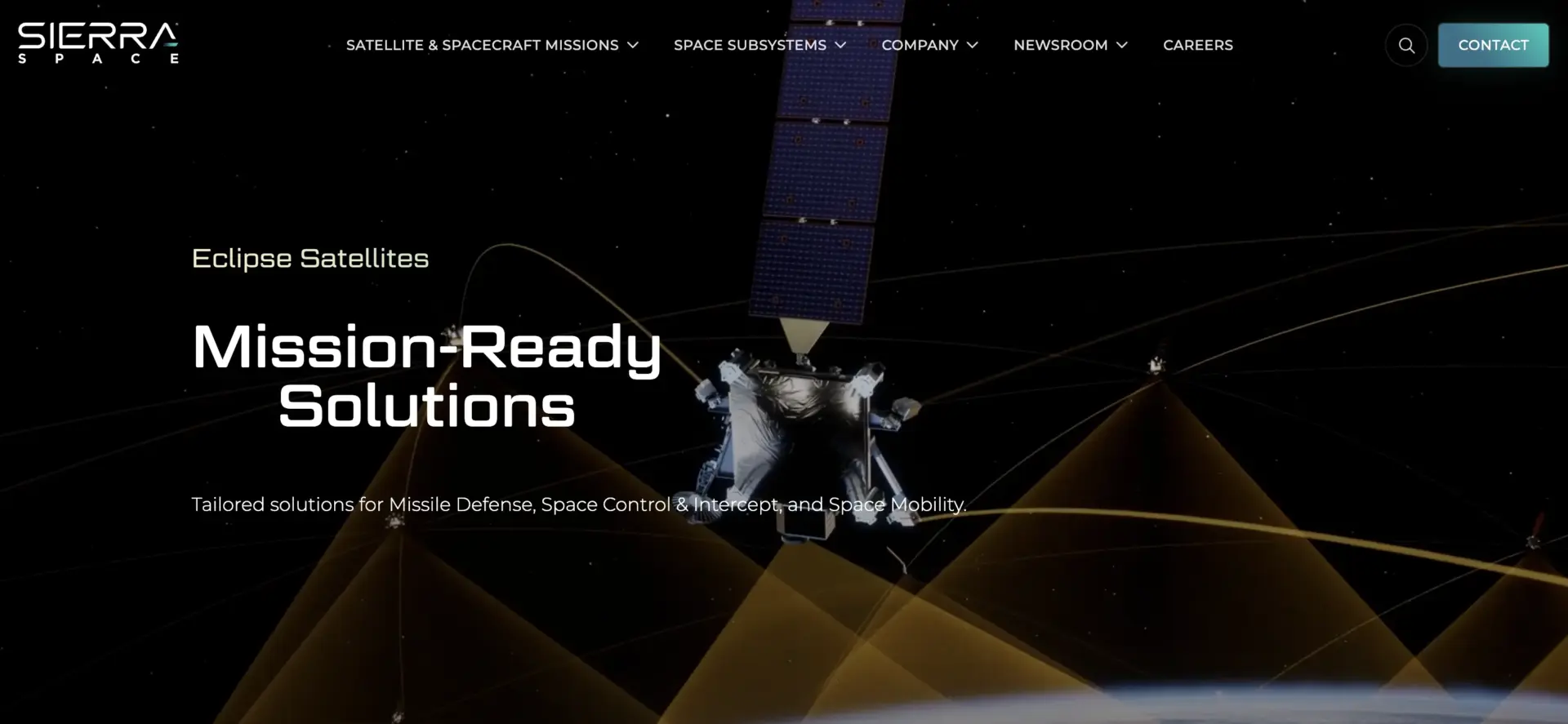
Sierra Space, known for its Dream Chaser spaceplane, aims to redefine the approach to space defense. Sierra was founded in Louisville, CO, USA, in 2021, and has been private since then, relying on VC funding to expand its business.
As of 2026, the company raised $2.29B in private funding, counting toward its total valuation. Sierra’s own valuation report puts the company’s total value at $8B, based on a $550M Series C raise in March 2026.
The company was also admitted to perform commercial space-station work, with the goal of building an Orbital Reef, a multi-purpose space station.
Sierra works on expandable space modules and habitats for commercial space station work. The company also serves contracts for the US Department of Defense and the Space Development Agency, producing rocket systems, satellite components, and other defense technologies.
Sierra Space trades as a private company, with Nasdaq Private Market as its primary venue. Other platforms include UpMarket, Forge, and EquityZen. As with other private companies, those platforms are open to accredited investors. Based on brokerages, the private shares are valued at around $25.49, rising after each round of VC funding.
Relativity Space
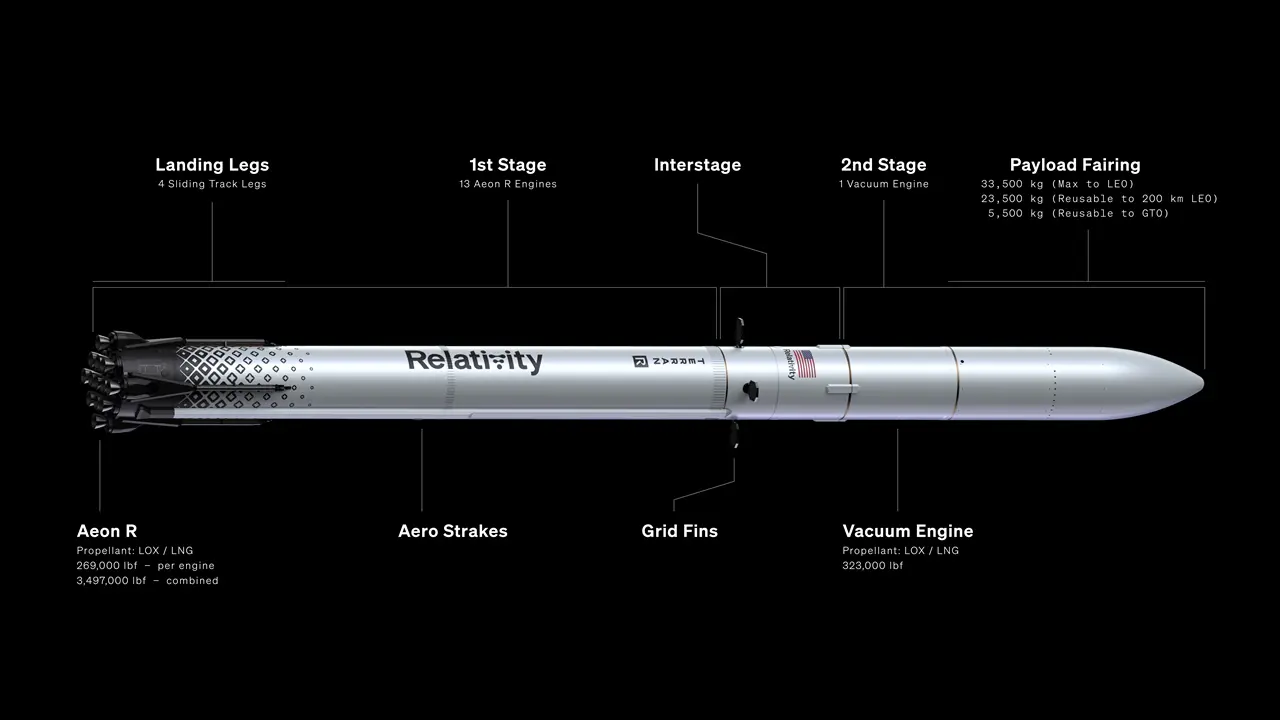
Relativity Space is a growth company, combining rocket design with 3D printing. Its bid is to simplify the supply chain for building a rocket, bringing assembly time down to 60 days and with fewer components.
The company was established in 2015 by Tim Ellis and Jordan Noone. As of 2026, it remains private, relying on VC-backed funding. Previous rounds have been backed by Y Combinator, Mark Cuban, Social Capital, and other leading funds.
Relativity Space was founded in 2015 and, since then, has achieved $1.6B in several funding rounds. Based on the latest funding round of 2021 for $650M, the company is valued at $4.2B. On Nasdaq Private Market, the bid price is at $6.47 as of August 14.
As with other private space companies, Relativity Space trades on Nasdaq Private Market and Forge, as well as TsgInvest. With those platforms, price setting still does not happen in real time. Estimating interest in Relativity Space is seen in the growth score and heat score signals. The private space company is mostly appealing for its rapid growth and development, though it is still far from viable launches.
Axiom Space

Axiom Space competes in the commercial human spaceflight niche. The company does not build its own rockets, but focuses on commercial space station development, human missions, and specialized space hardware.
Axiom Space has permission to attach its module to the International Space Station by 2027, and is commercially available at $65M per seat. The company has secured $2.2B in customer contracts, while having a valuation of around $2.5B according to PitchBook. To date, the company has raised $1.64B from funding rounds, according to PitchBook data.
This private space company has positioned itself to capture more of the growth of the aerospace industry. This has increased the interest in Axiom Space, which trades on the Nasdaq Private Market, Notice.co, Tsginvest, PrivateShares Fund, Forge, and Hiive. The presence of Axiom Space on those markets turns it into the most widely represented private space company.
The bids for Axiom Space are around $122.65. The company has one of the lowest valuations among other private space firms, creating increasing interest for an eventual IPO. However, the company has not mentioned plans for a public sale and is currently only available to accredited investors.
Stoke Space
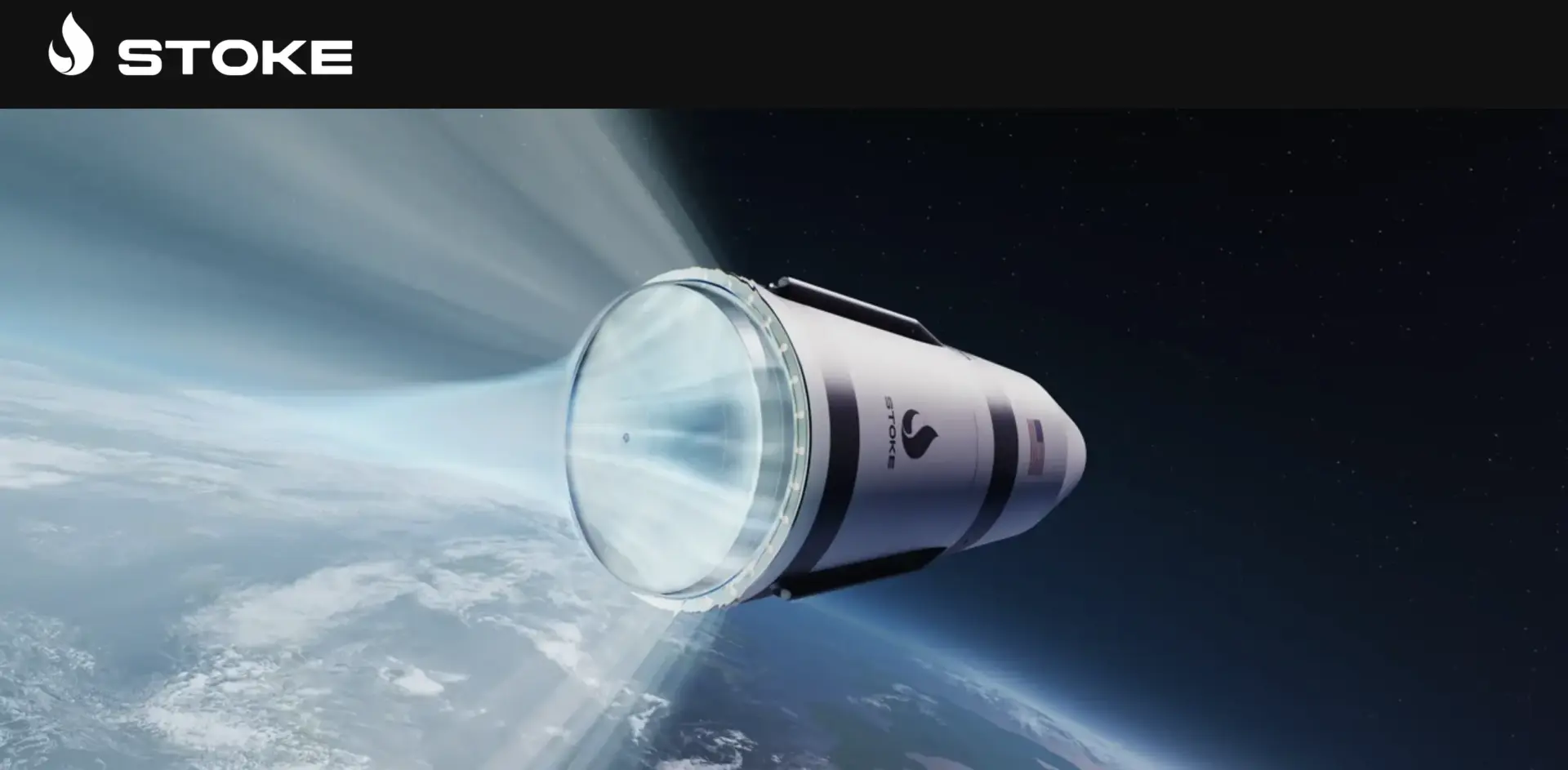
Stoke Space is a US-based company developing reusable rockets. The company was founded in 2019 by engineers formerly from Blue Origin and SpaceX. The company aims to build a reusable second-stage rocket for multiple launch cycles with shorter refurbishment downtime.
As of August 13, Stoke Space is valued at $9B, based on its latest $1B private raise. The company also finds price discovery through bids on Nasdaq Private Market, Forge, and Hiive.
Based on bids as of August 14, Stoke is priced at $50.07 per share, up over 260% for the past reporting period, driven by interest from accredited investors. Even for those investors, trading is limited, and Stoke Space has not even mentioned the possibility of an IPO.
Also traded private space companies
More niche choices are available in space tech. Vast Space Systems is open for private investors on Nasdaq Private Market and Forge. Accredited investors can also trade Impulse Space, Varda, and K2 Space on those platforms.
The Access Routes – and What Each One Costs
As discussed above, access to private space companies is only possible through a private secondary market, also known as an alternative trading system. These markets connect the holders of private shares, such as VC backers, employees, or early investors, to any available buyers, who are also vetted as accredited investors.
The platforms perform several roles: they source liquidity, establish the value of the private shares, and assist with legal issues and regulations.
On private secondary markets, share trades are settled in long time windows, often taking between 30 and 90 days. Some sales require additional compliance steps and multi-party approvals. The price itself may be negotiated ahead of striking a deal.
Private shares are liquidated in blocks coming from a specific holder, although investors can also place bids. Some platforms also assist with the creation of a Special Purpose Vehicle (SPV) to pool the purchase, instead of selling shares directly.
Platforms must also honor a company’s right of first refusal, meaning even if a buyer and seller agree on a price, the company has a period of up to 300 days during which it can buy back its own shares or block the trade. As it is easily seen, those platforms only give access to advanced investors who are ready to wait out the time limitations and have a long-term outlook.
Secondary marketplaces (Forge, Hiive, EquityZen, Nasdaq Private Market)
Several secondary marketplaces have established their position as market leaders. Each of those platforms carries a different list of private space companies. Platforms like Forge, Hiive, EquityZen, and Nasdaq Private Market all facilitate trading, but their approaches are suitable for different investor profiles. Each platform also sets a different level of price reporting transparency.
Hiive operates in a manner closest to a live order book, similar to a traditional stock exchange. The platform has an anonymous live order book matching bid and ask prices. The platform is key for price discovery, and users can see the real market depth as deals happen. Hiive offers direct share transfers, as well as fund-based buying. Minimum order sizes start at $25,000.
Forge structured itself as a platform for institutions, offering broker-dealer matching and institutional data feeds. The platform handles custody and offers custom fund structures. Forge handles big block sales of $100,000 to millions, tracking individual orders and custody. The platform operates with 2% to 5% fees.
EquityZen is the closest product to a retail portal, still requiring accredited investor status. EquityZen bundles orders into SPVs, clears cases of rights of first refusal, and removes most of the risk of a deal falling through. Deal sizes are relatively small, $5,000 to $10,000, with a 2.5% transaction fee.
Nasdaq Private Market focuses on the needs of the issuer company and is suitable for company-backed liquidity programs, such as tender offers and structured secondary sales. Even accredited investors cannot access small-scale direct deals. The price on the platform is set by companies, while volume caps are set for sellers. The issuing company controls access to its shares, with standardized terms for each sale event.
Feeder funds and SPVs (UpMarket, PrivateSharesFund)
Accredited retail investors still create significant demand for private space company shares. As a workaround, Special Purpose Vehicles and Feeder Funds allow entities to buy small amounts of shares while pooling their orders.
A special purpose vehicle will target a specific company and will sit in the company’s cap table as a single line item in the sale of private shares.
Another approach is the feeder fund, another aggregation vehicle, which then invests in a third-party larger fund, an institutional venture fund, or a multi-asset pool. Feeder funds can push funds into a portfolio of multiple companies.
As an access point, UpMarket uses a feeder fund model, also called an access fund. Buyers do not acquire shares directly, but first buy into an UpMarket Feeder Fund, which then allocates capital into another third-party institutional fund, venture vehicle, or primary allocation. UpMarket is suitable for accredited investors interested in $5M minimum purchases, as well as access to Tier 1 institutional venture funds.
The PrivateShares fund offers a continuous entry opportunity. PrivateShares itself holds a portfolio of late-stage private companies, as well as PIPEs and SPVx. Investors then buy into the fund for exposure, and they can observe the Net Asset Value of the portfolio. The fund charges fees of 2.46% to 2.74% while carrying out quarterly repurchases.
PrivateShares is suitable for small-scale retail purchases from accredited investors, as low as $2,500. The PrivateShares fund also does away with the accredited investor rule and may be one potential entry point for retail. However, PrivateShares still does not allow the targeting of a specific private space company.
The indirect route: funds that hold pre-IPO space positions
Funds are vehicles that offer exposure to pre-IPO positions, based on more flexible regulations. While most other entry routes are tailored to big funds or accredited investors, some funds offer access to retail buyers through pooled investments.
For general retail, this access is available through public ETFs and public mutual funds. The other option is closed-ended funds, focusing on a specific company. Public funds are more liquid and have more active trading, while closed-ended funds only offer limited quarterly redemptions.
Employee-equity purchases and why they’re the messiest
Employee-equity purchases are another entry point to private space companies, which are only open to accredited investors. The sale is subject to longer deadlines due to the company’s right of first refusal, as pointed out earlier, running up to 300 days. The company retains the right to block the transfer and buy back the shares.
Transferring share ownership may also require board approval and only happens during company-sanctioned liquidity periods, limited to specific tender offers. Not all employees can sell shares, and there are limitations to 1-2 transfers per year, or only allowing tenured or long-term employees to sell their shares.
Additionally, the pricing of employee shares is complex and may lead to discrepancies between a company’s internal price and the secondary market price.
Additional actions and payments may be required of the employees, even when they have the right to sell their private shares. Employees are also subject to additional taxes if selling their stock at above company valuations. Employees may also decide to hold until the IPO, instead of exercising stock options, to avoid a tax bill on paper valuations after the IPO.
What This Actually Costs You
Trying to acquire private space stocks will cost both time and money. Minimums run from $2,500 for some retail funds to $100K for large-scale vehicles. Some platforms have 2% to 5% fees on purchases. The other cost may come from carry fees, where the fund takes a payment from net capital gains. A carry fee can vary between 10% and 20%. The fee is not paid until the IPO.
Private stocks will not pay out dividends and may be held for years before the eventual IPO. Selling on a secondary market may lead to losses or incur additional fees.
The Risks Nobody Puts in the Listicle
Private space companies enjoy elevated hype, but this may not translate into net gains from their stock. In the pre-IPO market, low liquidity is the biggest risk. Often, both retail and larger accredited investors or funds have no clear exit date.
Traders or investors do not have clear information on their investment’s worth. The cost may be based on illiquid deals, the company’s own estimate, or outdated information. Some of the stocks may be locked up.
Space companies are also facing the risk of total failure with their cutting-edge technologies, and no real commercial success.
Final Verdict: The Honest Answer
While private space companies are hot, investing in them is not straightforward. There are only limited opportunities for special purpose vehicles (SPVs) or funds for each of the leading private space companies as of 2026.
Opportunities may vary by company and discourage some types of investors. Even accredited retail investors cannot access all early opportunities and face the same low-liquidity risks, non-transparent valuations and long mandatory waiting periods in some cases.
Investing in private space companies in 2026 is also happening with no time limit until an IPO is announced. Most of the companies gained attention after the SpaceX (Nasdaq:SPCX) IPO, but have no way to guarantee a similar listing trajectory.
บทความแนะนำ


