


British Pound Sterling slides as cheaper Crude Oil masks the inflation pipeline
- GBP/USD fell to its weakest level since early April as a hawkish Fed lifted the Dollar.
- The Bank of England held rates, but its vote split turned more hawkish as a second member backed a hike.
- A flat headline inflation print masked surging UK services inflation and a still-building core.
- Cheaper Crude Oil hides downstream food and petrochemical costs already locked into the supply chain.
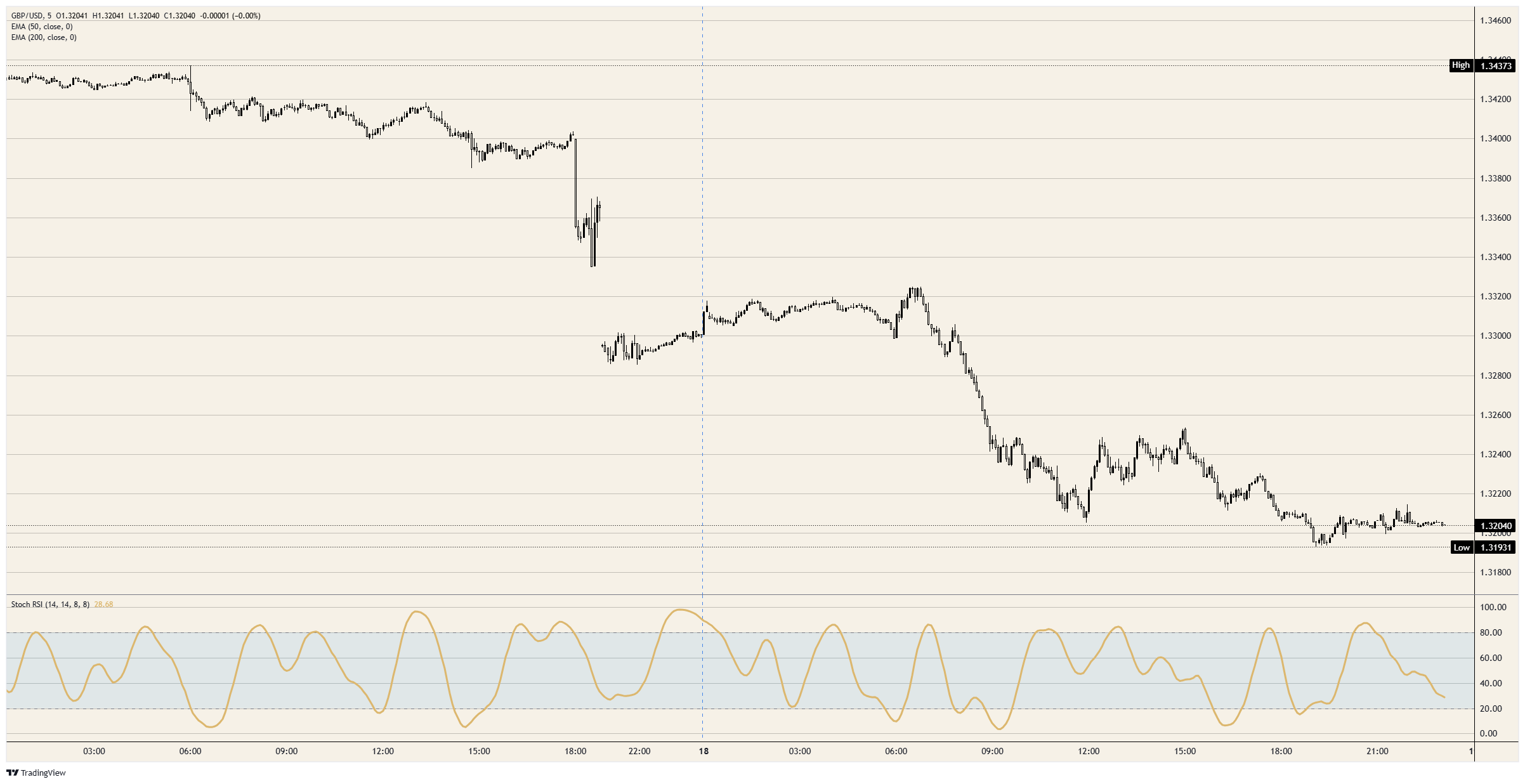
The Bank of England (BoE) delivered the hawkish hold the market expected on Thursday, and a second member of its Monetary Policy Committee (MPC) joined the push to raise the Bank Rate. Sterling fell anyway, sliding through the 1.3300 handle to its lowest level since early April, close to 1.3200. On its face, the hawkishness looks stubborn against a ceasefire dragging Crude Oil toward pre-war lows and a UK headline inflation rate that flatly refused to rise.
That apparent contradiction dissolves the moment you stop watching the Oil headline. The price pressure the committee is leaning against sits in surging services inflation already on the board, and in the food and petrochemical costs the Strait of Hormuz closure has baked into the supply chain, neither of which a ceasefire reverses.
Cheaper oil, hotter core
The May print only looked benign on the surface. Headline inflation held at 2.8%, below the 3.0% the market expected, but it stayed flat because temporarily cheaper food and easing housing offset a sharp rise in petrol; food inflation actually slipped to 2.2%, its lowest since December 2024.
Underneath, the categories the BoE watches most turned the other way. Services inflation, its preferred read on domestic persistence, jumped to 3.7% from 3.2%, and core inflation ticked up to 2.6%. With regular pay still running at 3.4%, the two dissenters had a live case for a hike that the flat headline conveniently buried.
The bill still in transit
The bigger worry is the part of the shock that has not landed yet. The Hormuz closure since late February choked off roughly a third of the world's seaborne fertilizer trade and drove nitrogen prices up by around 80% at the peak, with Gulf ammonia and urea production knocked offline. That cost grinds through planting, harvests and supply contracts long before it reaches a grocery shelf.
A reopening does not undo months of stranded cargo or instantly restart damaged plants, and the pass-through to food and petrochemical-linked goods typically lags by months. The BoE's own projections already pencil inflation higher into the second half of the year on energy and food, which is exactly the second-round pressure that cheaper spot Crude Oil disguises rather than removes.
Why the Pound fell anyway
None of that stopped Sterling from sliding, because the BoE was simply out-hawked across the Atlantic. New Federal Reserve (Fed) Chair Kevin Warsh used his debut to deliver a hawkish hold of his own, lifting the odds of a September US rate hike and pushing the Dollar Index (DXY) to a two-month high.
With the rate differential swinging the Dollar's way, the market even trimmed its BoE hike bets on the soft headline and cheaper oil, arguably the wrong read. Domestic politics did the rest, as the Makerfield by-election and leadership speculation unsettled gilts and the Pound.
What the calendar threatens next
The near-term test arrives Friday at 06:00 GMT with UK Retail Sales for May, where consensus looks for a rebound of around 0.5% MoM after a sharp prior drop; a soft number would harden the growth worries already weighing on Sterling.
The following week sharpens the divergence, opening with UK flash Purchasing Managers Index (PMI) surveys on Tuesday and a run of BoE speakers who will show how firm that hawkish vote really is, before US Personal Consumption Expenditures Price Index (PCE) data on Thursday, the Fed's favoured inflation gauge, either validates or undercuts the Dollar's edge.
Resistance: The 1.3300 handle, lost on the way down, now caps the first bounce, with the prior pivot near 1.3450 the next meaningful supply.
Support: The 1.3200 handle is the immediate line after Thursday's low just beneath it; a clean break exposes 1.3150 and then 1.3100, with the structural floor close to 1.3000.
Bias: Bearish while price holds below 1.3300, with the firm Dollar and UK politics steering the near-term tape and the Stochastic Relative Strength Index (Stoch RSI) sitting mid-range rather than oversold, leaving room for another leg lower. The risk to that view is the inflation the move is ignoring: if next week's services-heavy data and the pipeline food and petrochemical pressure push hike bets back into the curve, or US PCE softens, the recovery through 1.3300 could be quick.
GBP/USD 5-minute chart
Pound Sterling FAQs
The Pound Sterling (GBP) is the oldest currency in the world (886 AD) and the official currency of the United Kingdom. It is the fourth most traded unit for foreign exchange (FX) in the world, accounting for 12% of all transactions, averaging $630 billion a day, according to 2022 data. Its key trading pairs are GBP/USD, also known as ‘Cable’, which accounts for 11% of FX, GBP/JPY, or the ‘Dragon’ as it is known by traders (3%), and EUR/GBP (2%). The Pound Sterling is issued by the Bank of England (BoE).
The single most important factor influencing the value of the Pound Sterling is monetary policy decided by the Bank of England. The BoE bases its decisions on whether it has achieved its primary goal of “price stability” – a steady inflation rate of around 2%. Its primary tool for achieving this is the adjustment of interest rates. When inflation is too high, the BoE will try to rein it in by raising interest rates, making it more expensive for people and businesses to access credit. This is generally positive for GBP, as higher interest rates make the UK a more attractive place for global investors to park their money. When inflation falls too low it is a sign economic growth is slowing. In this scenario, the BoE will consider lowering interest rates to cheapen credit so businesses will borrow more to invest in growth-generating projects.
Data releases gauge the health of the economy and can impact the value of the Pound Sterling. Indicators such as GDP, Manufacturing and Services PMIs, and employment can all influence the direction of the GBP. A strong economy is good for Sterling. Not only does it attract more foreign investment but it may encourage the BoE to put up interest rates, which will directly strengthen GBP. Otherwise, if economic data is weak, the Pound Sterling is likely to fall.
Another significant data release for the Pound Sterling is the Trade Balance. This indicator measures the difference between what a country earns from its exports and what it spends on imports over a given period. If a country produces highly sought-after exports, its currency will benefit purely from the extra demand created from foreign buyers seeking to purchase these goods. Therefore, a positive net Trade Balance strengthens a currency and vice versa for a negative balance.
추천 기사


