


Citigroup Revs Up the Engine: Raises NVIDIA Target to $190, Eyes $4 Trillion Market

TradingKey - Citigroup has recently raised its price target for NVIDIA (NVIDIA.US) from its previous level to $190 per share, suggesting roughly 15% upside from Thursday’s closing price. This revision reflects strong market confidence in NVIDIA’s sustained leadership and growth potential in the artificial intelligence infrastructure space.
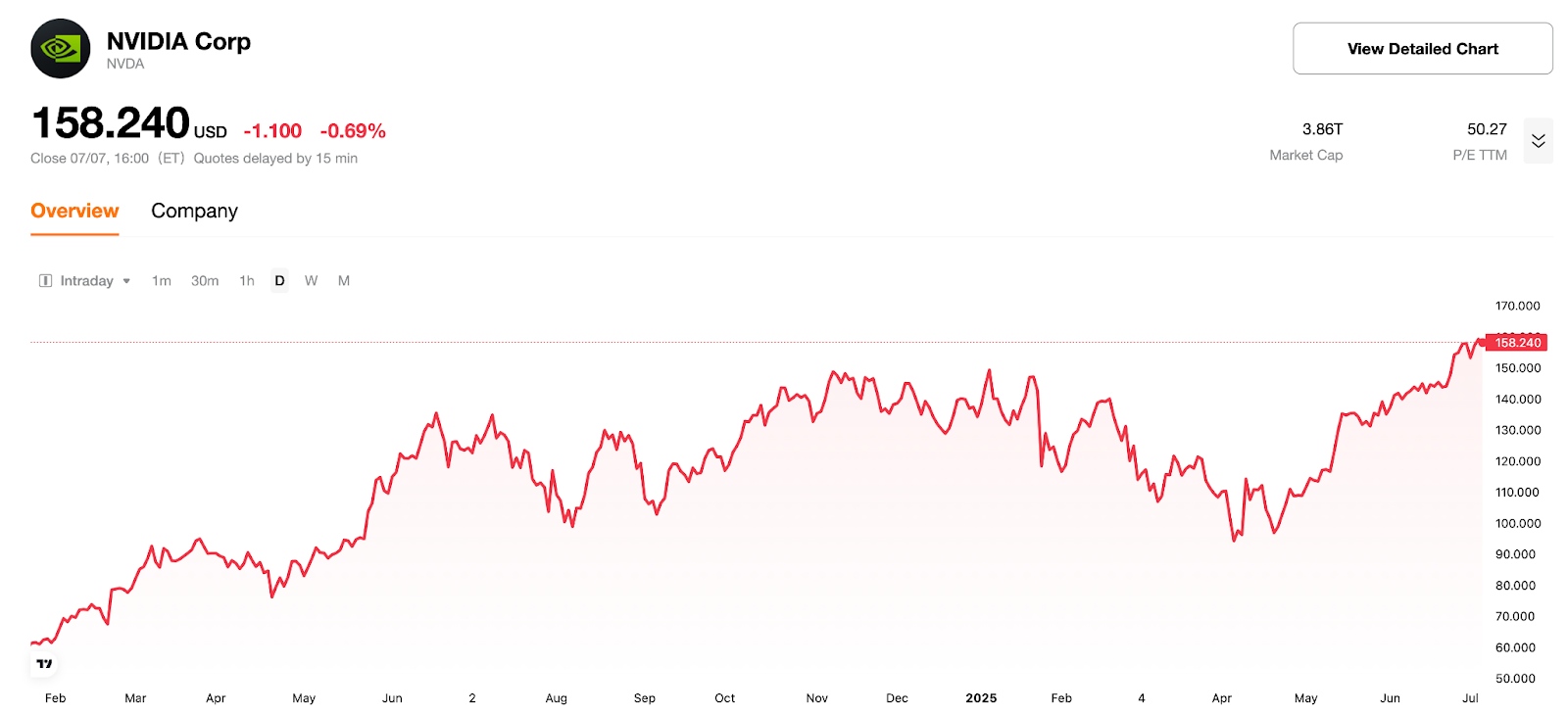
Over the past month alone, NVIDIA’s stock has climbed 12%, with its market capitalization approaching the $4 trillion mark.
Citi analysts Atif Malik and Papa Sylla highlighted that NVIDIA is involved in nearly every national-level AI infrastructure project globally, positioning itself as a key supplier for governments seeking to build independent AI capabilities.
With the accelerated rollout of the Blackwell GB200 chip and easing supply chain constraints, the next-generation GB300 is also on the horizon, further widening the company’s technological moat.
The bank has lifted its estimate for the total size of the AI computing market in 2028 from $500 billion to $563 billion, while raising its forecast for the networking equipment market from $90 billion to $119 billion. Citi expects NVIDIA’s data center and networking equipment businesses to maintain gross margins around 75%, underscoring the company’s robust profitability.
Despite this optimistic outlook, the bank still urges investors to remain mindful of potential risks, including the possibility of renewed U.S. restrictions on chip exports to China and broader geopolitical uncertainties.
Read more
* The content presented above, whether from a third party or not, is considered as general advice only. This article should not be construed as containing investment advice, investment recommendations, an offer of or solicitation for any transactions in financial instruments.


