

The Unpleasant Truth: The Stock Market Is Still Historically Pricey, Even With the Nasdaq and S&P 500 Recently Falling Into Correction Territory

Source The Motley Fool

Roughly two-and-a-half years ago, the iconic Dow Jones Industrial Average (DJINDICES: ^DJI), widely followed S&P 500 (SNPINDEX: ^GSPC), and innovation-inspired Nasdaq Composite (NASDAQINDEX: ^IXIC) bottomed out during the 2022 bear market. Much of the ensuing 30-month stretch has featured optimists running the show.

But history is quite clear that while the stock market is a phenomenal long-term wealth creator, it doesn't move up in a straight line for extended periods.

Where to invest $1,000 right now? Our analyst team just revealed what they believe are the 10 best stocks to buy right now. Learn More »

Over the last four weeks, a level of volatility and uncertainty has returned to Wall Street that hasn't been witnessed in quite some time. Between Feb. 19 and March 13, the S&P 500 and Nasdaq Composite respectively lost 10.1% and 13.7% of their value. This placed both indexes in official correction territory -- i.e., down more than 10% from their highs.

While there's no denying that the recent plunge has created attractive price dislocations for select stocks, the unpleasant truth is that -- even with the S&P 500 and Nasdaq Composite well off their all-time highs -- the stock market remains historically pricey.
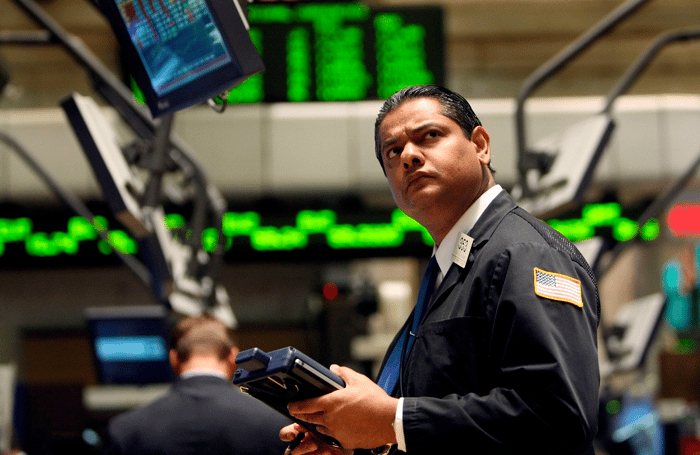
A New York Stock Exchange floor trader who's looking up in bewilderment at a computer screen.

Image source: Getty Images.

Statistically, this is still a very expensive market

To state the obvious, value is subjective and in the eye of the beholder. What one investor considers to be pricey might be viewed as a bargain by another.

When most investors evaluate the relative cheapness or priciness of a stock or the broader market, they typically do so by using the price-to-earnings (P/E) ratio. This time-tested valuation tool is arrived at by dividing a company's share price by its trailing-12-month earnings per share (EPS). It's a quick method for evaluating mature businesses and major stock indexes, but it can be easily tripped up by shock events.

One of the best ways to measure where Wall Street's most widely followed stock index (S&P 500) lands on the valuation scale is by examining the S&P 500's Shiller P/E Ratio, which is also known as the cyclically adjusted P/E Ratio, or CAPE Ratio.

The Shiller P/E accounts for average inflation-adjusted EPS over the last 10 years. Accounting for a decade of EPS history, rather than just the trailing-12-months with the traditional P/E ratio, ensures that shock events and recessions can't skew the reading. In other words, it provides the closest thing to an apples-to-apples valuation measure you'll get on Wall Street.

S&P 500 Shiller CAPE Ratio Chart

S&P 500 Shiller CAPE Ratio data by YCharts.

In December 2024, the S&P 500's Shiller P/E Ratio closed at 38.89, which is the peak for the current bull market cycle, and the third-highest reading during a continuous bull market in history. When the benchmark index officially entered correction territory on March 13, the Shiller P/E closed at 34.47.

To put these figures into context, the average Shiller P/E for the S&P 500 when back-tested 154 years is 17.22. At its recent low point of 34.47, it was still double the average multiple since January 1871.

The historic correlation that investors would be wise to pay close attention to is how stocks have behaved when previously surpassing a Shiller P/E reading of 30. Including the present, there have only been a half-dozen instances in 154 years where this has occurred -- and the previous five were eventually followed by declines of at least 20% in the Dow Jones, S&P 500, and/or Nasdaq Composite.

History has pretty clearly demonstrated that premium valuations aren't tolerated over long periods. Even the most-expensive markets witnessed the Shiller P/E retrace to the mid-20 range. Over the last three decades, bear market declines have pushed the S&P 500's Shiller P/E down to an average of 22.

What these historic correlations point to is the unpleasant truth that the stock market is still historically pricey, even with the S&P 500 and Nasdaq Composite declining by a double-digit percentage.

A businessperson critically reading a financial newspaper.

Image source: Getty Images.

Companies with premium valuations are most at-risk, while dividend stocks can thrive

To qualify the previous discussion, keep in mind that your investment horizon plays a big role in defining just how cheap or pricey a stock or the broader market is to you. While stock market corrections and bear markets can be jarring and play on investors' emotions, they typically resolve rather quickly. The simple fact that the Dow Jones, S&P 500, and Nasdaq Composite increase in value over long periods often makes it more palatable for long-term investors to deal with historically pricey valuations.

Nevertheless, stocks that trade at decisive premiums to their industry or historic norms are typically those that take it on the chin during stock market corrections.

For example, artificial intelligence (AI) giant Palantir Technologies (NASDAQ: PLTR) has been the hottest thing since sliced bread over the last two years. Its AI-inspired cloud-based Gotham platform, which assists federal governments with collecting data and planning/executing military missions, is unique and not duplicable at scale. This operating segment is what's helped Palantir sustain 20%-plus sales growth and push to recurring profitability well ahead of expectations.

PLTR PS Ratio Chart

PLTR PS Ratio data by YCharts. PS ratio = price-to-sales ratio.

But on Feb. 19, when the S&P 500 hit its all-time closing high, Palantir stock came with a stone's throw of a price-to-sales (P/S) ratio of 100! To offer context on just how far outside of historic norms this is, Microsoft, Cisco Systems, and Nvidia all peaked at P/S ratios in the neighborhood of 30 to 40.

Palantir is one of many examples in the high-growth tech sector of companies with premium valuations that could be hit hard if the S&P 500 and Nasdaq stock market corrections steepen.

On the other end of the spectrum, investors typically seek out perceived-to-be safe stocks during periods of stock market turbulence. While there's no one-size-fits-all blueprint, safe stocks are often time-tested, recurringly profitable, and they usually pay a dividend.

The reason dividend stocks become so attractive during corrections is because of their historic long-term outperformance. In The Power of Dividends: Past, Present, and Future, the analysts at Hartford Funds, in collaboration with Ned Davis Research, found that dividend stocks crushed non-payers in the return column -- 9.17% annualized vs. 4.27% annualized -- over a half-century (1973-2023).

PM Chart

PM data by YCharts. Returns from Feb. 19-March 14.

For instance, tobacco stocks Philip Morris International (NYSE: PM) and Altria Group (NYSE: MO) haven't missed a beat since the stock market downturn began four weeks ago. Philip Morris stock is up more than 10%, while Altria Group has eked out a 1.4% gain.

Even though tobacco stocks aren't the growth story they were decades ago, they offer predictability during a period of uncertainty on Wall Street. Cigarette smokers have demonstrated a willingness to absorb price increases, and the addictive nature of nicotine, which is found in tobacco, keeps consumers loyal. Philip Morris International and Altria Group aren't going to knock investors' socks off like tech stocks have over the prior two years, but they're just the type companies that can thrive amid a pricey market that's vacillating right around correction territory.

Don’t miss this second chance at a potentially lucrative opportunity

Ever feel like you missed the boat in buying the most successful stocks? Then you’ll want to hear this.

On rare occasions, our expert team of analysts issues a “Double Down” stock recommendation for companies that they think are about to pop. If you’re worried you’ve already missed your chance to invest, now is the best time to buy before it’s too late. And the numbers speak for themselves:

  • Nvidia: if you invested $1,000 when we doubled down in 2009, you’d have $315,521!*
  • Apple: if you invested $1,000 when we doubled down in 2008, you’d have $40,476!*
  • Netflix: if you invested $1,000 when we doubled down in 2004, you’d have $495,070!*

Right now, we’re issuing “Double Down” alerts for three incredible companies, and there may not be another chance like this anytime soon.

Continue »

*Stock Advisor returns as of March 17, 2025

Sean Williams has no position in any of the stocks mentioned. The Motley Fool has positions in and recommends Cisco Systems, Microsoft, Nvidia, and Palantir Technologies. The Motley Fool recommends Philip Morris International and recommends the following options: long January 2026 $395 calls on Microsoft and short January 2026 $405 calls on Microsoft. The Motley Fool has a disclosure policy.

Disclaimer: For information purposes only. Past performance is not indicative of future results.
placeholder
Gold Price Forecast: XAU/USD drifts higher above $4,200 as Fed delivers expected cutGold price (XAU/USD) gains momentum to around $4,235 during the early Asian session on Thursday. The precious metal extends its upside after the US Federal Reserve (Fed) delivered an expected third consecutive interest rate cut and maintained its outlook for just one cut in 2026.
Author  FXStreet
Dec 11, Thu
Gold price (XAU/USD) gains momentum to around $4,235 during the early Asian session on Thursday. The precious metal extends its upside after the US Federal Reserve (Fed) delivered an expected third consecutive interest rate cut and maintained its outlook for just one cut in 2026.
placeholder
Gold remains bid as lack of Fed clarity and geopolitical frictions persistGold (XAU/USD) advances modestly on Friday as traders seem to book profits ahead of the weekend, yet clings to gains of over 0.51% after reaching a seven-week high of $4,353. At the time of writing, XAU/USD trades at $4,302 as traders digest comments from Federal Reserve (Fed) officials.
Author  FXStreet
Yesterday 01: 34
Gold (XAU/USD) advances modestly on Friday as traders seem to book profits ahead of the weekend, yet clings to gains of over 0.51% after reaching a seven-week high of $4,353. At the time of writing, XAU/USD trades at $4,302 as traders digest comments from Federal Reserve (Fed) officials.
placeholder
Ethereum Price Slips Lower — $3,000 Looms as the Key BattlegroundEthereum is attempting to recover from a $3,026 low but remains below $3,200 and the 100-hour SMA, with a bearish trend line near $3,175 capping rebounds as bulls need a clean break above $3,200 to target $3,250–$3,400, while a drop below $3,050 risks a retest of $3,000 and $2,940.
Author  Mitrade
Yesterday 03: 25
Ethereum is attempting to recover from a $3,026 low but remains below $3,200 and the 100-hour SMA, with a bearish trend line near $3,175 capping rebounds as bulls need a clean break above $3,200 to target $3,250–$3,400, while a drop below $3,050 risks a retest of $3,000 and $2,940.
placeholder
Macro Analysts: Hawkish Japan Could Push Bitcoin Below $70KAnalysts predict Bitcoin may face further declines towards the $70,000 mark if the Bank of Japan raises interest rates as expected.
Author  Mitrade
Yesterday 05: 48
Analysts predict Bitcoin may face further declines towards the $70,000 mark if the Bank of Japan raises interest rates as expected.
placeholder
Bitcoin Slides 5% as Sellers Lean In — Can BTC Reclaim $88,000?Bitcoin has dropped back below $88,000 after rolling over from $90,500, with price still trading under the 100-hour Simple Moving Average. The sell-off found a floor at $85,151, and BTC is now consolidating near that base, but rebounds are facing pressure from a bearish trend line around $89,000. Bulls need to retake $88,000–$89,000 to ease downside risk; failure to do so keeps $85,500–$85,000 and then $83,500 in play, with $80,000 as the deeper “line in the sand.” Bitcoin (BTC) is back in damage-control mode after a sharp pullback wiped out recent gains. The price failed to reclaim the $90,000–$90,500 band, rolled over, and slid through $88,500 before briefly dipping under $87,000. Buyers did show up around $85,000, but the rebound so far looks more like stabilization than a clear trend reversal. Bitcoin dips hard, finds a bid near $85,000(h3) BTC’s latest move lower began when it couldn’t build follow-through above $90,000 and $90,500. Once that upside stalled, sellers took control and pushed price down through $88,500. The slide accelerated enough to spike below $87,000, but the market didn’t free-fall. Bulls defended the $85,000 zone, printing a low at $85,151. Since then, Bitcoin has been consolidating below the 23.6% Fibonacci retracement of the drop from the $93,560 swing high to the $85,151 low — a clue that the bounce is still shallow and that sellers haven’t fully backed off yet. Structurally, BTC is still on the back foot: It’s trading below $88,000, and It remains below the 100-hour Simple Moving Average, keeping short-term trend pressure pointed downward. Resistance is layered, and $89,000 is the problem area(h3) If bulls try to turn this into a recovery, they’ll have to climb through multiple ceilings in quick succession. First, BTC faces resistance around $87,150, followed by a more meaningful barrier near $87,500. From there, the market’s attention snaps back to $88,000 — the level BTC just lost and now needs to reclaim. A close back above $88,000 would improve the tone, but it doesn’t solve the bigger issue: there’s a bearish trend line on the hourly BTC/USD chart (Kraken feed) with resistance near $89,000, which also lines up with the next technical hurdle. If BTC can push through $89,000 and hold, the rebound could extend toward $90,000, with follow-through targets at $91,000 and $91,500. But until price clears that $88,000–$89,000 zone, rallies are at risk of being sold rather than chased. If BTC fails to reclaim resistance, the downside path is clear(h3) The near-term bear case is simple: if Bitcoin can’t climb back above the $87,000 area and keep traction, sellers may attempt another leg lower. Support levels line up like this: Immediate support: $85,500 First major support: $85,000 Next support: $83,500 Then $82,500 in the near term Below that, the major “don’t break this” level is still $80,000. If BTC slips under $80,000, the risk of acceleration to the downside increases significantly — not because it’s magic, but because it’s the kind of psychological and structural level that tends to trigger forced de-risking. Indicators: momentum still leans bearish(h3) The intraday indicators aren’t offering much comfort yet: Hourly MACD is losing pace in the bearish zone. Hourly RSI remains below 50, suggesting sellers still have the upper hand on short timeframes. So while the $85,000 defense held for now, the market hasn’t flipped bullish — it’s just stopped bleeding.
Author  Mitrade
9 hours ago
Bitcoin has dropped back below $88,000 after rolling over from $90,500, with price still trading under the 100-hour Simple Moving Average. The sell-off found a floor at $85,151, and BTC is now consolidating near that base, but rebounds are facing pressure from a bearish trend line around $89,000. Bulls need to retake $88,000–$89,000 to ease downside risk; failure to do so keeps $85,500–$85,000 and then $83,500 in play, with $80,000 as the deeper “line in the sand.” Bitcoin (BTC) is back in damage-control mode after a sharp pullback wiped out recent gains. The price failed to reclaim the $90,000–$90,500 band, rolled over, and slid through $88,500 before briefly dipping under $87,000. Buyers did show up around $85,000, but the rebound so far looks more like stabilization than a clear trend reversal. Bitcoin dips hard, finds a bid near $85,000(h3) BTC’s latest move lower began when it couldn’t build follow-through above $90,000 and $90,500. Once that upside stalled, sellers took control and pushed price down through $88,500. The slide accelerated enough to spike below $87,000, but the market didn’t free-fall. Bulls defended the $85,000 zone, printing a low at $85,151. Since then, Bitcoin has been consolidating below the 23.6% Fibonacci retracement of the drop from the $93,560 swing high to the $85,151 low — a clue that the bounce is still shallow and that sellers haven’t fully backed off yet. Structurally, BTC is still on the back foot: It’s trading below $88,000, and It remains below the 100-hour Simple Moving Average, keeping short-term trend pressure pointed downward. Resistance is layered, and $89,000 is the problem area(h3) If bulls try to turn this into a recovery, they’ll have to climb through multiple ceilings in quick succession. First, BTC faces resistance around $87,150, followed by a more meaningful barrier near $87,500. From there, the market’s attention snaps back to $88,000 — the level BTC just lost and now needs to reclaim. A close back above $88,000 would improve the tone, but it doesn’t solve the bigger issue: there’s a bearish trend line on the hourly BTC/USD chart (Kraken feed) with resistance near $89,000, which also lines up with the next technical hurdle. If BTC can push through $89,000 and hold, the rebound could extend toward $90,000, with follow-through targets at $91,000 and $91,500. But until price clears that $88,000–$89,000 zone, rallies are at risk of being sold rather than chased. If BTC fails to reclaim resistance, the downside path is clear(h3) The near-term bear case is simple: if Bitcoin can’t climb back above the $87,000 area and keep traction, sellers may attempt another leg lower. Support levels line up like this: Immediate support: $85,500 First major support: $85,000 Next support: $83,500 Then $82,500 in the near term Below that, the major “don’t break this” level is still $80,000. If BTC slips under $80,000, the risk of acceleration to the downside increases significantly — not because it’s magic, but because it’s the kind of psychological and structural level that tends to trigger forced de-risking. Indicators: momentum still leans bearish(h3) The intraday indicators aren’t offering much comfort yet: Hourly MACD is losing pace in the bearish zone. Hourly RSI remains below 50, suggesting sellers still have the upper hand on short timeframes. So while the $85,000 defense held for now, the market hasn’t flipped bullish — it’s just stopped bleeding.
goTop
quote