


3 Ways the Strait of Hormuz Could Affect Coca-Cola (KO) In 2026
Key Points
Coca-Cola’s Middle East business could struggle with slower demand and higher prices.
But it should overcome those challenges and remain a resilient safe-haven stock.
- 10 stocks we like better than Coca-Cola ›
Coca-Cola (NYSE: KO), the world's largest beverage maker, is often considered an evergreen stock. Over the past few decades, it's expanded its portfolio to include more brands of fruit juices, teas, bottled water, sports drinks, energy drinks, coffee, and even alcoholic beverages to offset declining soda consumption rates. It's also refreshed its sodas with new flavors, healthier versions, and smaller serving sizes to reach more consumers.
Coca-Cola only sells syrups and concentrates for those drinks, while its independent bottling partners actually produce and sell the finished products. That capital-light model enables the company to generate ample cash to pay consistent dividends.
Will AI create the world's first trillionaire? Our team just released a report on the one little-known company, called an "Indispensable Monopoly" providing the critical technology Nvidia and Intel both need. Continue »
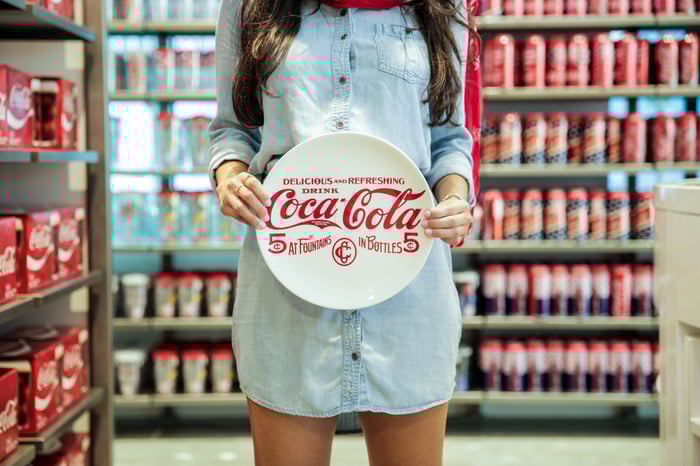
Image source: Coca-Cola.
Coca-Cola has raised its dividend annually for 63 consecutive years, making it a Dividend King that has increased its payout for at least 50 years in a row. That streak indicates it can keep growing even as recessions, wars, and other macro headwinds rattle the global economy.
So is Coca-Cola still a safe stock to own even as the Iran War intensifies and disrupts its shipments through the Strait of Hormuz? Let's review the three ways the crisis could affect Coca-Cola -- and if they'll make it a less appealing investment.
1. Its production costs will rise
About a fifth of the global oil supply passes through the Strait of Hormuz. The Iran War is throttling those deliveries and driving up oil prices worldwide, which in turn are raising manufacturing, packaging, and transportation costs for Coca-Cola and its bottling partners.
Coca-Cola's supply chain won't be directly affected by the crisis, since its sugar, water, and other ingredients are sourced locally rather than imported. But those higher manufacturing and logistics costs could force its bottling partners to raise their prices to preserve their margins.
2. It could exhaust its pricing power
In 2025, Coca-Cola generated 22.6% of its operating revenue from the Europe, Middle East, and Africa (EMEA) region. It was its second-largest region after North America, which accounted for 40.8% ifs revenue. During the year, the EMEA region's organic sales rose 6% -- making it Coca-Cola's second-fastest growing region after Latin America (10% growth).
The Iran War could throttle the EMEA region's growth by simultaneously driving up regional prices and depressing consumer demand. The region accounted for 31.2% of Coca-Cola's operating income in 2025 -- but that percentage could shrink this year as the crisis continues and its regional bottlers run out of room to raise prices.
3. The U.S. dollar could strengthen
Coca-Cola generates most of its revenue overseas, so a weaker dollar boosts its sales and profits. In a stable market, rising oil prices usually depress the U.S. dollar. But in a volatile market like this one, oil prices and the U.S. dollar can spike at the same time. The supply shock drives up oil prices, while more people buy U.S. dollars as a safe-haven asset.
In 2025, Coca-Cola's comparable EPS rose 4%, even as the currency headwinds reduced its year-over-year growth by five percentage points. Back in mid-February, Coca-Cola predicted its comparable EPS would grow 7%-8% in 2026 after benefiting from a 3% currency tailwind.
However, it issued that guidance before the Iran War started. It wouldn't be surprising if it reduces that outlook, and the currency tailwind becomes a headwind again. That said, Coca-Cola has weathered plenty of currency spikes over the past several decades.
What's the smartest thing for investors to do today?
The smartest move for Coca-Cola investors is to simply do nothing. Its EMEA sales could slow down this year, its margins could decline, and it could face tougher currency headwinds. But it will also likely overcome those challenges and attract more safety-seeking investors.
Should you buy stock in Coca-Cola right now?
Before you buy stock in Coca-Cola, consider this:
The Motley Fool Stock Advisor analyst team just identified what they believe are the 10 best stocks for investors to buy now… and Coca-Cola wasn’t one of them. The 10 stocks that made the cut could produce monster returns in the coming years.
Consider when Netflix made this list on December 17, 2004... if you invested $1,000 at the time of our recommendation, you’d have $495,179!* Or when Nvidia made this list on April 15, 2005... if you invested $1,000 at the time of our recommendation, you’d have $1,058,743!*
Now, it’s worth noting Stock Advisor’s total average return is 898% — a market-crushing outperformance compared to 183% for the S&P 500. Don't miss the latest top 10 list, available with Stock Advisor, and join an investing community built by individual investors for individual investors.
See the 10 stocks »
*Stock Advisor returns as of March 21, 2026.
Leo Sun has positions in Coca-Cola. The Motley Fool has no position in any of the stocks mentioned. The Motley Fool has a disclosure policy.
Recommended Articles


