


Prediction: This Will Be Nvidia's Stock Price by the End of 2026
Key Points
Nvidia controls a significant portion of the data center GPU market.
CEO Jensen Huang has high confidence in demand through the end of 2027.
The stock is attractively priced, particularly in light of Huang's recent proclamation.
- 10 stocks we like better than Nvidia ›
It's crystal clear that Nvidia (NASDAQ: NVDA) has been one of the primary beneficiaries of the scramble to adopt artificial intelligence (AI). The company's graphics processing units (GPUs) -- which were originally created to generate lifelike images in video games (hence the name) -- have become the gold standard and the most sought-after chips in AI.
Since the dawn of the AI revolution in early 2023, Nvidia stock has soared 1,150% (as of this writing), providing a veritable windfall for shareholders along the way. Yet the debate rages on Wall Street and Main Street about what the future holds for Nvidia stock and its shareholders.
Will AI create the world's first trillionaire? Our team just released a report on the one little-known company, called an "Indispensable Monopoly" providing the critical technology Nvidia and Intel both need. Continue »
Let's take a look at the available evidence to see where Nvidia's stock price might end up by the end of 2026.
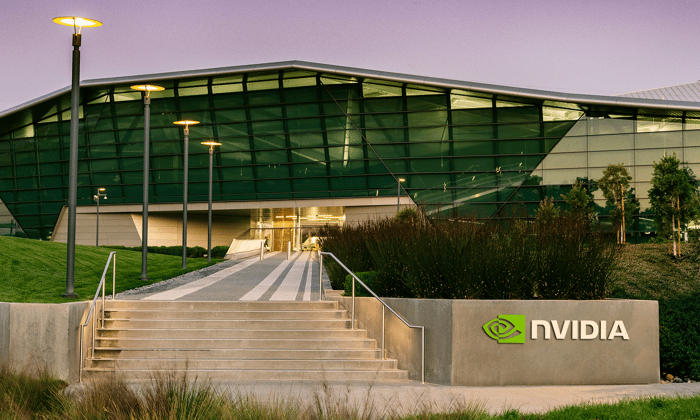
Image source: Nvidia.
Data center diva
Nvidia's ability to adapt the humble GPU to different tasks and coax more performance out of each successive version set the chipmaker apart from its rivals. After conquering the discrete desktop GPU market, the company pivoted to the emerging opportunity of AI.
Nvidia had already mastered the concept of parallel processing, which speeds computationally intensive workloads by breaking them down into subtasks and assigning them to each of its many "cores," or processors, within the GPU. The ability to complete these Herculean tasks more quickly was instrumental in advancing AI and has been critical to Nvidia's ongoing success.
Data centers have become the nucleus of AI activity, since processing of this magnitude requires legions of GPUs working in unison. This has been the catalyst behind the current data center building boom, and it's still early days, according to most experts.
Estimates regarding AI infrastructure spending for data centers continue to ratchet higher. Supporting the relentless demand for AI will require capital outlays of nearly $7 trillion by 2030, according to global management consultants McKinsey & Company. Nvidia dominates the GPU data center market with a 92% share, according to IoT Analytics.
Just this week, at Nvidia's GPU Technology Conference, CEO Jensen Huang provided investors with an update on the company's backlog, and the number was staggering. The chief executive estimates that Nvidia will generate "at least" $1 trillion from the sale of Blackwell and Vera Rubin chips by the end of 2027. "In fact, we are going to be short," Huang said. "I am certain computing demand will be much higher than that."
In a subsequent interview on CNBC, Huang provided additional color to his proclamation:
We have $500 billion dollars' worth of visibility. And at this point, at this point, with another 21 more months to go to the end of 2027, we already have high confidence, high confidence visibility of $1 trillion plus of Blackwell and Rubin, not anything else, just Blackwell and Rubin.
That's a stunning outlook. If the company is even close, shareholders will certainly benefit.
Fun with numbers
Assuming Huang's revenue estimates are accurate (and we have no reason to believe otherwise), we can make some assumptions and use available information to calculate what Nvidia's stock price could be by the end of this year.
For its fiscal 2026 fourth quarter (ended Jan. 25), Nvidia reported revenue of $68 billion. The company also provided a Q1 revenue forecast of $78 billion. Assuming its outlook is accurate, Nvidia expects to generate the remainder of the $1 trillion, or revenue of roughly $922 billion, over the next 21 months, or seven quarters.
It will take roughly 13% sequential growth in each of the next seven quarters to reach total revenue of $1 trillion by the end of 2027. Applying that growth rate would result in revenue of $379 billion in fiscal 2027 (calendar 2026).
Nvidia currently has a market cap of roughly $4.42 trillion and has a price-to-sales (P/S) ratio of roughly 21 (as of this writing). If its P/S ratio remains constant, and if Nvidia were to generate revenue of $379 billion in 2026 -- which is a daunting task -- its stock price could jump 77% to $322 per share, pushing the company's market cap to roughly $7.8 trillion.
The fine print
Let's be clear: This exercise is fun with numbers and an exercise in mental gymnastics. Seasoned investors know full well that things can change on a dime. Competitors are developing rival GPUs, and Application-Specific Integrated Circuits (ASICs) are becoming the heir apparent for specific use cases -- which could ultimately eat into Nvidia's market share. Economic conditions could go south, and estimates about the pace of AI adoption could be too ambitious. That said, even if Nvidia doesn't reach this benchmark by the end of this year, its growth trajectory is clear.
Finally, at just 22 times forward earnings, the stock is attractively priced. The company's consistent execution and strong secular tailwinds make Nvidia stock an unqualified buy.
Should you buy stock in Nvidia right now?
Before you buy stock in Nvidia, consider this:
The Motley Fool Stock Advisor analyst team just identified what they believe are the 10 best stocks for investors to buy now… and Nvidia wasn’t one of them. The 10 stocks that made the cut could produce monster returns in the coming years.
Consider when Netflix made this list on December 17, 2004... if you invested $1,000 at the time of our recommendation, you’d have $494,747!* Or when Nvidia made this list on April 15, 2005... if you invested $1,000 at the time of our recommendation, you’d have $1,094,668!*
Now, it’s worth noting Stock Advisor’s total average return is 911% — a market-crushing outperformance compared to 186% for the S&P 500. Don't miss the latest top 10 list, available with Stock Advisor, and join an investing community built by individual investors for individual investors.
See the 10 stocks »
*Stock Advisor returns as of March 21, 2026.
Danny Vena, CPA has positions in Nvidia. The Motley Fool has positions in and recommends Nvidia. The Motley Fool has a disclosure policy.
Recommended Articles


