


Here's What Falling Oil Prices Mean for These 3 Energy Stocks
Key Points
Devon Energy is a pure-play energy producer.
Chevron is an integrated energy giant with exposure to the entire energy value chain.
Enterprise Products Partners is a toll-taker in the midstream.
- 10 stocks we like better than Chevron ›
The geopolitical conflict in the Middle East has upended the oil market. Oil prices have risen to $100 per barrel and have been swinging dramatically from day to day, driven by news flow and investor sentiment. This is actually pretty normal for the energy sector, which has a long history of being volatile.
If history is any guide, oil prices will eventually come back down. Here's what you need to know to prepare for when that time comes.
Will AI create the world's first trillionaire? Our team just released a report on the one little-known company, called an "Indispensable Monopoly" providing the critical technology Nvidia and Intel both need. Continue »
Devon Energy is entirely dependent on oil prices
Devon Energy (NYSE: DVN) is an independent U.S. onshore oil and natural gas producer. Basically, it drills for oil and gas and sells it. While the company uses hedges to help protect itself from energy price volatility, the core driver of the business remains the prices of the commodities it produces and sells.
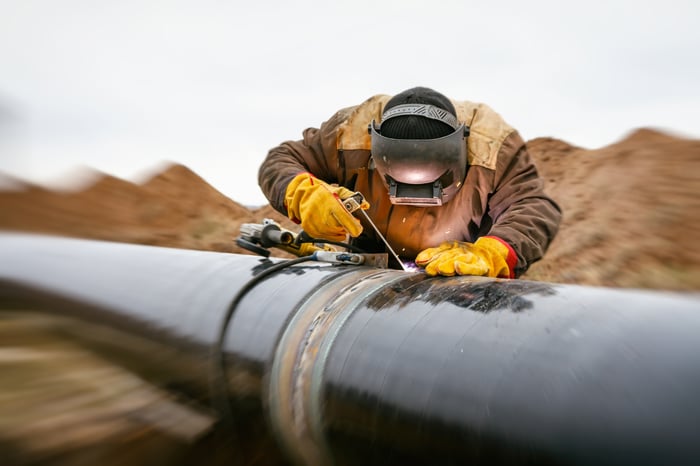
Image source: Getty Images.
It is effectively leveraged to the price of oil and natural gas. Over the past six months, Devon's stock has risen around 33%. That's the upside opportunity with a pure-play energy producer, which is often called an upstream business. Investors should expect Devon Energy's financial results to be strong so long as oil prices remain high.
However, when oil prices eventually fall, as they always have historically, Devon's earnings will fall, too. And, as a result, investors will likely dump the stock, leading to a dramatic price decline. Be prepared for a drawdown if you buy Devon Energy while energy prices are rising.
Chevron is built to survive the cycle
Chevron (NYSE: CVX) is an integrated energy company. It owns production assets, so it is materially impacted by oil price moves. Over the past six months, the stock is up 22%. Chevron hasn't risen as much as Devon because Chevron also owns midstream assets (pipelines), which provide reliable cash flows through the energy cycle, and downstream assets (chemicals and refining), which tend to underperform when oil prices are high, but benefit from low oil prices.
While Chevron can't avoid the impact of energy price swings, the integrated model helps soften the peaks and valleys. Adding to the stability here is Chevron's impressive balance sheet. It has a debt-to-equity ratio of around 0.25x, which is modest leverage for any business. When oil prices are weak, Chevron can take on debt to continue funding its business and dividend. When energy prices recover, as they always have historically, Chevron reduces leverage. The dividend has notably been increased annually for decades, which basically proves the company's business model works.
Chevron won't feel the pinch as much as Devon when oil prices fall, making it a better choice for more conservative investors. The dividend yield is 3.6% right now, which might also interest dividend seekers. That said, the best time to buy Chevron is usually when oil prices are weak.
Enterprise Products Partners sidesteps commodity prices
Enterprise Products Partners (NYSE: EPD) and its midstream peers are likely to be the least impacted by rising and falling commodity prices. That's because Enterprise owns energy transportation assets, such as pipelines, that help to move energy around the world. Midstream businesses generally charge fees for the use of their assets, meaning that the volume flowing through their systems is more important to their financial results than the price of the commodities they move.
This allows businesses like Enterprise to reward investors with large distributions through the entire energy cycle. The distribution has grown steadily over time, and Enterprise's distribution yield is currently around 5.8%. When oil prices fall, the business isn't likely to see a material impact. Even conservative investors will find Enterprise appealing today.
Know what drives your energy investments
At the end of the day, you need to understand the fundamental business drivers of the energy businesses you own. In the upstream, oil prices are key. Integrated businesses aren't as reliant on commodity prices, as they have other assets to mitigate price swings. And midstream businesses like Enterprise are simple toll takers with businesses that aren't materially impacted by rising or falling commodity prices.
Should you buy stock in Chevron right now?
Before you buy stock in Chevron, consider this:
The Motley Fool Stock Advisor analyst team just identified what they believe are the 10 best stocks for investors to buy now… and Chevron wasn’t one of them. The 10 stocks that made the cut could produce monster returns in the coming years.
Consider when Netflix made this list on December 17, 2004... if you invested $1,000 at the time of our recommendation, you’d have $508,877!* Or when Nvidia made this list on April 15, 2005... if you invested $1,000 at the time of our recommendation, you’d have $1,115,328!*
Now, it’s worth noting Stock Advisor’s total average return is 936% — a market-crushing outperformance compared to 189% for the S&P 500. Don't miss the latest top 10 list, available with Stock Advisor, and join an investing community built by individual investors for individual investors.
See the 10 stocks »
*Stock Advisor returns as of March 19, 2026.
Reuben Gregg Brewer has no position in any of the stocks mentioned. The Motley Fool has positions in and recommends Chevron. The Motley Fool recommends Enterprise Products Partners. The Motley Fool has a disclosure policy.
Recommended Articles


