


Where Will Ripple (XRP) Be in 10 Years? (Hint: A $1 Trillion Valuation Is Possible If This Happens).
Key Points
Ripple's CEO thinks a $1 trillion valuation is possible.
Two catalysts must succeed for the project to reach a $1 trillion valuation.
- 10 stocks we like better than XRP ›
For years, Ripple's XRP (CRYPTO: XRP) has remained one of the top cryptocurrencies in the world. After reaching a $200 billion market cap last year, the crypto project still commands a valuation of nearly $100 billion after a steep plunge in crypto markets globally.
But if you ask Ripple's most bullish investors, many see the project's valuation exceeding $1 trillion during the next decade. Why? There are two key catalysts to watch closely.
Will AI create the world's first trillionaire? Our team just released a report on the one little-known company, called an "Indispensable Monopoly" providing the critical technology Nvidia and Intel both need. Continue »
1. Ripple is betting aggressively on building a global ecosystem
For years, Ripple, the closely held company that developed XRP, bet aggressively on its network replacing legacy international payment systems like SWIFT (Society for Worldwide Interbank Financial Telecommunication), which process trillions of dollars in transfers every year. But recently, the company has pivoted slightly to focus on an ecosystem approach rather than a direct replacement. This ecosystem focus is what has Chief Executive Officer Brad Garlinghouse bullish on Ripple's potential to reach a $1 trillion valuation.
"There will be a trillion-dollar crypto company, I don't doubt that for a second," Garlinghouse said last month. "I think Ripple has the opportunity, if we do things well in partnership with the overall XRP ecosystem, to be that company."
What exactly is Garlinghouse talking about when he references the "overall XRP ecosystem"? At its core would sit the XRP ledger itself. That blockchain includes all of the usual components: independent validators, open-source protocols, and consensus-based settlements.
Ripple's ecosystem consists mostly of projects building on top of this foundational layer. That would include things like decentralized finance (DeFi) tools and applications and customized payment solutions developed for third-party usage. The ecosystem layer would also include wallets, developer APIs, and liquidity providers like crypto exchanges and custody services that make the XRP Ledger more practical for adoption.
In short, Ripple has realized after years of limited adoption that its success will not be based on industry use of its technology outright. Instead, it will be investing heavily to build a supporting ecosystem of developers, exchanges, tools, and institutional partnerships that can drive value for the network from a variety of endpoints.
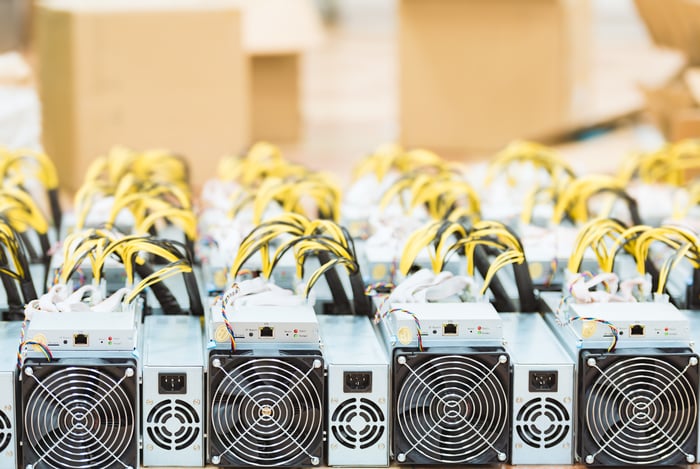
Image source: Getty Images.
2. Tokenizing real-world assets could be a game changer
A fully developed Ripple ecosystem would create what Ripple's leadership team has deemed "the Internet of Value." This system would not only be a central hub for crypto assets but also for traditional assets that could, at least on paper, be easily tokenized for use in wider decentralized markets.
This is arguably the holy grail of crypto markets. Not only would decentralized assets be usable by increasingly complex network layers, but also traditional securities like bonds, stocks, real estate, and commodities.
Bringing these assets on-chain would create huge value and validation for crypto markets. And Ripple believes it has the lead in making this potential a reality, with its network sitting at the core of this evolution.
This isn't a pipe dream. Many experts -- including global financial leaders like Deloitte and Citigroup -- believe trillions of dollars of tokenized assets will move on-chain during the next decade. If Ripple is the primary enabler of this transition, a $1 trillion market cap certainly is not out of the question in the long term.
Should you buy stock in XRP right now?
Before you buy stock in XRP, consider this:
The Motley Fool Stock Advisor analyst team just identified what they believe are the 10 best stocks for investors to buy now… and XRP wasn’t one of them. The 10 stocks that made the cut could produce monster returns in the coming years.
Consider when Netflix made this list on December 17, 2004... if you invested $1,000 at the time of our recommendation, you’d have $513,407!* Or when Nvidia made this list on April 15, 2005... if you invested $1,000 at the time of our recommendation, you’d have $1,123,237!*
Now, it’s worth noting Stock Advisor’s total average return is 938% — a market-crushing outperformance compared to 188% for the S&P 500. Don't miss the latest top 10 list, available with Stock Advisor, and join an investing community built by individual investors for individual investors.
See the 10 stocks »
*Stock Advisor returns as of March 18, 2026.
Citigroup is an advertising partner of Motley Fool Money. Ryan Vanzo has no position in any of the stocks mentioned. The Motley Fool has positions in and recommends XRP. The Motley Fool has a disclosure policy.
Recommended Articles


