


OpenClaw Founder Accuses Tencent of “Copying,” Company Responds Citing Support for the Ecosystem
TradingKey - As the open‑source AI agent framework OpenClaw gains global traction, a wave of “OpenClaw‑compatible” products has begun emerging across markets. Among them is Tencent’s newly launched developer‑focused platform, SkillHub, which the company describes as built to support the growing community of agent developers.
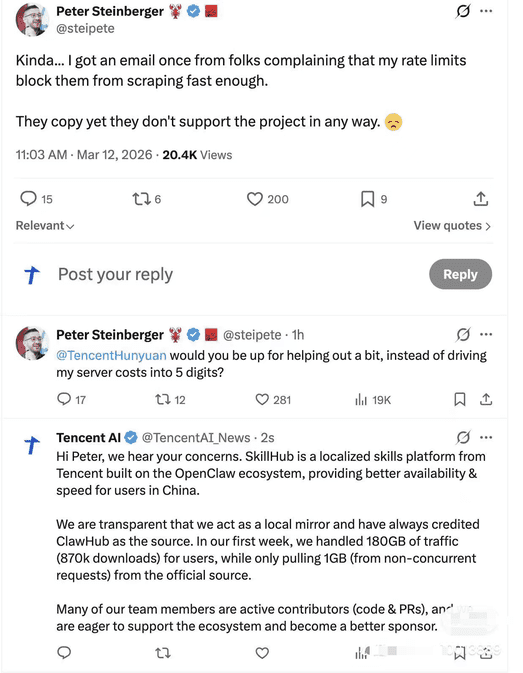
But the rapid rollout drew backlash from OpenClaw’s founder, Peter Steinberger, who took to social media today to accuse Tencent of copying without contributing. Steinberger said he had received “multiple complaints” in recent days about rate‑limit errors and data‑fetch failures linked to China‑based traffic surges. He wrote, “They copy yet they don't support the project in any way.”
Tencent responded within one hour, rejecting the allegation. The company explained in X that SkillHub functions as a localized mirror site for Chinese users, with clear attribution to ClawHub—the official OpenClaw repository—as the original source. Tencent said the platform distributed roughly 180 GB of content in its first week, totaling 870,000 downloads, while drawing only about 1 GB from the official server. That traffic pattern, Tencent argued, means SkillHub has actually diverted nearly 99 percent of bandwidth away from OpenClaw’s servers, easing the very strain Steinberger expressed concern about.
The company added that some members of the SkillHub engineering team were already contributors to the OpenClaw codebase, and said its goal was to strengthen the ecosystem through localized infrastructure and better access — describing the project as a complementary effort rather than a rival one.
In parallel, Tencent introduced an enterprise‑grade assistant called WorkBuddy, marketed under the “Tencent OpenClaw” initiative. The new agent tool claims full compatibility with the OpenClaw skill framework while eliminating complex setup—companies can activate it directly within WeCom, Tencent’s workplace messaging platform, in under a minute.
Tencent Holdings (00700.HK) shares have rallied in recent weeks on optimism surrounding AI‑agent development. As of 16:30 local time (GMT+8), the stock hovered around HK $546, down about 3 percent from Wednesday’s short‑term high near HK $565.
Recommended Articles


