


This Ridiculously Cheap Warren Buffett Stock Could Make You Richer
Key Points
Berkshire Hathaway has lost billions on its Kraft Heinz investment.
The packaged foods company no longer plans to split into two entities, but other efforts could lead to a recovery.
With its 6.7% forward dividend yield further enhancing its value potential, consider Kraft Heinz a great opportunity at current prices.
- 10 stocks we like better than Kraft Heinz ›
Berkshire Hathaway, led by Warren Buffett from 1965 until his retirement at the end of 2025, holds numerous consumer staples stocks in its equity portfolio. However, it may be one of Berkshire's most poorly performing investments that offers the greatest opportunity to new investors.
At the end of 2025, Berkshire Hathaway held a 27.5% stake in Kraft Heinz (NASDAQ: KHC). At current prices, Berkshire's stake is worth around $7.8 billion, but its cost basis for the investment was around $9.8 billion.
Will AI create the world's first trillionaire? Our team just released a report on the one little-known company, called an "Indispensable Monopoly" providing the critical technology Nvidia and Intel both need. Continue »
Before taking a $3.8 billion impairment charge last year, the position's book value was $12.2 billion.
Recently, there's been talk of Berkshire, now under the leadership of Buffett's successor, Greg Abel, selling off the Kraft Heinz stake as the packaged foods company was considering splitting into two. Kraft Heinz has since put those plans on hold, and Berkshire appears content to hold Kraft Heinz stock for now. While it's unclear whether Berkshire sees better times ahead, much suggests to me that a comeback could be in motion.
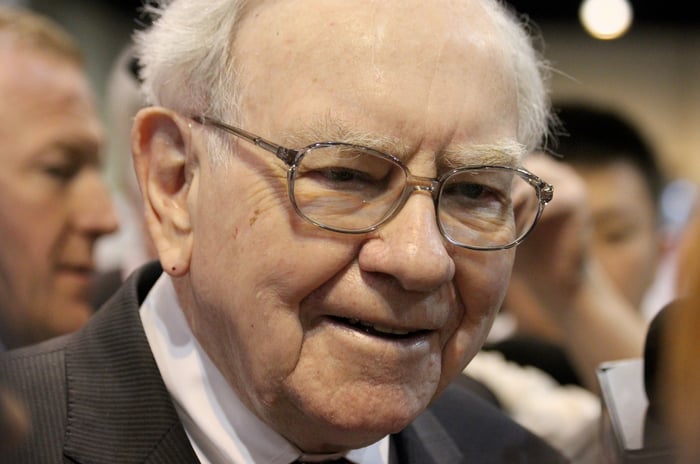
Image source: The Motley Fool.
Why Kraft Heinz became a rare miss for the Oracle of Omaha
Buffett may have handily beaten the S&P 500 index over many decades, but even legendary investors have their share of losing investments. Berkshire's involvement with Kraft Heinz goes back to 2013.
That's when the company partnered with private equity firm 3G Capital to take HJ Heinz private. Two years later, Heinz merged with Kraft Foods. Berkshire Hathaway rolled over its 50% stake in Heinz for a 27.5% stake in the combined, publicly traded Kraft Heinz.
Post-merger, shares initially performed well. However, within a few years, the stock began its nearly decade-long descent to new lows. At first, shares declined due to radical cost-cutting measures that did more harm than good. These cuts initially boosted profitability but also led to underinvestment in the company's brands. In turn, this impacted growth and profitability.
To mitigate this issue, Kraft Heinz reversed course, leading to a partial recovery. However, within a few years, inflation became a new headwind. Besides squeezing margins, high inflation led consumers to shun branded products in favor of lower-cost substitutes. As a result, fiscal performance has weakened again, pushing shares back toward multiyear lows.
Berkshire and Buffett's loss could be your gain
The proposed split of Kraft Heinz discussed last fall would have resulted in one entity holding the company's faster-growing condiment and shelf-stable foods business, while another assuming the grocery staples business.
Management backed off, however, reportedly under pressure from Berkshire. This move eliminated a key potential catalyst, but there is now less risk of Berkshire winding down its position and putting pressure on shares. Furthermore, there are other efforts underway, like the company's current $600 million brand revitalization plan that could also improve results. Kraft Heinz trades for around 12 times forward earnings, in line with competitors. However, if earnings rebound, and sentiment for food stocks improves, shares could more higher. Historically, Kraft Heinz has traded at a mid-teens price-to-earnings (P/E) ratio.
That's not all. The stock's 6.6% forward dividend yield further enhances the value potential. Kraft Heinz hasn't worked out for Berkshire and Buffett, but for those buying today, the stock could be a golden, long-term opportunity.
Should you buy stock in Kraft Heinz right now?
Before you buy stock in Kraft Heinz, consider this:
The Motley Fool Stock Advisor analyst team just identified what they believe are the 10 best stocks for investors to buy now… and Kraft Heinz wasn’t one of them. The 10 stocks that made the cut could produce monster returns in the coming years.
Consider when Netflix made this list on December 17, 2004... if you invested $1,000 at the time of our recommendation, you’d have $534,817!* Or when Nvidia made this list on April 15, 2005... if you invested $1,000 at the time of our recommendation, you’d have $1,123,912!*
Now, it’s worth noting Stock Advisor’s total average return is 964% — a market-crushing outperformance compared to 192% for the S&P 500. Don't miss the latest top 10 list, available with Stock Advisor, and join an investing community built by individual investors for individual investors.
See the 10 stocks »
*Stock Advisor returns as of March 6, 2026.
Thomas Niel has no position in any of the stocks mentioned. The Motley Fool has positions in and recommends Berkshire Hathaway. The Motley Fool recommends Kraft Heinz. The Motley Fool has a disclosure policy.
Recommended Articles


