
3 Warren Buffett Stocks to Buy Hand Over Fist in December

Source The Motley Fool

Key Points

  • He may be selling pieces of it, but Bank of America is still one of Berkshire Hathaway’s biggest holdings for a reason.

  • Don’t let the fact that you’ve probably never even heard of Chubb dissuade you from owning a stake in the insurer.

  • Fast-food chain Domino's Pizza was a surprising pick when Buffett and his lieutenants started buying it last year, but it actually makes good sense.

  • 10 stocks we like better than Bank of America ›

Warren Buffett's time as Berkshire Hathaway's (NYSE: BRK.A) (NYSE: BRK.B) chief executive and its chief stock-picker may be nearing its end. But he's still in charge, so any changes he wanted to make to the conglomerate's portfolio before his exit would have likely been made by now. The names Berkshire is still holding suggests everyone's in agreement that they're worth holding onto, and that's a pretty big deal.

With that as the backdrop, here are three of these holdings you might want to buy for yourself sooner rather than later.

Where to invest $1,000 right now? Our analyst team just revealed what they believe are the 10 best stocks to buy right now. Continue »
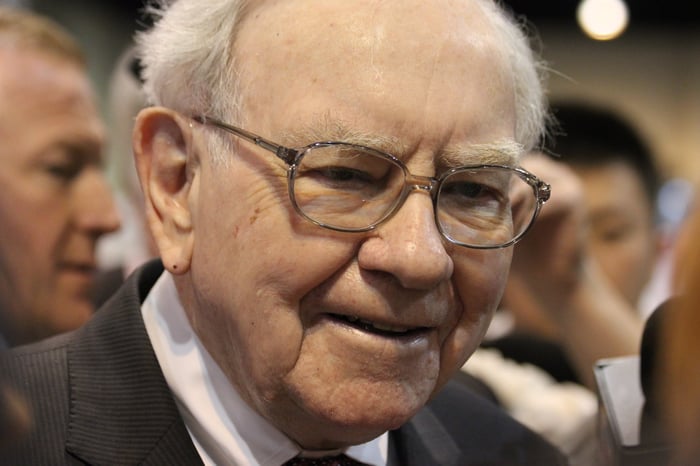
Warren Buffett, the Oracle of Omaha.

Image source: The Motley Fool.

1. Bank of America

Yes, Berkshire has been steadily shedding some of its position in Bank of America (NYSE: BAC) since the middle of last year. Don't read too much into the selling, though. At a value of $31 billion, it's still the organization's third-biggest holding, which speaks volumes about the confidence Berkshire's management has in the mega-bank.

In this same vein, the fact that BAC shares continue to rise at a time when they seemingly shouldn't (falling interest rates, lethargic economy, and consumers' heavy indebtedness) also speaks volumes about the market's confidence in the company's long-term guidance. BofA management now believes the banking giant will grow its net interest income at an average annual pace of 5% to 7% between now and 2030, compared to a more modest pace of 4% for the past few years.

At the same time, the company expects to improve its ROTCE (return on tangible common equity) to somewhere between 16% and 18%, putting it back on par with most of its rivals' results.

Perhaps even more bullish is the fact that, even with this stock's 120% gain since its late-2023 low, BAC shares are still reasonably valued at less than 13 times next year's expected earnings of $4.35 per share. The stock's forward-looking dividend yield of 2.1% is also better than you'll find with most comparable companies.

2. Chubb

Chubb (NYSE: CB) may well be the least-talked-about name of all of Berkshire Hathaway's major holdings. In fact, many investors may have never even heard of it. Blame its business, mostly. Chubb's an insurer, which just can't compete for investor attention the way growth industries like artificial intelligence can.

What this insurer lacks in pizzazz, however, it makes up for in other ways, like surprisingly consistent performance as well as surprisingly consistent dividend growth.

That might be a little tough to believe for a property and casualty (and liability) insurer like Chubb these days, given the seemingly growing number of increasingly expensive natural disasters. And Chubb is feeling this pain to be sure. Its catastrophic losses more than tripled year over year during the first quarter of 2025 due to California's rampant January wildfires. The company also reported estimated losses in the ballpark of $250 million to $300 million resulting from Hurricane Milton that devastated much of Florida late last year, taking a bite out of what would have otherwise been nearly $2.8 billion in net income for the quarter in question.

The thing is, insurers' actuaries -- the mathematicians that predict payout costs and determine customers' insurance premiums -- have gotten shockingly good at figuring out how to price their products to cover payouts for what are actually surprisingly predictable catastrophes. That's how Chubb has avoided suffering any meaningful quarterly loss over the course of the past decade, with the exception of the second quarter of 2020, when the completely unpredictable COVID-19 pandemic was ripping across the planet. Notice the company more than made up for it by the end of that year.

CB Net Income (Quarterly) Chart

Data by YCharts.

No, you'll never enjoy huge growth from this slow-moving name in a slow-moving industry. You will enjoy consistent growth, though, along with a dividend payment that's not only been paid like clockwork for decades, but has been raised every year for the past 32 years.

3. Domino's Pizza

Finally, add Domino's Pizza (NASDAQ: DPZ) to your list of Buffett stocks to buy this month while you can still step in at a discount. Share prices of the fast food chain are still well below this year's high of around $500 apiece.

When Buffett first began adding Domino's to Berkshire Hathaway's portfolio in the latter half of last year, it turned more than a few curious heads. It wasn't a bad company, and the stock had just suffered the sort of short-term setback that Buffett likes to buy into. It just wasn't the kind of investment that the Oracle of Omaha had shown interest in at any point in the recent past.

As time marches on, though -- giving investors as well as analysts time to examine this often-overlooked name -- the unlikely trade makes more and more sense. Pizza is a marketable meal in any and all economic environments, while operating pickup-and-delivery-only kitchens like Domino's is cost-effective. Simple raw pizza toppings are relatively cheap to buy in bulk, and these stores operate on a small footprint that requires a minimal amount of staff and servicing.

Of course, it doesn't hurt the bullish argument that Domino's Pizza is one of the biggest and best-known names in the business, making it easier to expand when the opportunity arises. To this end, the company opened (net) 214 new stores in the third quarter of this year, bringing its total count up to 21,750, and accelerating its current annualized pace of 748 new stores. Indeed, although it has since dialed back these plans so it can proceed more thoughtfully and carefully through an ever-changing environment, Domino's revealed back in 2023 that it was looking to eventually establish 50,000 locales, illustrating the scope of what the company thinks is possible.

Regardless of when (or even if) that happens, newcomers will be plugging into a solid stock with a respectable dividend yield of nearly 1.7%.

Should you buy stock in Bank of America right now?

Before you buy stock in Bank of America, consider this:

The Motley Fool Stock Advisor analyst team just identified what they believe are the 10 best stocks for investors to buy now… and Bank of America wasn’t one of them. The 10 stocks that made the cut could produce monster returns in the coming years.

Consider when Netflix made this list on December 17, 2004... if you invested $1,000 at the time of our recommendation, you’d have $513,353!* Or when Nvidia made this list on April 15, 2005... if you invested $1,000 at the time of our recommendation, you’d have $1,072,908!*

Now, it’s worth noting Stock Advisor’s total average return is 965% — a market-crushing outperformance compared to 193% for the S&P 500. Don't miss the latest top 10 list, available with Stock Advisor, and join an investing community built by individual investors for individual investors.

See the 10 stocks »

*Stock Advisor returns as of December 16, 2025.

Bank of America is an advertising partner of Motley Fool Money. James Brumley has no position in any of the stocks mentioned. The Motley Fool has positions in and recommends Berkshire Hathaway and Domino's Pizza. The Motley Fool has a disclosure policy.

Disclaimer: For information purposes only. Past performance is not indicative of future results.
placeholder
Gold Price Forecast: XAU/USD drifts higher above $4,200 as Fed delivers expected cutGold price (XAU/USD) gains momentum to around $4,235 during the early Asian session on Thursday. The precious metal extends its upside after the US Federal Reserve (Fed) delivered an expected third consecutive interest rate cut and maintained its outlook for just one cut in 2026.
Author  FXStreet
Dec 11, Thu
Gold price (XAU/USD) gains momentum to around $4,235 during the early Asian session on Thursday. The precious metal extends its upside after the US Federal Reserve (Fed) delivered an expected third consecutive interest rate cut and maintained its outlook for just one cut in 2026.
placeholder
Gold remains bid as lack of Fed clarity and geopolitical frictions persistGold (XAU/USD) advances modestly on Friday as traders seem to book profits ahead of the weekend, yet clings to gains of over 0.51% after reaching a seven-week high of $4,353. At the time of writing, XAU/USD trades at $4,302 as traders digest comments from Federal Reserve (Fed) officials.
Author  FXStreet
Yesterday 01: 34
Gold (XAU/USD) advances modestly on Friday as traders seem to book profits ahead of the weekend, yet clings to gains of over 0.51% after reaching a seven-week high of $4,353. At the time of writing, XAU/USD trades at $4,302 as traders digest comments from Federal Reserve (Fed) officials.
placeholder
Ethereum Price Slips Lower — $3,000 Looms as the Key BattlegroundEthereum is attempting to recover from a $3,026 low but remains below $3,200 and the 100-hour SMA, with a bearish trend line near $3,175 capping rebounds as bulls need a clean break above $3,200 to target $3,250–$3,400, while a drop below $3,050 risks a retest of $3,000 and $2,940.
Author  Mitrade
Yesterday 03: 25
Ethereum is attempting to recover from a $3,026 low but remains below $3,200 and the 100-hour SMA, with a bearish trend line near $3,175 capping rebounds as bulls need a clean break above $3,200 to target $3,250–$3,400, while a drop below $3,050 risks a retest of $3,000 and $2,940.
placeholder
Macro Analysts: Hawkish Japan Could Push Bitcoin Below $70KAnalysts predict Bitcoin may face further declines towards the $70,000 mark if the Bank of Japan raises interest rates as expected.
Author  Mitrade
Yesterday 05: 48
Analysts predict Bitcoin may face further declines towards the $70,000 mark if the Bank of Japan raises interest rates as expected.
placeholder
Bitcoin Slides 5% as Sellers Lean In — Can BTC Reclaim $88,000?Bitcoin has dropped back below $88,000 after rolling over from $90,500, with price still trading under the 100-hour Simple Moving Average. The sell-off found a floor at $85,151, and BTC is now consolidating near that base, but rebounds are facing pressure from a bearish trend line around $89,000. Bulls need to retake $88,000–$89,000 to ease downside risk; failure to do so keeps $85,500–$85,000 and then $83,500 in play, with $80,000 as the deeper “line in the sand.” Bitcoin (BTC) is back in damage-control mode after a sharp pullback wiped out recent gains. The price failed to reclaim the $90,000–$90,500 band, rolled over, and slid through $88,500 before briefly dipping under $87,000. Buyers did show up around $85,000, but the rebound so far looks more like stabilization than a clear trend reversal. Bitcoin dips hard, finds a bid near $85,000(h3) BTC’s latest move lower began when it couldn’t build follow-through above $90,000 and $90,500. Once that upside stalled, sellers took control and pushed price down through $88,500. The slide accelerated enough to spike below $87,000, but the market didn’t free-fall. Bulls defended the $85,000 zone, printing a low at $85,151. Since then, Bitcoin has been consolidating below the 23.6% Fibonacci retracement of the drop from the $93,560 swing high to the $85,151 low — a clue that the bounce is still shallow and that sellers haven’t fully backed off yet. Structurally, BTC is still on the back foot: It’s trading below $88,000, and It remains below the 100-hour Simple Moving Average, keeping short-term trend pressure pointed downward. Resistance is layered, and $89,000 is the problem area(h3) If bulls try to turn this into a recovery, they’ll have to climb through multiple ceilings in quick succession. First, BTC faces resistance around $87,150, followed by a more meaningful barrier near $87,500. From there, the market’s attention snaps back to $88,000 — the level BTC just lost and now needs to reclaim. A close back above $88,000 would improve the tone, but it doesn’t solve the bigger issue: there’s a bearish trend line on the hourly BTC/USD chart (Kraken feed) with resistance near $89,000, which also lines up with the next technical hurdle. If BTC can push through $89,000 and hold, the rebound could extend toward $90,000, with follow-through targets at $91,000 and $91,500. But until price clears that $88,000–$89,000 zone, rallies are at risk of being sold rather than chased. If BTC fails to reclaim resistance, the downside path is clear(h3) The near-term bear case is simple: if Bitcoin can’t climb back above the $87,000 area and keep traction, sellers may attempt another leg lower. Support levels line up like this: Immediate support: $85,500 First major support: $85,000 Next support: $83,500 Then $82,500 in the near term Below that, the major “don’t break this” level is still $80,000. If BTC slips under $80,000, the risk of acceleration to the downside increases significantly — not because it’s magic, but because it’s the kind of psychological and structural level that tends to trigger forced de-risking. Indicators: momentum still leans bearish(h3) The intraday indicators aren’t offering much comfort yet: Hourly MACD is losing pace in the bearish zone. Hourly RSI remains below 50, suggesting sellers still have the upper hand on short timeframes. So while the $85,000 defense held for now, the market hasn’t flipped bullish — it’s just stopped bleeding.
Author  Mitrade
10 hours ago
Bitcoin has dropped back below $88,000 after rolling over from $90,500, with price still trading under the 100-hour Simple Moving Average. The sell-off found a floor at $85,151, and BTC is now consolidating near that base, but rebounds are facing pressure from a bearish trend line around $89,000. Bulls need to retake $88,000–$89,000 to ease downside risk; failure to do so keeps $85,500–$85,000 and then $83,500 in play, with $80,000 as the deeper “line in the sand.” Bitcoin (BTC) is back in damage-control mode after a sharp pullback wiped out recent gains. The price failed to reclaim the $90,000–$90,500 band, rolled over, and slid through $88,500 before briefly dipping under $87,000. Buyers did show up around $85,000, but the rebound so far looks more like stabilization than a clear trend reversal. Bitcoin dips hard, finds a bid near $85,000(h3) BTC’s latest move lower began when it couldn’t build follow-through above $90,000 and $90,500. Once that upside stalled, sellers took control and pushed price down through $88,500. The slide accelerated enough to spike below $87,000, but the market didn’t free-fall. Bulls defended the $85,000 zone, printing a low at $85,151. Since then, Bitcoin has been consolidating below the 23.6% Fibonacci retracement of the drop from the $93,560 swing high to the $85,151 low — a clue that the bounce is still shallow and that sellers haven’t fully backed off yet. Structurally, BTC is still on the back foot: It’s trading below $88,000, and It remains below the 100-hour Simple Moving Average, keeping short-term trend pressure pointed downward. Resistance is layered, and $89,000 is the problem area(h3) If bulls try to turn this into a recovery, they’ll have to climb through multiple ceilings in quick succession. First, BTC faces resistance around $87,150, followed by a more meaningful barrier near $87,500. From there, the market’s attention snaps back to $88,000 — the level BTC just lost and now needs to reclaim. A close back above $88,000 would improve the tone, but it doesn’t solve the bigger issue: there’s a bearish trend line on the hourly BTC/USD chart (Kraken feed) with resistance near $89,000, which also lines up with the next technical hurdle. If BTC can push through $89,000 and hold, the rebound could extend toward $90,000, with follow-through targets at $91,000 and $91,500. But until price clears that $88,000–$89,000 zone, rallies are at risk of being sold rather than chased. If BTC fails to reclaim resistance, the downside path is clear(h3) The near-term bear case is simple: if Bitcoin can’t climb back above the $87,000 area and keep traction, sellers may attempt another leg lower. Support levels line up like this: Immediate support: $85,500 First major support: $85,000 Next support: $83,500 Then $82,500 in the near term Below that, the major “don’t break this” level is still $80,000. If BTC slips under $80,000, the risk of acceleration to the downside increases significantly — not because it’s magic, but because it’s the kind of psychological and structural level that tends to trigger forced de-risking. Indicators: momentum still leans bearish(h3) The intraday indicators aren’t offering much comfort yet: Hourly MACD is losing pace in the bearish zone. Hourly RSI remains below 50, suggesting sellers still have the upper hand on short timeframes. So while the $85,000 defense held for now, the market hasn’t flipped bullish — it’s just stopped bleeding.
goTop
quote