

Whales Dump Over $1 Billion In Bitcoin: Fire Sale Or Foreshadowing?

Source Newsbtc

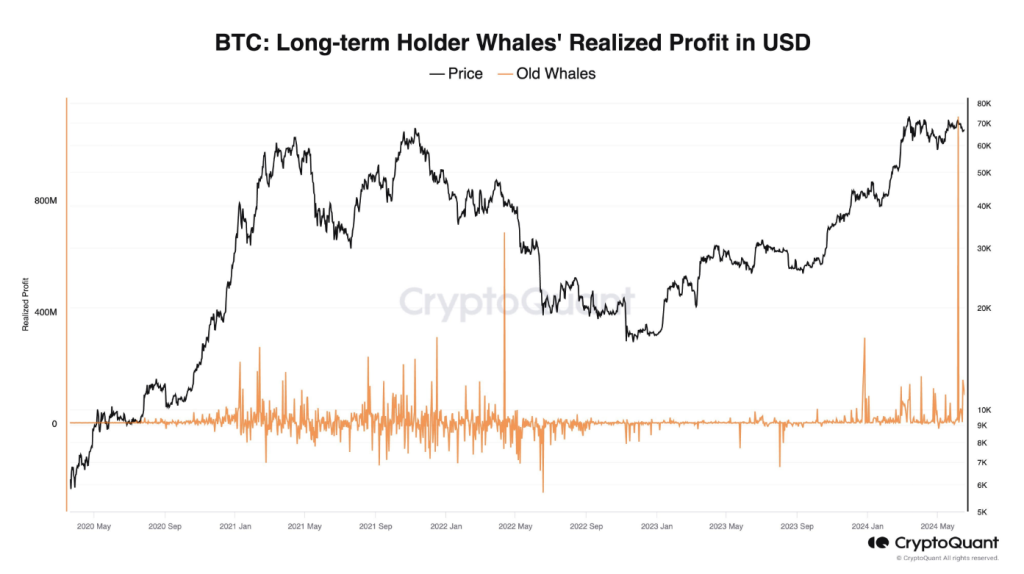
Bitcoin seems to be hitting an air pocket. Over the past two weeks, whales have been shedding their digital assets in large amounts. This exodus, totaling over $1.2 billion according to CryptoQuant, has been a cause for concern for many landlocked investor.

Where The Whales Go, The Market May Follow

The reasons for this sudden sell-off remain murky, but analysts point to a confluence of factors. One theory suggests a shift in priorities for miners, the brawny machines that secure the Bitcoin network and earn rewards in the form of new coins.

With the booming artificial intelligence (AI) sector offering a potentially more lucrative goldmine, miners might be cashing out their crypto rewards to invest in the future of computing.
The allure of AI is undeniable, shared Lucy Hu, a senior analyst at crypto fund Metalpha. The sheer processing power needed for AI development aligns perfectly with the capabilities of mining rigs. It seems miners are strategically diversifying their revenue streams.

This potential exodus of miners from the Bitcoin ecosystem could have a domino effect. As miners sell their rewards, it increases the overall supply of BTC in circulation, potentially driving the price down.

This aligns with the observed decline in “UTXO age” – a metric used to track buying and selling patterns. A drop in UTXO age indicates increased selling activity, and that’s not a comforting sign for investors hoping to ride the Bitcoin wave.

Traditional Markets Beckon, Leaving Bitcoin On The Beach

Adding fuel to the fire is the broader market sentiment. The recent strength of the US dollar and a general flight towards “safer” assets like traditional stocks have put a damper on riskier investments like Bitcoin.

This risk aversion is further reflected in the net outflows of over $600 million from US-listed Bitcoin ETFs – the worst performance since late April.

Is This A Bitcoin Bust, Or A Temporary Hiccup?

The combined effect of these factors has been a steady decline in BTC’s price. From a lofty perch of $71,000 just a few weeks ago, Bitcoin has dipped to a little over $65,000. Some analysts warn of a potential freefall to as low as $60,000 if the tide of negative sentiment continues to flow.

Whales are unloading a ton of Bitcoin. Is this a fire sale, a big discount to buy Bitcoin, or a warning sign that things are about to get rough for Bitcoin? Investors are waiting to see if this is a good time to buy or if they should get out before the price drops even more.

Featured image from Getty Images, chart from TradingView

Disclaimer: For information purposes only. Past performance is not indicative of future results.
placeholder
WTI (USOIL) Is down 2.03% on Sep 25: Here Is WhyWTI (USOIL) is down 2.03% at Sep 24 22:20(UTC+0), now at $92.517, with a 7-day down of 3.63%.What is driving WTI (USOIL)’s stock price down today?The drop in WTI crude oil prices was primarily driven by
Author  TradingKey
16 hours ago
WTI (USOIL) is down 2.03% at Sep 24 22:20(UTC+0), now at $92.517, with a 7-day down of 3.63%.What is driving WTI (USOIL)’s stock price down today?The drop in WTI crude oil prices was primarily driven by
placeholder
Silver Price Forecast: XAG/USD remains steady near $64.00 as oil prices easeSilver price (XAG/USD) inches higher after two days of losses, trading around $63.90 per troy ounce during Asian hours on Friday. Non-yielding Silver is finding underlying support as inflation concerns ease following a pullback in crude oil prices.
Author  FXStreet
17 hours ago
Silver price (XAG/USD) inches higher after two days of losses, trading around $63.90 per troy ounce during Asian hours on Friday. Non-yielding Silver is finding underlying support as inflation concerns ease following a pullback in crude oil prices.
placeholder
Gold Price Forecast: Gold Drops Below $4,300, Will It Continue to Fall? As of the European session on September 24, gold prices (XAUUSD) extended their correction, dipping below $4,300 intraday to hit a low of $4,262.45. After previously rebounding close to $
Author  TradingKey
Yesterday 09: 57
As of the European session on September 24, gold prices (XAUUSD) extended their correction, dipping below $4,300 intraday to hit a low of $4,262.45. After previously rebounding close to $
placeholder
Yen touches 158.37 as Tokyo reopens, then slips back — ¥15.4 trillion of intervention and the 200-day line stand between here and 160USD/JPY reached 158.37 overnight, its highest since early September, then eased to 157.88 as Japanese markets reopened after a three-day holiday. The Ministry of Finance has spent ¥15.4 trillion defending the yen since late July and the BOJ ran a rate check on September 18. The 200-day average sits at 158.43.
Author  Irene Q.
Yesterday 06: 59
USD/JPY reached 158.37 overnight, its highest since early September, then eased to 157.88 as Japanese markets reopened after a three-day holiday. The Ministry of Finance has spent ¥15.4 trillion defending the yen since late July and the BOJ ran a rate check on September 18. The 200-day average sits at 158.43.
placeholder
US input costs rose at the fastest pace in four years — the September flash PMI beat is an inflation story, not a growth storyUS September flash PMIs came in far above expectations, with the composite at 58.4, a five-year high. But the detail that moved markets was input cost inflation at its fastest since October 2022, driven by fuel, transport and supply shortages. Brent is back above $100 and the 10-year Treasury yield has hit its highest since 2007.
Author  Suzie
Yesterday 06: 46
US September flash PMIs came in far above expectations, with the composite at 58.4, a five-year high. But the detail that moved markets was input cost inflation at its fastest since October 2022, driven by fuel, transport and supply shortages. Brent is back above $100 and the 10-year Treasury yield has hit its highest since 2007.
goTop
quote