


Instruments to Watch in April as Trump's Reciprocal Tariffs Take Effect!

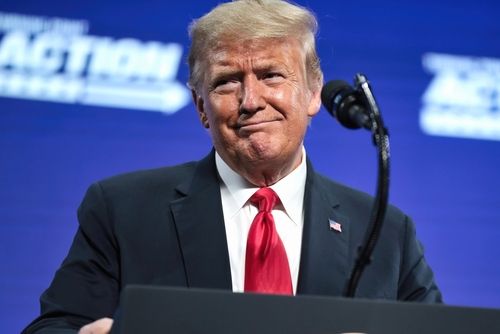
On 2 April ET, Trump unveiled the reciprocal tariffs, targeting over 40 trading partners with a 10% baseline rate and some others with even higher rates of up to 49%.
The unanticipated aggressive strength of the tariffs attack resulted in financial market turmoil. US shares, the USD, and crude oil collapsed, while gold reached another high.
JPMorgan expects the current trade tensions to persist through June, as such provocative tariff policies typically progress through several stages including announcement, retaliation, escalation, and reconciliation.
Under turbulent time like this, how would various assets fare? Where do trading opportunities lie? You may want to pay extra focus on the following 6 instruments:
1. Gold (XAU/USD)
Safe-haven demands kept pushing gold prices to repeatedly hit all-time highs. The yellow metal rose to peak at $3,167 per ounce in response to the implementation of Trump's reciprocal tariffs.

[Source: TradingView; 2025 Gold Price Trend]
Citigroup predicts gold price to rise to $3,200 per ounce in the coming months, and possibly to $3,500 if the US economy worsens further.
Goldman Sachs upped its year-end gold price outlook from $3,100 to $3,300 per ounce, highlighting the possibility of surpassing $4,200 under tail-risk scenarios.
2. NASDAQ 100 (NAS 100)
Trump's tariff threat has intensified market concerns regarding a US economic recession, coupled with an unclear AI prospects, leading the NASDAQ 100 index to fall by nearly 8% in March.
The NASDAQ 100 Futures also went down by 4% following the reciprocal tariff announcement. At present, most Wall Street analysts hold a bearish outlook on US shares.

[Source: TradingView; 2025 NASDAQ 100 Price Trend]
BCA Research is more blunt, stating that US shares have more room to fall in the future, betting that US shares could ultimately drop another 10%.
Goldman Sachs believes that tech shares may remain under pressure as macroeconomics is starting to interfere with micro performance guidance, and AI investments are unlikely to yield significant results in the short term.
3. USD/JPY
Japanese yen has been regarded as a traditional safe-haven currency. Following the reciprocal tariff announcement, USD/JPY plummeted by 1% to breach 148.

[Source: TradingView; 2025 USD/JPY Trend]
Goldman Sachs picks JPY as the best hedge against US recession, expecting USD/JPY exchange rates to fall to the low 140s this year.
Commonwealth Bank of Australia expects the JPY to strengthen further as more trade news hit headlines. MUFG Trust Bank also sees USD/JPY to decline to 145.
4. Crude Oil (USOIL, UKOIL)
Oil prices rebounded by 2% in March driven by geopolitical supply concerns. However, Trump's tariff policy could lower energy demand.
The imposition of reciprocal tariffs caused WTI to fall by over 1%, with Brent following suit.

[Source: TradingView; 2025 WTI Price Trend]
Investment banks such as Goldman Sachs, JPMorgan, and Morgan Stanley are revising down their oil price forecasts, expecting Brent to average at $72.13 per barrel and WTI at $68.36 this year.
Analysts pointed out that although stricter US sanctions on Iran, Venezuela, and Russia could limit crude oil supply, US tariffs will suppress global energy demand, slow economic growth, and subsequently result in falling oil prices.
5. EUR/USD
Germany's fiscal breakthrough drove EUR/USD to surge by more than 4% in March.
It is reported that the EU plans to take emergency measures to protect the economy from Trump's tariffs. Notwithstanding the reciprocal tariffs, EUR/USD continues to rise, breaching 1.09.

[Source: TradingView; 2025 EUR/USD Trend]
Lagarde, European Central Bank President, spells out that Trump's tariff policy will lower euro zone growth by at least 0.3 percentage points.
Morgan Stanley sees upside potential for EUR/USD in the medium term but with struggle to break through 1.12 in the short term due to tariff risks.
The market will be closely watching ECB's next interest rate decision to be issued on 17 April, which would impact the Euro one way or the other.
6. Bitcoin (BTC/USD)
Bitcoin (BTC) tumbled by more than $5,000 to the $83,000 following the imposition of reciprocal tariff, with limited rebounding.

[Source: TradingView; 2025 Bitcoin (BTC) Price Trend]
10x Research predicts that Bitcoin could drop below $80,000 this week as multiple risk-averse factors weigh on equities and spill over into the crypto market.
Arthur Hayes, co-founder of BitMEX, projects Bitcoin to reach $250,000 by the end of the year if Federal Reserve pivots to QE, even if the US stock market continues to fall under tariff turbulences.
Barchart data shows that Bitcoin has averaged a 27% gain in Aprils since 2010, second only to Novembers (38%) and Mays (26%).
Read more
* The content presented above, whether from a third party or not, is considered as general advice only. This article should not be construed as containing investment advice, investment recommendations, an offer of or solicitation for any transactions in financial instruments.


