


USD/JPY Breaks 150! Focus on BOJ Interest Rate Meeting this Week

coverImg
Source: DepositPhotos

Market Review

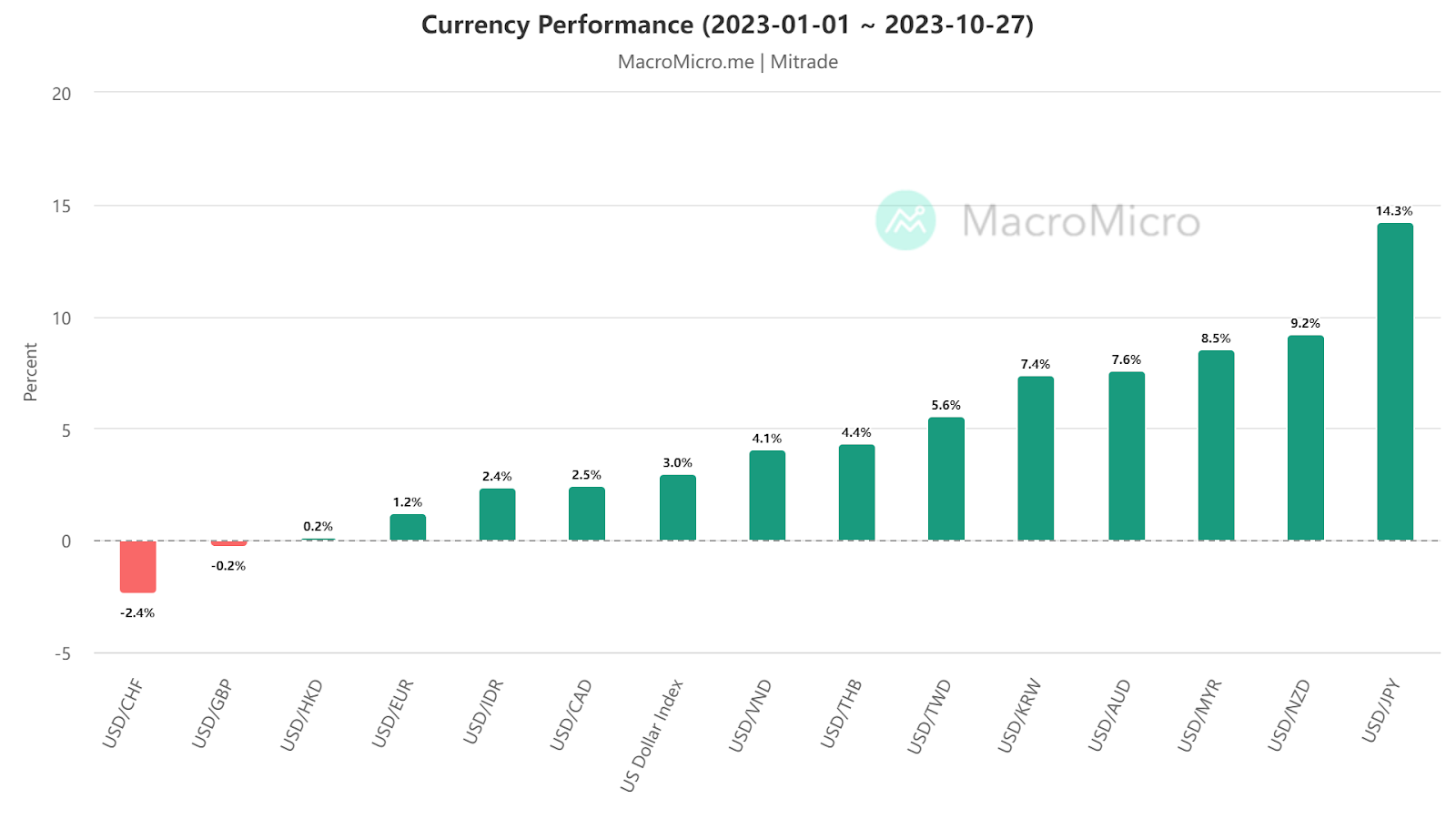
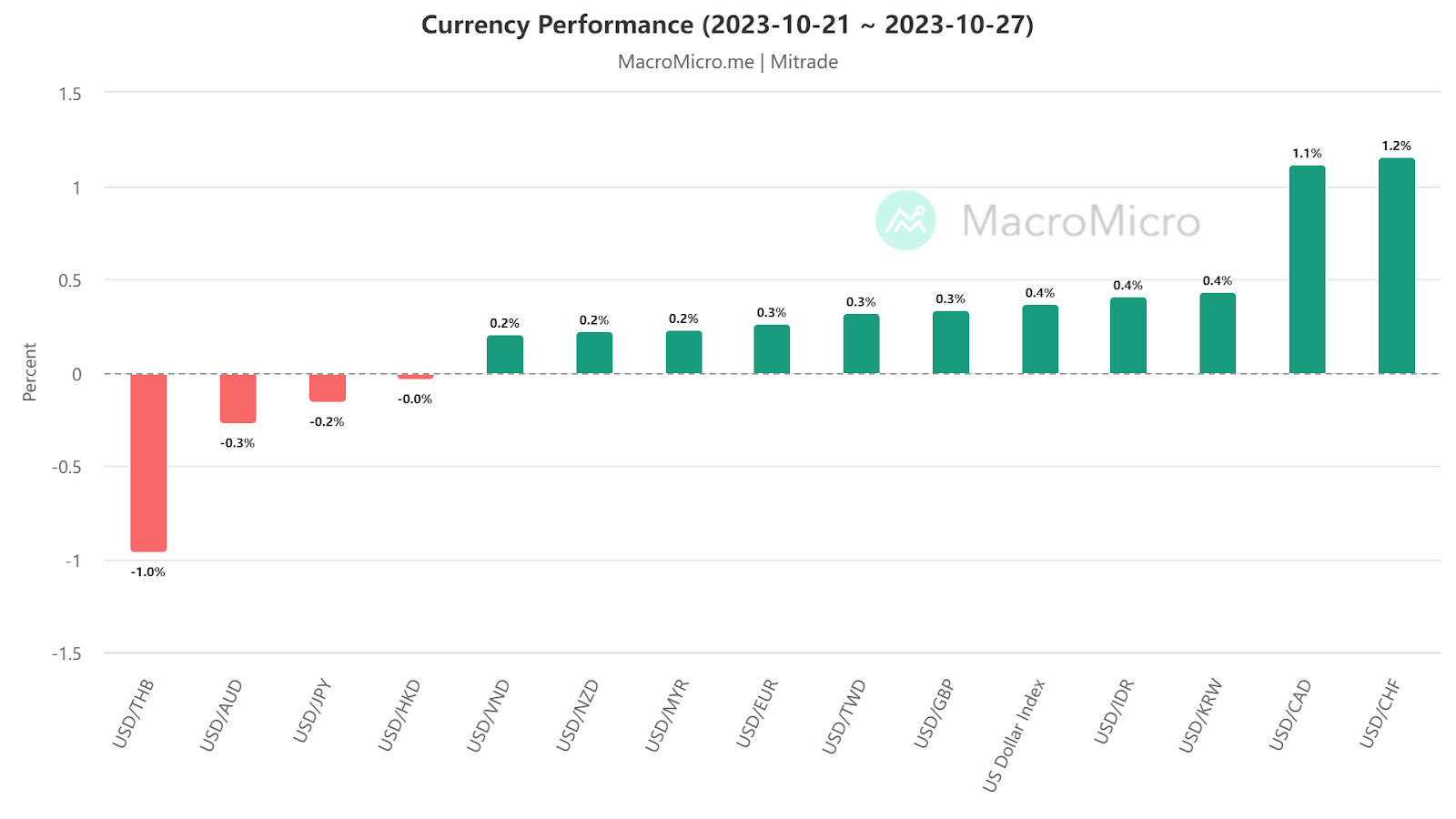
Last week (10/23-10/27), the US dollar index rose by 0.37%, while non-US currencies had mixed performance. The Japanese yen appreciated by 0.2%, while the euro depreciated by 0.3%.

【Source: MacroMicro;Date2023/10/23-2023/10/27


【Source: MacroMicro;Date2023/1/1-2023/10/27

1. Under European and American economic disparities, EUR/USD remains under pressure

Last week, the Euro continued to decline for two main reasons. Firstly, the Eurozone's economic data remained weak while the United States maintained its strength. Secondly, the European Central Bank (ECB) provided a dovish message during its interest rate meeting.


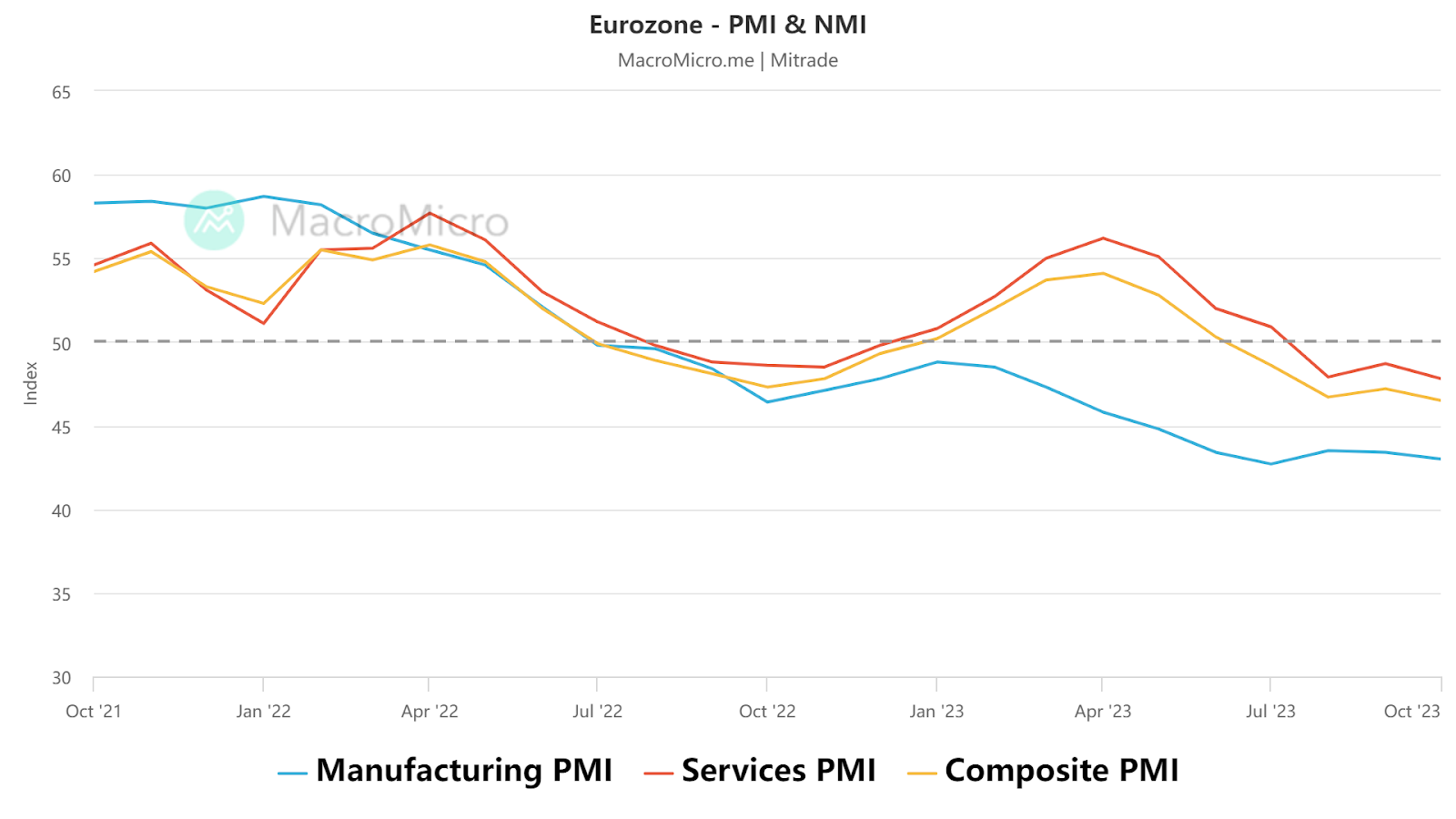
Data on October 24th showed that the preliminary manufacturing PMI for October in the Eurozone fell from 43.4 to 43, and the preliminary services PMI dropped from 48.7 to 47.8. The composite PMI came in at 46.5, lower than the expected 47.4 and the previous value of 47.2, reaching its lowest level since November 2020.


In contrast, the US PMI for October unexpectedly exceeded expectations, with a preliminary composite PMI of 51, reaching a three-month high. The real GDP growth for the third quarter was 4.9% compared to the previous quarter, surpassing market expectations.

Source:MacroMicro 】


Furthermore, on October 26th, the European Central Bank pressed the pause button on interest rate hikes as planned, stating that the current rates are already at restrictive levels, which will further dampen demand and help reduce inflation. Analysts widely believe that the ECB's tightening cycle has come to an end.


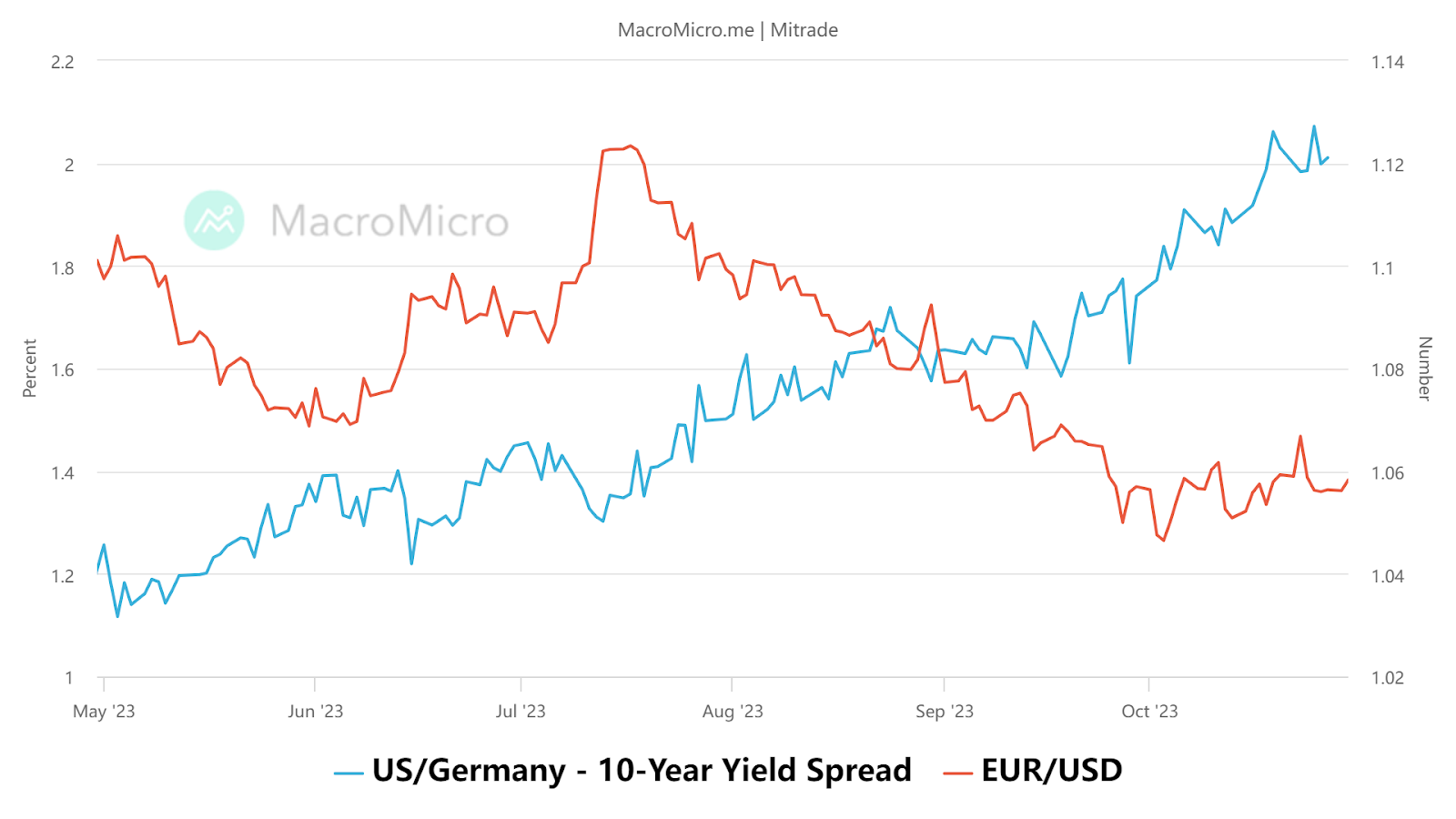
The German-US yield spread widened slightly last week, which continued to support the US dollar and put pressure on the Euro.

Source:MacroMicro 】


Mitrade Analyst:


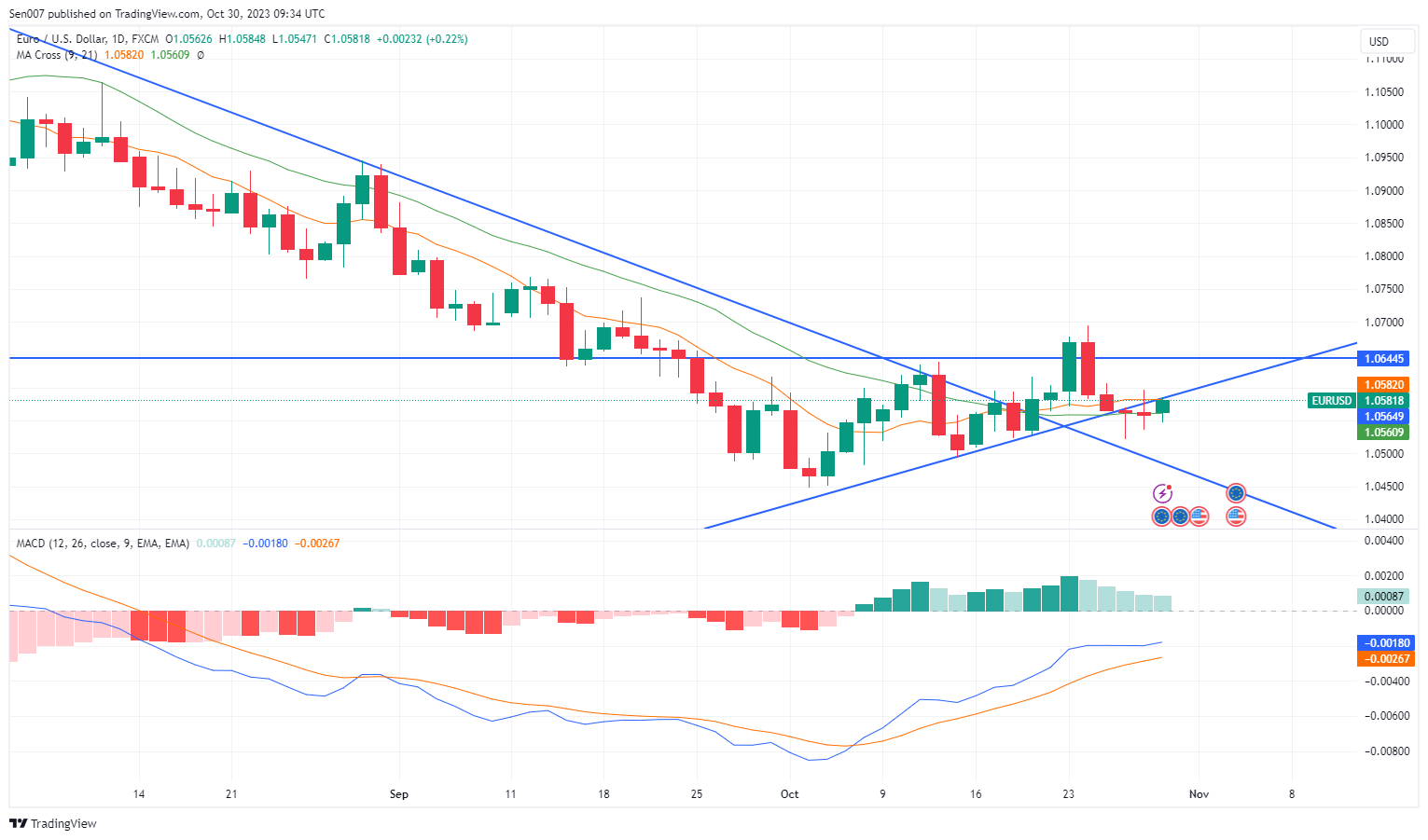
This week's focus will be on the Federal Reserve interest rate meeting and October inflation data in the Eurozone. If inflation continues to decline, the euro may continue to be under pressure and trend lower. However, considering the recent resilience of the euro against the US dollar, we estimate that the downward movement of the euro will be limited.


From a technical perspective, the EUR/USD has once again fallen below the 21-day moving average. If it manages to break above the 21-day moving average and return to the upward trend line this week, there is a possibility of further rebound, with resistance around 1.07. On the other hand, if it fails to hold this position, there is an increased risk of further downside for the EUR/USD, with support around 1.045.

【Source:TradingView】


2. USD/JPY Surges Past 150! Focus on BOJ Interest Rate Meeting this Week

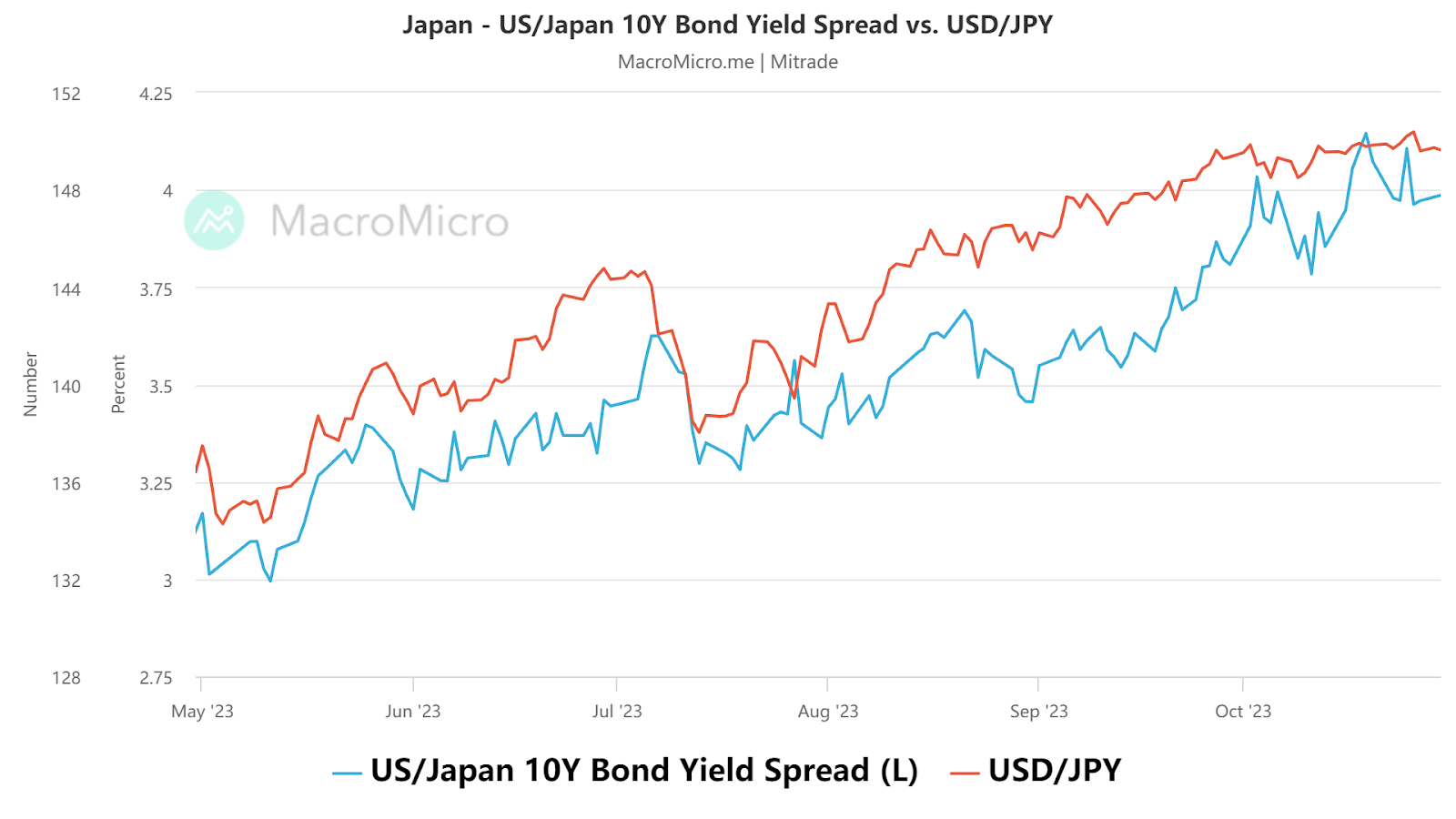
On October 26th, US Treasury yields surged again, pushing the yen to its lowest level in a year, breaking through the psychological level of 150. However, due to heightened risk aversion, the USD/JPY retreated below 150.

Source:MacroMicro 】


With the yen falling below 150 against the US dollar, foreign exchange traders became cautious as this level had previously prompted intervention by Japanese authorities.


This week, the Bank of Japan will announce the outcome of its interest rate meeting and unveil the latest economic and inflation outlook. A recent report in the Japanese media suggested that the central bank may consider adjusting its Yield Curve Control (YCC) program at this meeting, although officials hold differing views.


However, most analysts believe that despite the widening interest rate spread between the US and Japan and the yen's evident weakness, Japan has no intention of abandoning its ultra-loose monetary policy. Currently, the Japanese government aims to maintain low interest rates to stimulate the economy and wage-driven inflation, while also stabilizing the exchange rate to prevent import-driven inflation from eroding domestic purchasing power and slowing down domestic recovery. Clearly, the Bank of Japan will continue to face a dilemma.


Mitrade Analyst:


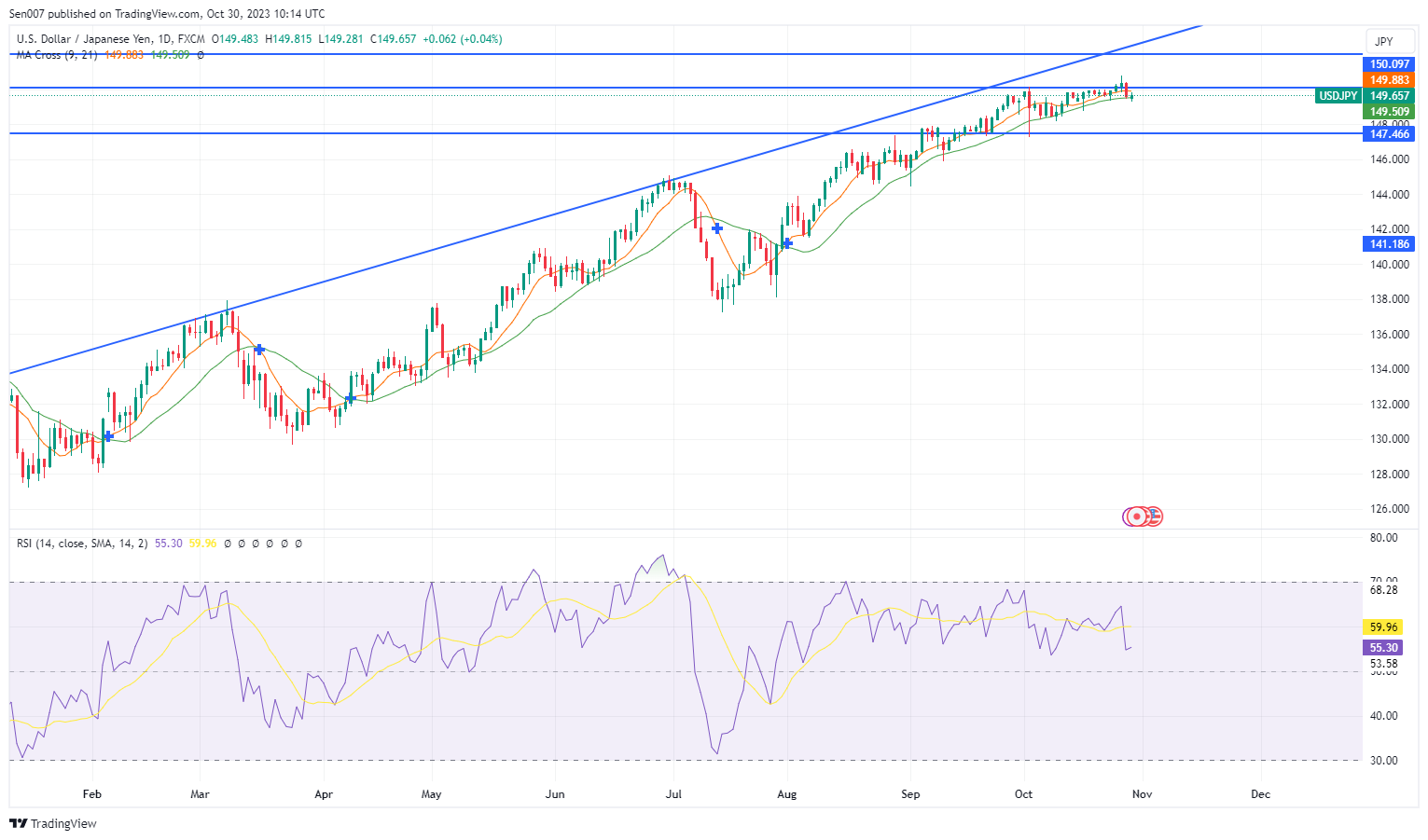
Although the current market views the adjustment of monetary policy by the Bank of Japan at this meeting as a low probability event, we believe there is a possibility of adjusting the Yield Curve Control (YCC) policy. However, if the Bank of Japan maintains its current stance, the yen is likely to further depreciate, potentially triggering foreign exchange intervention.


From a technical perspective, the USD/JPY has retraced towards the 21-day moving average. If it breaks above 150 again this week, the next target would be around the previous high near 152. Conversely, if it fails to hold above the 21-day moving average near 149.5 this week, the USD/JPY could see a significant decline with support around 148.

【Source:TradingView】


Read more

  • Have Fed Rate Hike Headwinds Been Priced In? Gold Rebounds Strongly Toward $4,400, Poised for a New Rally
  • Gold rebounds to near $4,350 on weaker US Dollar, falling oil prices
  • Note: If you want to share the article 《USD/JPY Breaks 150! Focus on BOJ Interest Rate Meeting this Week》, make sure you retain the original link. For more information, please visit Insights or browse www.mitrade.com.

    * The content presented above, whether from a third party or not, is considered as general advice only.  This article should not be construed as containing investment advice, investment recommendations, an offer of or solicitation for any transactions in financial instruments.

    goTop
    quote
    Related Articles
    placeholder
    US to delay new "overcapacity" tariffs on China — what the pause means for trade, inflation and the dollarWashington is expected to hold off announcing new tariffs over Chinese "overcapacity" until after the 24 September summit, according to Bloomberg. The postponed plan would have added 7.5% to Chinese goods, taking second-term US tariffs to around 20%. Here is what is on the table, and what a deal versus no deal would mean for the yuan, Hong Kong equities and the dollar.
    Author  Mitrade
    Sep 18, Fri
    Washington is expected to hold off announcing new tariffs over Chinese "overcapacity" until after the 24 September summit, according to Bloomberg. The postponed plan would have added 7.5% to Chinese goods, taking second-term US tariffs to around 20%. Here is what is on the table, and what a deal versus no deal would mean for the yuan, Hong Kong equities and the dollar.
    placeholder
    Dollar index tops 100 for the first time since July as the Fed's hawkish dot plot sinks inThe U.S. dollar index broke back above 100 for the first time since 31 July after the Fed delivered its first rate hike since 2023, with the dot plot showing 16 of 18 officials expect at least one more increase this year. Here are the levels that matter for DXY, the currencies feeling it most, and what to watch next.
    Author  Irene Q.
    Sep 17, Thu
    The U.S. dollar index broke back above 100 for the first time since 31 July after the Fed delivered its first rate hike since 2023, with the dot plot showing 16 of 18 officials expect at least one more increase this year. Here are the levels that matter for DXY, the currencies feeling it most, and what to watch next.
    placeholder
    US dollar clings to nine-week lows near 98.4 as Brent nears $100 and the yen hits a seven-month high — five events to watch todayThe dollar is pinned near nine-week lows even after a blockbuster jobs report, as an oil spike toward $100, a surging yen and China's reflation data crowd the driver's seat. Five key events to watch today: Brent at $99.46, USD/JPY at 154, China CPI/PPI, PBOC gold buying, and Thursday's PPI / Friday's CPI ahead of the September 15-16 FOMC.
    Author  Eric Nkando
    Sep 09, Wed
    The dollar is pinned near nine-week lows even after a blockbuster jobs report, as an oil spike toward $100, a surging yen and China's reflation data crowd the driver's seat. Five key events to watch today: Brent at $99.46, USD/JPY at 154, China CPI/PPI, PBOC gold buying, and Thursday's PPI / Friday's CPI ahead of the September 15-16 FOMC.
    placeholder
    AUD/USD climbs for a fourth day to 0.7218 as Fed-hike bets fail to lift the dollar; RBA speakers and US CPI now in focusThe Australian dollar has risen for four straight sessions toward 0.72 even after August nonfarm payrolls far exceeded expectations and pushed September Fed-hike odds to 58.4%. A thin, holiday-thinned dollar is the short-term driver; Westpac confidence and RBA speakers today, US PPI/CPI this week and the Sept 15-16 FOMC will decide whether the rally holds.
    Author  Irene Q.
    Sep 08, Tue
    The Australian dollar has risen for four straight sessions toward 0.72 even after August nonfarm payrolls far exceeded expectations and pushed September Fed-hike odds to 58.4%. A thin, holiday-thinned dollar is the short-term driver; Westpac confidence and RBA speakers today, US PPI/CPI this week and the Sept 15-16 FOMC will decide whether the rally holds.
    placeholder
    Japanese Yen rallies to February 18 high as upbeat wage data and GDP lift BoJ hike betsThe USD/JPY pair declines for the second straight day – also marking the fourth day of a fall in the previous five – and sinks to its lowest level since February 18, around mid-153.00s during the Asian session on Tuesday.
    Author  FXStreet
    Sep 08, Tue
    The USD/JPY pair declines for the second straight day – also marking the fourth day of a fall in the previous five – and sinks to its lowest level since February 18, around mid-153.00s during the Asian session on Tuesday.

    Forex Related Articles

    • How to Identify Forex Scams? Warning Signs Every Trader Should Know
    • Stop Loss: Your Savior In The Market
    • Is Mitrade a Legit Broker? A Transparent Review of Security, Platform, and Trading Conditions (2026 Updated)
    • Is Mitrade Right for You? A Complete Guide on How to Start Trading CFDs in 5 Steps
    • 6 Leading ASIC-Regulated Forex Trading Platforms&Apps in Australia (2026 Update)
    • Forex Trading In Malaysia - Top 10 Forex Brokers for Malaysia: Regulated & Trader-Friendly Picks

    Click to view more