
GBP/JPY tumbles below 192.00 as Shigeru Ishiba wins LDP leadership race run-off

Mitrade
coverImg
Source: DepositPhotos


  • GBP/JPY attracts some sellers to 191.85 in Friday’s early European session. 


  • Former defense minister Shigeru Ishiba won the LDP leadership race run-off and will be Japan's next prime minister. 


  • The BoE is expected to deliver another interest rate cut in any of its two policy meetings remaining this year. 


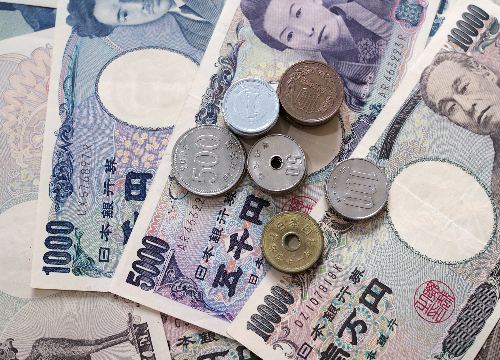
The GBP/JPY cross faces some selling pressure to around 191.85, snapping the three-day winning streak during the early European session on Friday. The winning of former defense minister Shigeru Ishiba in the Liberal Democratic Party's (LDP) leadership race run-off boosts the Japanese Yen (JPY) and creates a headwind for the cross. 

Japan’s ruling party holds its leadership election on Friday and the former defense minister Shigeru Ishiba won the LDP leadership race run-off. The Japanese Yen (JPY) gains traction in an immediate reaction to the outcome as Ishiba received 215 votes in the run-off while Sanae Takaich only got 194 votes. 

The Tokyo core Consumer Price Index (CPI), which excludes volatile fresh food costs, rose 2.0% in September from the previous year, the Statistics Bureau of Japan showed Friday. This figure matched the Bank of Japan’s (BoJ) target and the median market forecast. The headline Tokyo Consumer Price Index (CPI) increased 2.2% YoY in September, compared to a 2.6% rise in August. The Tokyo CPI inflation data indicates the Japanese economy is making progress in meeting the criteria for further interest rate hikes, which further boosts the JPY. 

On the other hand, the dovish comments from the Bank of England (BoE) Governor Andrew Bailey might weigh on the Pound Sterling (GBP). Bailey stated that the UK central bank should be able to lower interest rates gradually as it gains confidence that inflation will remain close to its 2% target. Economists expect the BoE to deliver one interest rate cut in any of its two policy meetings remaining this year. 


Japanese Yen FAQs


The Japanese Yen (JPY) is one of the world’s most traded currencies. Its value is broadly determined by the performance of the Japanese economy, but more specifically by the Bank of Japan’s policy, the differential between Japanese and US bond yields, or risk sentiment among traders, among other factors.


One of the Bank of Japan’s mandates is currency control, so its moves are key for the Yen. The BoJ has directly intervened in currency markets sometimes, generally to lower the value of the Yen, although it refrains from doing it often due to political concerns of its main trading partners. The current BoJ ultra-loose monetary policy, based on massive stimulus to the economy, has caused the Yen to depreciate against its main currency peers. This process has exacerbated more recently due to an increasing policy divergence between the Bank of Japan and other main central banks, which have opted to increase interest rates sharply to fight decades-high levels of inflation.


The BoJ’s stance of sticking to ultra-loose monetary policy has led to a widening policy divergence with other central banks, particularly with the US Federal Reserve. This supports a widening of the differential between the 10-year US and Japanese bonds, which favors the US Dollar against the Japanese Yen.


The Japanese Yen is often seen as a safe-haven investment. This means that in times of market stress, investors are more likely to put their money in the Japanese currency due to its supposed reliability and stability. Turbulent times are likely to strengthen the Yen’s value against other currencies seen as more risky to invest in.


Read more

  • Gold posts first weekly gain in three weeks — can $4,200 hold through CPI?
  • Gold Price Forecast: Gold Rebounds Above $4,200, Can Falling Oil Prices Drive Another Rally?
  • US September CPI preview: inflation set to hit 3.7% — will the Fed hike in December?
  • * The content presented above, whether from a third party or not, is considered as general advice only.  This article should not be construed as containing investment advice, investment recommendations, an offer of or solicitation for any transactions in financial instruments.

    goTop
    quote
    Related Articles
    placeholder
    Euro slides to a 17-month low as France's budget crisis spreads — can 1.12 hold?EUR/USD touched 1.1162 on 5 October, its weakest level in 17 months, as France's budget standoff pushed the 10-year OAT above 5% and the OAT-Bund spread to roughly 160bp — the widest since the 2011-12 eurozone debt crisis. The euro now trades near 1.1215 ahead of US jobless claims and a $22 billion 30-year Treasury auction. Here are the levels and the two scenarios to watch.
    Author  Irene Q.
    Oct 08, Thu
    EUR/USD touched 1.1162 on 5 October, its weakest level in 17 months, as France's budget standoff pushed the 10-year OAT above 5% and the OAT-Bund spread to roughly 160bp — the widest since the 2011-12 eurozone debt crisis. The euro now trades near 1.1215 ahead of US jobless claims and a $22 billion 30-year Treasury auction. Here are the levels and the two scenarios to watch.
    placeholder
    AUD/USD Price Forecast: Struggles to return to 0.7000 amid firm US DollarThe Australian Dollar (AUD) gives back its early gains after rising to near 0.6975 and turns marginally lower at around 0.6964 against the US Dollar (USD) during the European trading session on Tuesday.
    Author  FXStreet
    Oct 06, Tue
    The Australian Dollar (AUD) gives back its early gains after rising to near 0.6975 and turns marginally lower at around 0.6964 against the US Dollar (USD) during the European trading session on Tuesday.
    placeholder
    United States Dollar Index sits near March 2025 highs, above 102.00 ahead of US NFPThe US Dollar Index (DXY), which tracks the Greenback against a basket of currencies, attracts buyers for the fifth straight day and climbs back above the 102.00 mark during the Asian session on Friday.
    Author  FXStreet
    Oct 02, Fri
    The US Dollar Index (DXY), which tracks the Greenback against a basket of currencies, attracts buyers for the fifth straight day and climbs back above the 102.00 mark during the Asian session on Friday.
    placeholder
    【Daily Brief】The dollar ground higher for six days — and the AUD fell 2% in the very week the RBA hiked to a 15-year highThe dollar index held above 101 while the Australian dollar slid to a two-month low of 0.6976, a 2.02% six-session loss, even though the RBA raised rates to 4.60% and Australian CPI printed 4.0%. The yen is the only major currency gaining, ahead of Japan's monthly intervention tally at 7pm JST.
    Author  Irene Q.
    Sep 30, Wed
    The dollar index held above 101 while the Australian dollar slid to a two-month low of 0.6976, a 2.02% six-session loss, even though the RBA raised rates to 4.60% and Australian CPI printed 4.0%. The yen is the only major currency gaining, ahead of Japan's monthly intervention tally at 7pm JST.
    placeholder
    RBA set to hike interest rate to 4.60% in September as inflation remains elevatedThe Reserve Bank of Australia (RBA) is widely expected to raise the Official Cash Rate (OCR) by 25 basis points (bps) to 4.60% from 4.35% on Tuesday, after keeping rates unchanged at its previous two meetings
    Author  FXStreet
    Sep 29, Tue
    The Reserve Bank of Australia (RBA) is widely expected to raise the Official Cash Rate (OCR) by 25 basis points (bps) to 4.60% from 4.35% on Tuesday, after keeping rates unchanged at its previous two meetings

    Forex Related Articles

    • How to Identify Forex Scams? Warning Signs Every Trader Should Know
    • Stop Loss: Your Savior In The Market
    • Is Mitrade a Legit Broker? A Transparent Review of Security, Platform, and Trading Conditions (2026 Updated)
    • Is Mitrade Right for You? A Complete Guide on How to Start Trading CFDs in 5 Steps
    • 6 Leading ASIC-Regulated Forex Trading Platforms&Apps in Australia (2026 Update)
    • Forex Trading In Malaysia - Top 10 Forex Brokers for Malaysia: Regulated & Trader-Friendly Picks

    Click to view more