

Could a Yen Carry Trade Unwind Become the Next Black Swan Event?

 Trending Articles
- Silver Price Forecast: XAG/USD surges to record high above $56 amid bullish momentum
- Fed Chair Candidate: What Would a Hassett Nomination Mean for U.S. Stocks?
- After the Crypto Crash, Is an Altcoin Season Looming Post-Liquidation?
- The 2026 Fed Consensus Debate: Not Hassett, It’s About Whether Powell Stays or Goes
- U.S. PCE and 'Mini Jobs' Data in Focus as Salesforce (CRM) and Snowflake (SNOW) Report Earnings 【The week ahead】
- AUD/USD holds steady below 0.6550 as traders await Australian GDP release
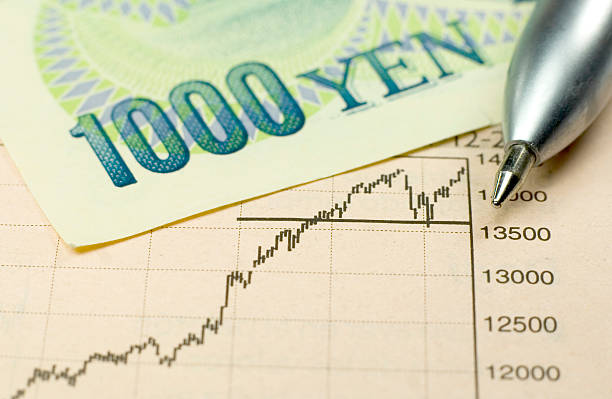
The Japanese yen has weakened significantly, trading past ¥153 per US dollar for the first time since February. This has reignited concerns over the yen carry trade and its potential to trigger a global financial upheaval.
The Bank of Japan faces a critical choice: raise interest rates to support a plunging yen, or maintain current policy and risk igniting market chaos. Experts warn that the fallout from policy shifts could trigger a crisis.
A Tipping Point for the Yen Carry Trade
The yen carry trade involves borrowing in low-interest yen and investing in higher-yielding assets abroad, such as US stocks or bonds, to capitalize on interest rate differentials. For decades, Japan’s near-zero rates have made the yen an attractive funding currency.
Notably, even minor adjustments by the Bank of Japan have caused market ripples. For example, in July 2024, the BoJ’s first rate hike in years propelled a 13% surge in the yen in one month.
However, the move set the stage for turmoil in August, when Japanese stocks suffered record losses. According to Reuters, the Nikkei Index posted its biggest single-day drop since Black Monday in 1987.
“After the Bank of Japan raised rates by a quarter-point earlier in 2024, they caught the markets off guard with a second hike not long after. That triggered a huge rally in the yen that at one point shot the VIX above the 60 level and ignited a roughly 10% correction in the S&P 500,” analyst Michael A. Gayed observed.
This volatility arises because carry trades are heavily leveraged. A sudden spike in yen value or a shift in rate differentials can force panicked unwinding. Forced sales then drive prices lower across markets.
Yet, today’s yen carry trade is much larger in scale, with estimates placing the trade’s size at up to $14 trillion—over three times the cryptocurrency market capitalization. This further raises the stakes as the yen continues to drop.
Analysts call this scenario a potential ‘Black Swan’—a rare, unpredictable event with global consequences. If the gap between Japanese and foreign rates narrows further, a rapid unwind could amplify panic, affecting bonds, stocks, and cryptocurrencies alike.
Policy Gridlock and Political Uncertainty
Meanwhile, the BoJ faces a stark policy dilemma under Governor Kazuo Ueda. Raising rates could stabilize the yen but risks crashing Japan’s bond market and spilling over to US equities, given the interconnected nature of global finance.
Maintaining low rates, however, invites currency collapse and hyperinflation. Political shifts have added to uncertainty.
Following Sanae Takaichi’s win in the LDP leadership race, investors reassessed monetary policy prospects. With her strong opposition to rate hikes, the odds of an October interest rate increase plunged from 68% to 25%.
Still, BoJ Governor Kazuo Ueda, the responsibility is growing. He must balance political pressure with maintaining the central bank’s independence.
Recent indicators underscore mounting risks. The Yen Carry Trade Indicator has displayed a bearish divergence, signaling potential reversal. Furthermore, macroeconomist Kashyap Sriram has suggested that without intervention, the yen could become the first major currency to collapse in modern times.
Thus, this might push the BoJ to raise rates to save the falling yen despite political pressures.
Ripple Effects on Crypto and Global Assets
Meanwhile, the consequences of a rate hike unwind extend well beyond stocks and bonds—cryptocurrencies are also at risk. In August 2024’s turmoil, Bitcoin (BTC) tumbled below $50,000.
“If a rate hike happens, investors will sell their global assets and convert them into yen to repay their debt. This will bring massive short-term selling pressure, similar to August 2024,” analyst Ted Pillows noted.
So, if the BoJ decides to hike rates again, Bitcoin could feel the impact in the coming months. While Q4 seasonality typically favors BTC performance, the macroeconomic shock from a yen-driven liquidity crunch could still override those trends.
Thus, the fate of global assets—from equities to Bitcoin—now hinges on Japan’s next move. Investors are bracing for potential aftershocks, as future yen policies carry major implications for anyone engaged in global capital markets.
Read more
* The content presented above, whether from a third party or not, is considered as general advice only. This article should not be construed as containing investment advice, investment recommendations, an offer of or solicitation for any transactions in financial instruments.


