


Oversupply is crushing oil prices, Can Even Fed Rate Cuts Save Prices?

 Trending Articles
- US-Iran Rift Persists, Will Gold Rise or Fall Next?
- Gold rallies on hopes for US-Iran talks and falling US Treasury yields
- Gold Price Forecast: XAU/USD opens lower around $4,450 on fears of widening Iran conflicts
- USD/JPY Hits 160.00 Mark, Will Japanese Government Intervene? Will the Currency’s Rally Be Contained?
- Seesaw Effect Continues. US Pre-Market Three Major Index Futures Weaken, Oil Prices Rise, Bitcoin Drops Below 68,000 Mark
- Brent: Forecast lifted with $150 risk – Societe Generale
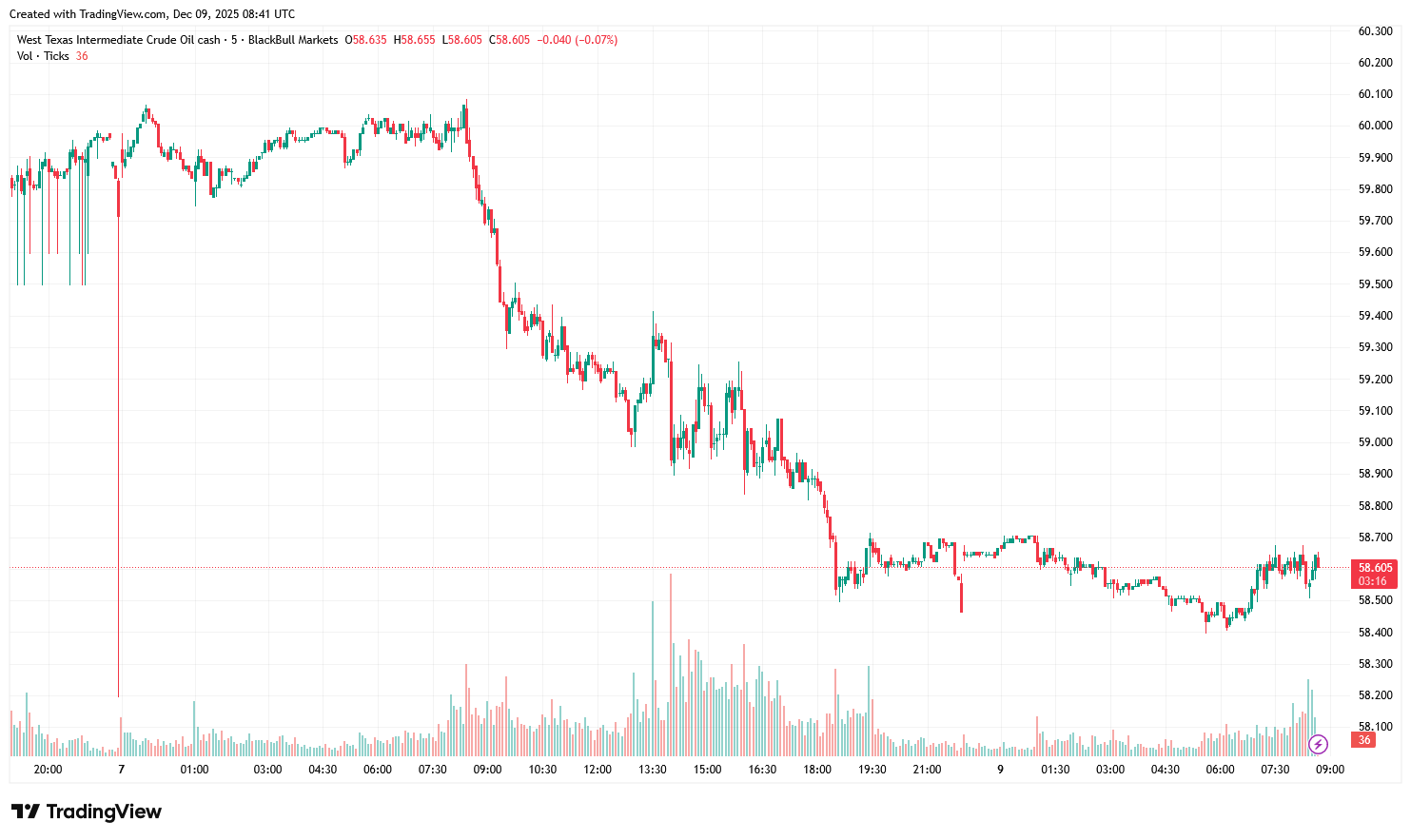
TradingKey - Global oil prices extended declines Tuesday, erasing last week's gains. WTI and Brent crude futures fell further, pressured by renewed Iraqi supply and Saudi price cuts, despite looming Federal Reserve rate cuts.
The market currently faces ample supply pressures stemming from the restart of a giant Iraqi oilfield and Saudi Arabia's proactive price adjustments. While expectations for a Federal Reserve rate cut persist, this may struggle to quickly reverse the downward trend driven by supply-demand imbalance in the short term.
Pressure from Iraq's Production Restart and Saudi Price Cuts
Recent signals of ample supply in the crude market are the primary drivers for lower oil prices. On Monday, Iraq's energy ministry confirmed that the West Qurna 2 oilfield, previously shut down due to a pipeline leak, has resumed production, with output returning to its normal level of approximately 460,000 barrels per day.
As one of the world's largest oilfields, news of its restart immediately pierced the market's fragile defenses, directly causing Brent and WTI crude futures to fall by more than $1.
Concurrently, Saudi Arabia last week lowered the official selling prices of its key crude grades to Asia to a five-year low. This, coupled with a continuous buildup in global crude inventories and weakening monthly spreads and refined product crack spreads, indicates a lack of support from both the supply and demand sides of the oil market.
Analysts at Ritterbusch highlighted a growing bearish sentiment regarding the global oil supply-demand balance, particularly in the U.S. market, where oversupply pressures are projected to extend into the first quarter of 2026.
Slow Progress in Ukraine Negotiations⟟
The progress of Russia-Ukraine peace negotiations remains the largest geopolitical uncertainty impacting oil prices, with its trajectory directly influencing the global energy market's supply landscape. Currently, talks are still slow, and issues concerning Kyiv's security guarantees and the status of Russian-occupied territories remain unresolved.
Ukrainian President Zelenskyy held talks in London on Monday with UK Prime Minister Keir Starmer, French President Emmanuel Macron, and German Chancellor Andrea Merz to discuss the latest draft peace plan aimed at ending the Ukraine crisis. However, Zelenskyy faces increasing pressure from the U.S. to accept significant territorial losses and other concessions outlined in a potential Trump peace plan.
Amidst this complex geopolitical maneuvering, the direction of oil price fluctuations hinges on the negotiation outcomes. Tim Waterer, Chief Market Analyst at KCM Trade, noted that if talks collapse, oil prices are expected to rise. Conversely, if negotiations progress and Russia restores its supply to global energy markets, prices are anticipated to fall.
Vivek Dhar, an analyst at Commonwealth Bank of Australia, further elaborated that a ceasefire agreement represents a major downside risk for current oil prices, while continued damage to Russian oil infrastructure poses a potential upside risk. However, Dhar emphasized that the market generally expects Russian oil exports to eventually recover by bypassing sanctions through various channels, making concerns about oversupply likely to materialize in the medium term.
Federal Reserve Rate Cut Expectations
The market widely anticipates the Federal Reserve to implement a 25-basis-point rate cut this week, with the implied probability from pricing at approximately 84%. Generally, in a lower interest rate environment, economic activity typically gains momentum, thereby boosting oil demand. This is the underlying logic for market expectations that a Fed rate cut could support oil prices.
However, some analysts remain cautious about the extent of its immediate impact on oil prices. In the short term, even if the Fed cuts rates as expected, the boosting effect on crude demand may not materialize quickly enough to reverse the current market landscape dominated by oversupply.
Overall, the current decline in oil prices primarily reflects the market's swift reaction to supply changes. However, the medium-term trend still hinges on whether the Federal Reserve's policy stimulus can effectively improve demand; otherwise, oil prices may continue to trade in a volatile and weakening pattern.
Read more
* The content presented above, whether from a third party or not, is considered as general advice only. This article should not be construed as containing investment advice, investment recommendations, an offer of or solicitation for any transactions in financial instruments.


