




Anthropic Opens at $111.5 in Debut, Up 34% From IPO Price, Market Cap at $1.45 Trillion
TradingKey - On November 19, Eastern Time, Claude model developer Anthropic (ANT) debuted on Nasdaq, opening at $111.50, up 34% from its offering price of $83, with its latest market cap reaching $1.45 trillion, currently ranking 11th in the U.S., below Tesla but ahead of Eli Lilly.
The company's offering price was $83, 6.4% above the high end of its original range of $70 to $78, corresponding to a fully diluted valuation of approximately $1.5 trillion.
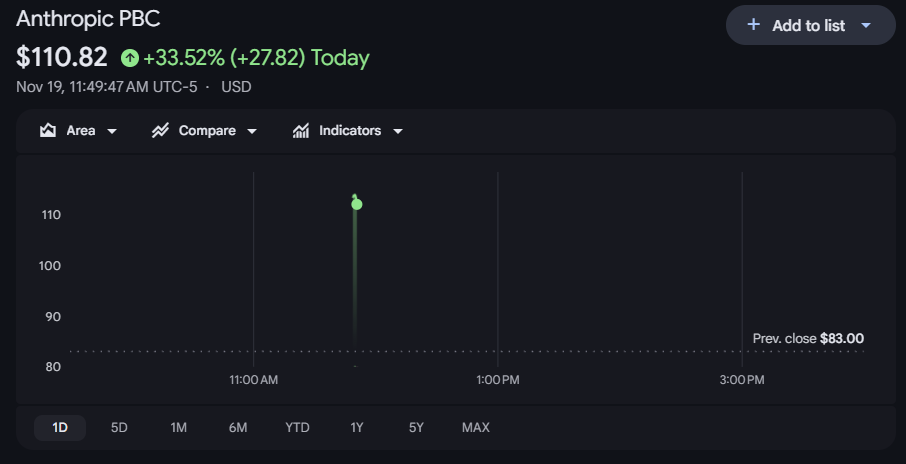
Anthropic stock price chart, Source: Google Finance
Strong subscription demand prompted Anthropic to both raise its offering price and expand the size of the share sale. According to the company's pricing announcement, the public offering was upsized from the originally planned 825 million shares to 980 million shares, an increase of approximately 18.8%. Approximately 97.6% were newly issued shares by the company, with the remainder sold by existing shareholders.
Based on the offering price, Anthropic's base public offering size was approximately $81.3 billion. Combined with a $26 billion concurrent private placement from seven tech companies including Google and Nvidia, the total transaction value reached approximately $107.3 billion. On this combined basis, the size is roughly 24% higher than the approximately $86.2 billion raised by SpaceX in June this year after including the over-allotment option.
Claude's pace of commercialization provides key support for its trillion-dollar valuation. In the first three quarters of 2026, Anthropic's revenue reached $33.24 billion, up approximately 1,206% year over year. However, costly short-term computing power caused its third-quarter adjusted operating margin to decline from 19% in the previous quarter to 15%, as revenue expansion has yet to yield a commensurate improvement in profitability.
First-day trading also faces potential supply beyond the offering. According to the prospectus, up to approximately 315 million shares held by employees and other holders can be sold starting from the first day of listing, equivalent to 32% of the base shares offered. The actual selling volume, combined with whether investors who did not receive full allocations chase the stock, will jointly influence post-opening performance.
Recommended Articles


