




Japanese Chip Sector Rebounds Across the Board as Kioxia, SoftBank Both Jump Over 5%
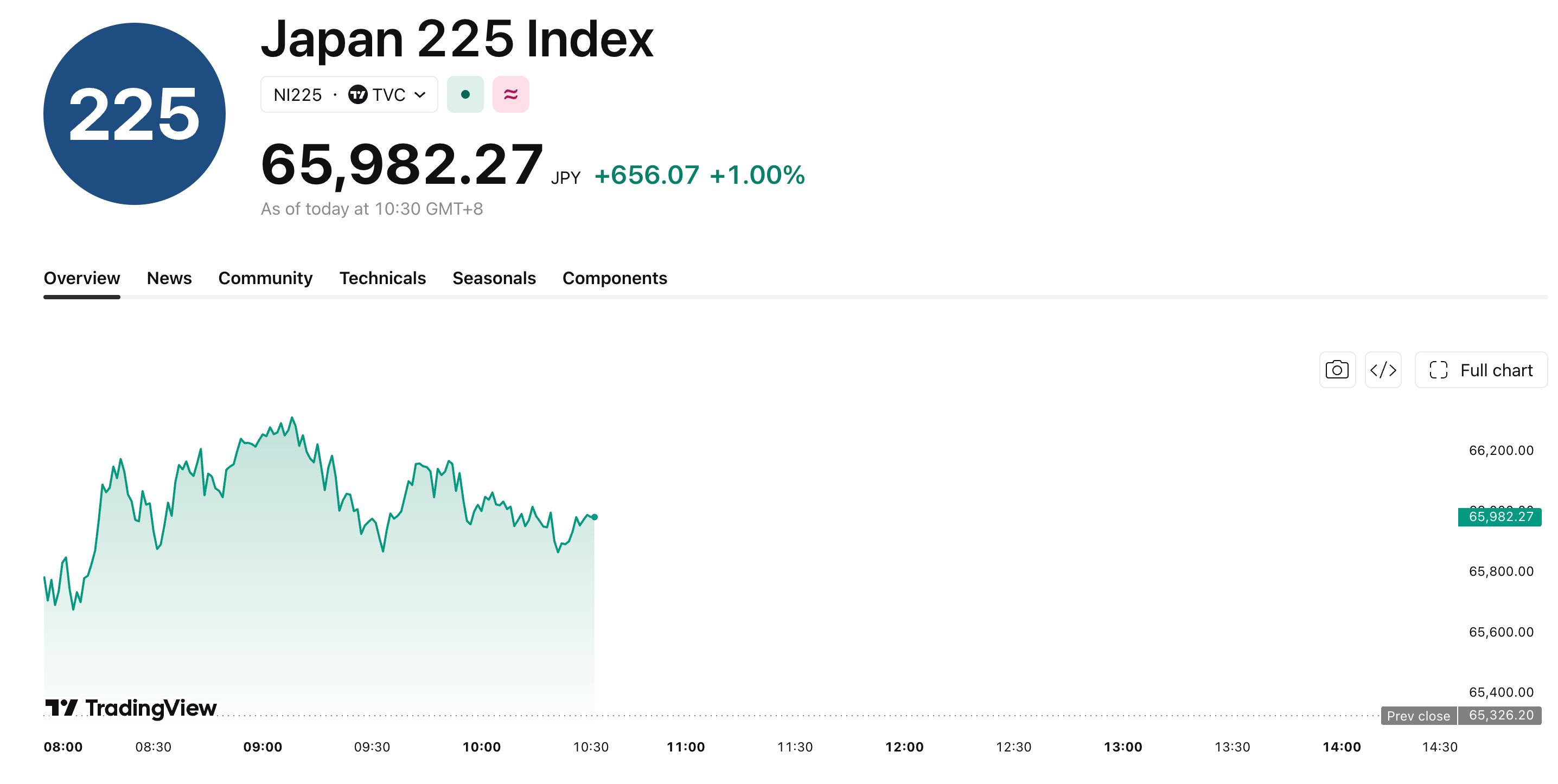
TradingKey - During the Asian trading session on August 20, the Nikkei 225 Index extended the rebounding sentiment from overnight U.S. stocks. As of press time, the Nikkei 225 Index rose 1% to 65,982.27 points, snapping a two-day sharp decline. The Topix simultaneously advanced 0.9% to 4,048.71 points. The previous day, the U.S. Department of the Treasury announced an expansion of the limit for long-term bond buybacks, providing sentiment support for the Tokyo market.
[Source: TradingView]
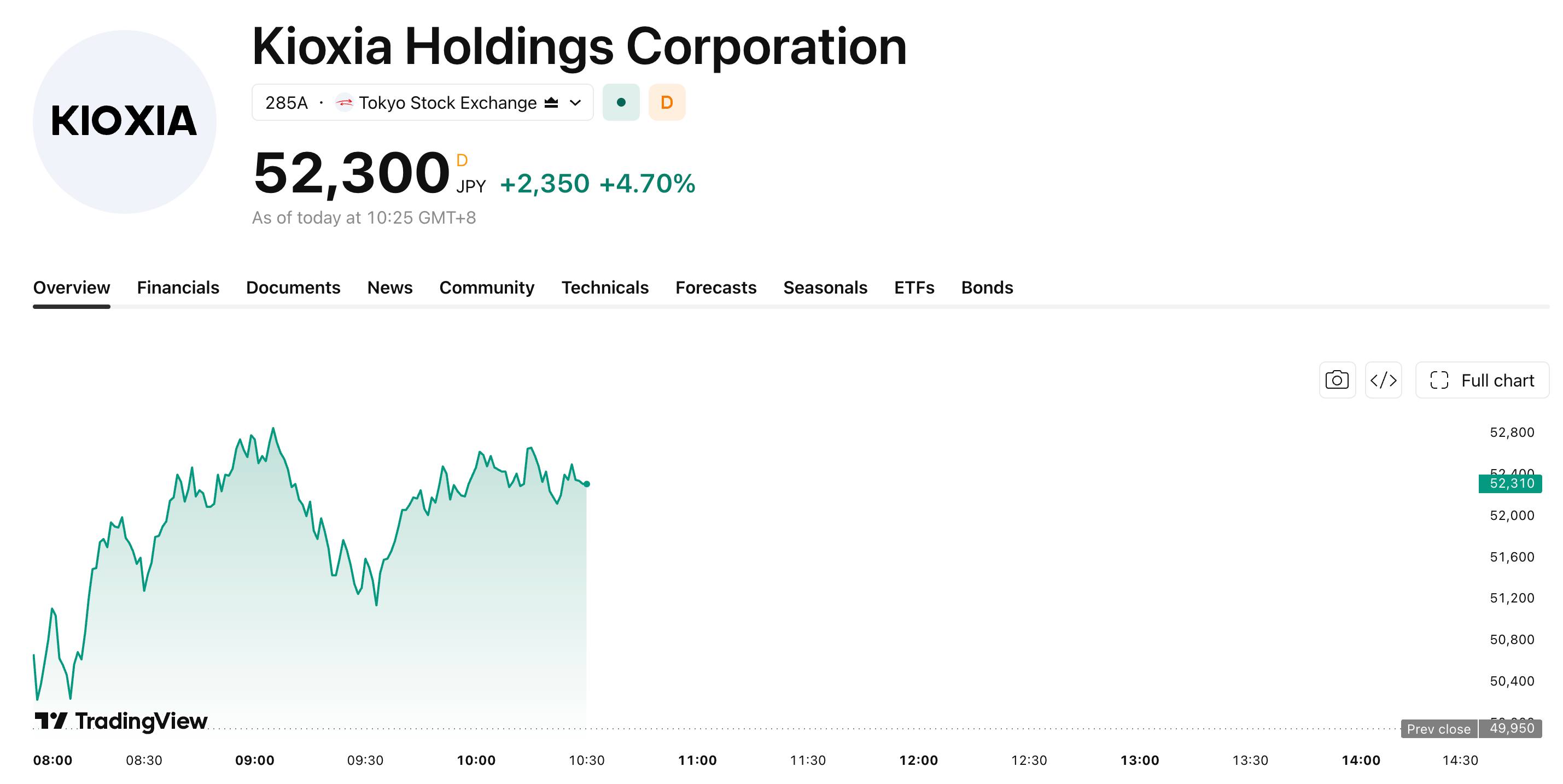
The semiconductor sector broadly recovered, with heavyweights that previously suffered sharp drops rebounding significantly. Kioxia Holdings once surged over 5% and, as of press time, was up 4.70% at 52,300 yen (approx. $330). Kioxia closed down over 12% in the previous trading day, dragged down mainly by spiking U.S. Treasury yields and a sharp drop in the Philadelphia Semiconductor Index overnight. Most analysts believe Kioxia's sell-off was driven more by technical factors such as overseas ETF selling and retail leveraged bets, while its fundamentals have not deteriorated.
[Source: TradingView]
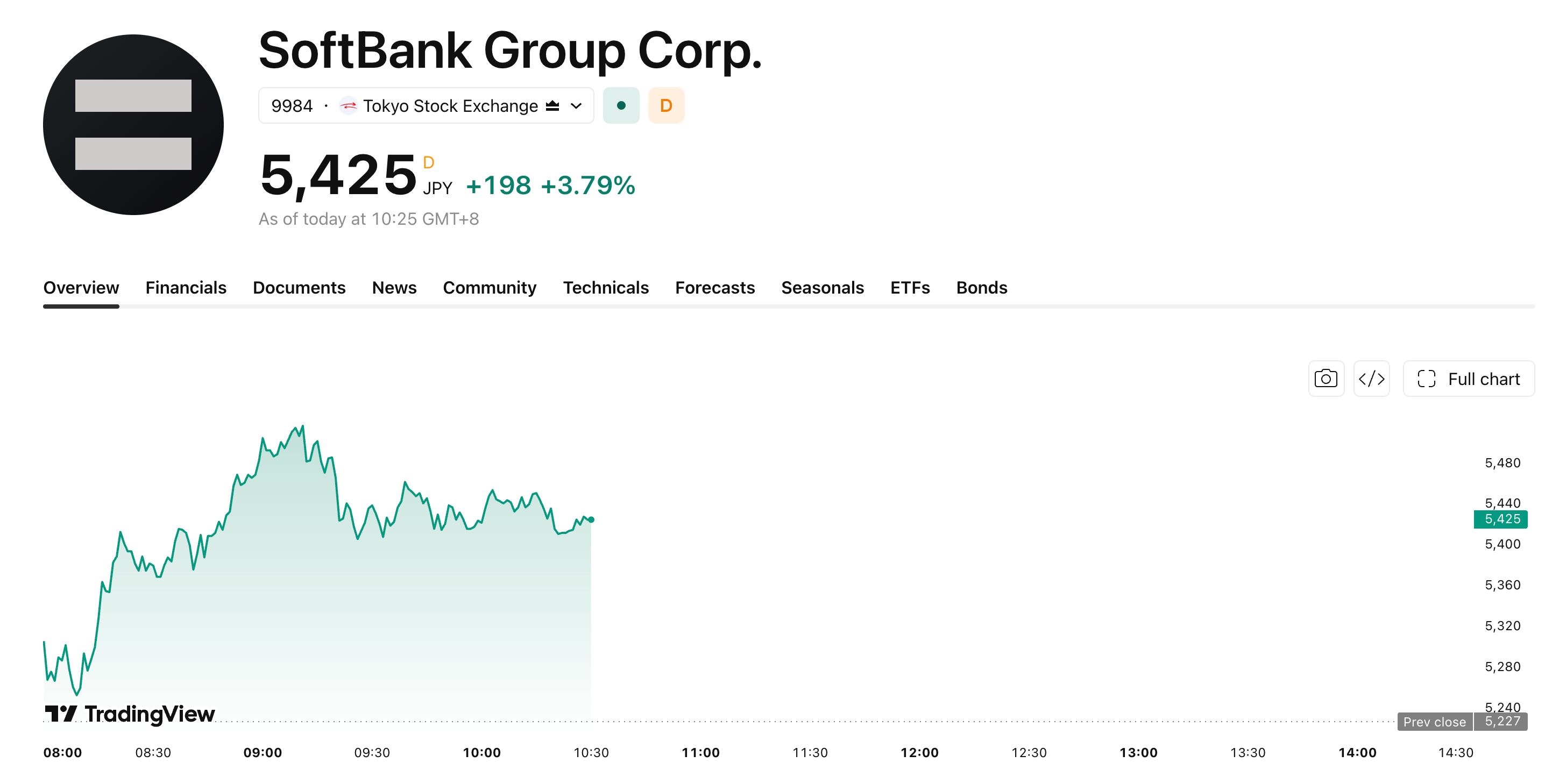
SoftBank Group rebounded in tandem, with SoftBank rising 3.79% as of press time. It once climbed over 5% in early trading, snapping a previous losing streak. The stock plunged over 10% on Wednesday due to market concerns over AI valuations and its bond financing plans.
[Source: TradingView]
On the macroeconomic front, Japan recorded a trade deficit of 634.5 billion yen in July. Exports for the month grew 23.2% year-on-year, while imports rose 27.8%, both exceeding market expectations. The wider import growth was mainly driven by rising crude oil import costs, while semiconductor exports surged 49.1% year-on-year, continuing to support export growth.
In forex, USD/JPY fell to near 158.20, with the yen appreciating by about 1 yen against the previous trading day, putting some pressure on export companies' earnings expectations.
Overall, the stabilization of the U.S. Treasury market resonated with the oversold rebound demand in the sector, leading to a strong recovery in chip stocks. However, geopolitical uncertainties and the direction of U.S. Treasury yields remain underlying concerns weighing on upside momentum.
Recommended Articles


