




ASML's EUV Machines Are Becoming More Valuable Than Ever. Here's Why.
Key Points
ASML could raise the prices of its low-NA EUV systems soon.
It can afford to do so because it’s monopolized that crucial chipmaking technology.
- These 10 stocks could mint the next wave of millionaires ›
ASML (NASDAQ: ASML) is the world's largest producer of lithography systems, which optically etch circuit patterns onto silicon wafers. It's also the only producer of extreme ultraviolet (EUV) lithography systems, which are required for manufacturing the world's most advanced chips.
All of the world's top foundries -- including TSMC (NYSE: TSM), Samsung, and Intel (NASDAQ: INTC) -- use ASML's EUV systems to produce their top-tier chips. That makes the Dutch company a linchpin of the global semiconductor market.
Missed Nvidia in 2009? This Rare Signal Is Flashing Again. In 2009, a "Double Down" signal flashed for a little-known chipmaker called Nvidia. For the first time in years, that same "Total Conviction" signal is flashing for a company 1/100th the size of Nvidia. Continue »
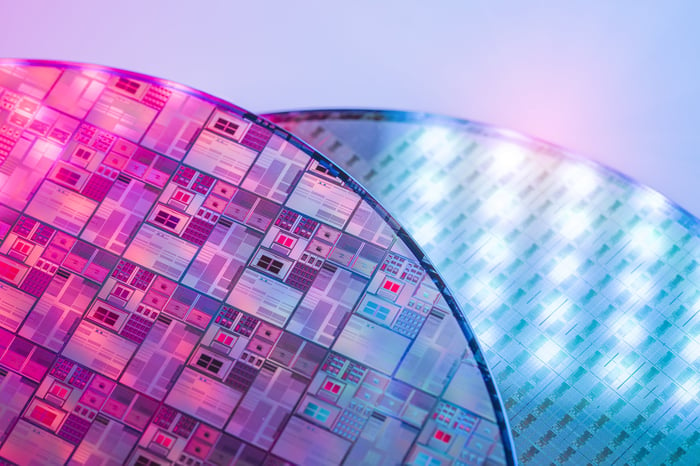
Image source: Getty Images.
ASML developed its EUV technology over the past three decades, giving it a wide moat, no meaningful competitors, and absolute pricing power. Its low-NA (0.33 numerical aperture) EUV systems, which are currently used to produce the world's smallest chips, cost approximately $200 million and require multiple planes to ship. Its newest high-NA (0.55 numerical aperture) systems, which can produce even smaller chips, cost more than $400 million.
TSMC plans to push ASML's low-NA systems to their limits before transitioning to high-NA systems in 2029. Intel has already begun using high-NA systems to produce its newest 18A chips, while Samsung plans to adopt them in 2027. TSMC's conservative strategy might help it cut costs, but ASML will reportedly raise its prices for low-NA EUV systems in the near future.
Why are ASML's systems getting more expensive?
By monopolizing the EUV market, ASML can easily raise its prices without losing customers. It also needs to keep its prices high to cover its high engineering and maintenance costs, as well as the premiums it pays to secure a steady supply of specialized optics and lasers.
ASML also notes that the rapid growth of the artificial intelligence (AI) market makes its EUV systems even more valuable to top fabs like TSMC. Since those productivity gains boost the fabs' profits, ASML can justify its price hikes on both older and newer lithography systems.
The global EUV market could grow at an 11.4% CAGR from 2026 to 2032, according to Research and Markets. ASML expects to generate revenue of €44 billion to €60 billion ($51 billion to $69 billion) by 2030. That would represent a 5-year CAGR of 6%-13% from 2025.
Should you buy ASML's stock today?
ASML isn't growing as rapidly as top AI chipmakers like Nvidia, but it's a more balanced way to profit from the semiconductor market's long-term growth. ASML controls a crucial link in the semiconductor supply chain, and it can repeatedly raise its EUV prices even if fabs need to absorb those costs or pass them on to their fabless customers.
Don’t miss this second chance at a potentially lucrative opportunity
Ever feel like you missed the boat in buying the most successful stocks? Then you’ll want to hear this.
On rare occasions, our expert team of analysts issues a “Double Down” stock recommendation for companies that they think are about to pop. If you’re worried you’ve already missed your chance to invest, now is the best time to buy before it’s too late. And the numbers speak for themselves:
- Nvidia: if you invested $1,000 when we doubled down in 2009, you’d have $493,435!*
- Apple: if you invested $1,000 when we doubled down in 2008, you’d have $64,457!*
- Netflix: if you invested $1,000 when we doubled down in 2004, you’d have $397,081!*
Right now, we’re issuing “Double Down” alerts for three incredible companies, available when you join Stock Advisor, and there may not be another chance like this anytime soon.
See the 3 stocks »
*Stock Advisor returns as of July 30, 2026.
Leo Sun has positions in ASML. The Motley Fool has positions in and recommends ASML, Intel, Nvidia, and Taiwan Semiconductor Manufacturing. The Motley Fool has a disclosure policy.
Recommended Articles


