




Should You Buy SpaceX After Its IPO? Here Are 3 Lessons to Heed from Warren Buffett
Key Points
IPOs are usually structured to benefit the seller.
Price and value aren't the same thing.
Understand the business -- including the risks.
- 10 stocks we like better than Space Exploration Technologies ›
SpaceX (NASDAQ: SPCX) has launched. And it was a doozy. The space technology pioneer went public on Friday and instantly became the seventh-largest company traded on a U.S. stock exchange.
Should investors jump on the SpaceX bandwagon after its record-setting IPO? Here are three lessons to heed from Warren Buffett.
Will AI create the world's first trillionaire? Our team just released a report on the one little-known company, called an "Indispensable Monopoly" providing the critical technology Nvidia and Intel both need. Continue »
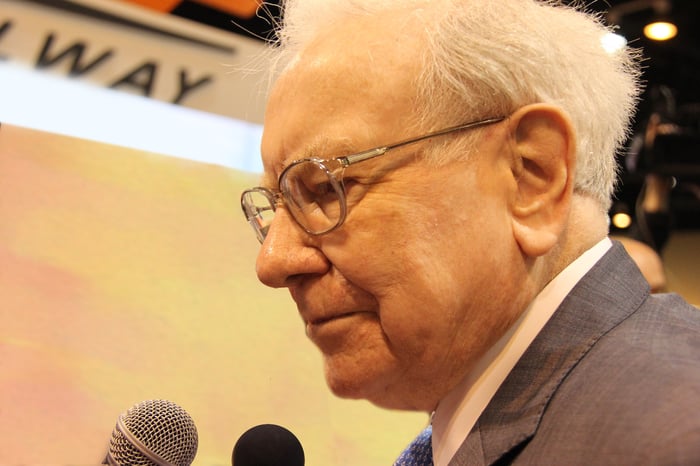
Image source: The Motley Fool.
1. IPOs are usually structured to benefit the seller
Buffett stated at Berkshire Hathaway's (NYSE: BRKA) (NYSE: BRKB) annual shareholder meeting in 2004 that IPOs "come when the seller thinks that the market is ready for them. And they come with an informed seller thinking it's a pretty good time to go public." The legendary investor also said that sellers "don't pick a time necessarily that's good for you" as a retail investor.
His mentor, Benjamin Graham, summed things up with even stronger words. The Intelligent Investor author quipped, "Weighing the evidence objectively, the intelligent investor should conclude that IPO does not stand only for 'initial public offering.' More accurately, it is also shorthand for: It's Probably Overpriced, Imaginary Profits Only, Insiders' Private Opportunity, or Idiotic, Preposterous, and Outrageous."
Whether or not you fully agree with Graham's take, his reference to "insiders' private opportunity" aligns with Buffett's view. IPOs are almost always structured to maximize benefits for the sellers. It's not just about the price, either. For example, Elon Musk still holds roughly 82.4% of SpaceX's voting power. Other shareholders have virtually no say in what the company does.
2. Price and value aren't the same thing
One of Buffett's most famous quotes is: "Price is what you pay. Value is what you get." Before buying SpaceX stock, investors should first determine if they're getting their money's worth. Many analysts would argue that they won't at the current price.
SpaceX generated revenue of $18.7 billion in 2025. Its market cap at the end of its IPO day was $2.1 trillion. That translates to a price-to-sales ratio of over 112. To say that the stock is priced for perfection is an understatement.
Morningstar (NASDAQ: MORN) used a probability-weighted discounted cash flow (DCF) analysis to peg SpaceX's real valuation at $63 per share. That's roughly 42% of the company's current IPO price. Unsurprisingly, Morningstar concluded that SpaceX is "significantly overvalued."
Morningstar did identify one "moonshot" scenario for SpaceX's AI business that would give the stock a value of $154 per share. In this highly optimistic scenario, the company would overcome all engineering challenges and rapidly build data centers orbiting the Earth. But Morningstar calculated only a 7% probability of this happening. In other words, the changes are more than 14-to-1 against the sole scenario in which SpaceX might be worth close to its current share price.
It's fair to conclude that both Buffett and Graham would not like those odds.
3. Understand the business -- including the risks
Buffett has frequently emphasized the importance of investing within your "circle of competence." He stated in no uncertain terms, "Never invest in a business you cannot understand."
This could present a problem for many investors with SpaceX. Why? It isn't only a space stock. The merger with another Musk business, xAI, complicates matters. Importantly, $22.7 trillion of the $28.5 trillion total addressable market SpaceX believes it's targeting (which the company said is "the largest in human history") stems from enterprise applications.
Furthermore, SpaceX's business could become even more convoluted. The company's revised S-1 filing warned that it "may issue a significant amount of equity in connection with future transactions." This fueled speculation that Musk could push to combine Tesla (NASDAQ: TSLA) with SpaceX.
The complexity makes it more difficult for investors to project future earnings. As Buffett explained in his 2013 letter to Berkshire Hathaway shareholders:
We first have to decide whether we can sensibly estimate an earnings range for five years out, or more. If the answer is yes, we will buy the stock (or business) if it sells at a reasonable price in relation to the bottom boundary of our estimate. If, however, we lack the ability to estimate future earnings– which is usually the case– we simply move on to other prospects.
Choose the pitches you swing at
These three lessons from Buffett point to the same conclusion about buying SpaceX at its current valuation: Investors should beware.
The "Oracle of Omaha" gave another piece of great advice, stating, "The trick in investing is just to sit there and watch pitch after pitch go by and wait for the one right in your sweet spot. And if people are yelling, 'Swing, you bum!', ignore them."
It's easy to get caught up in the excitement of a historic IPO such as SpaceX's. But the investors who wisely choose the pitches they swing at are more likely to make money over the long run.
Should you buy stock in Space Exploration Technologies right now?
Before you buy stock in Space Exploration Technologies, consider this:
The Motley Fool Stock Advisor analyst team just identified what they believe are the 10 best stocks for investors to buy now… and Space Exploration Technologies wasn’t one of them. The 10 stocks that made the cut could produce monster returns in the coming years.
Consider when Netflix made this list on December 17, 2004... if you invested $1,000 at the time of our recommendation, you’d have $433,268!* Or when Nvidia made this list on April 15, 2005... if you invested $1,000 at the time of our recommendation, you’d have $1,259,391!*
Now, it’s worth noting Stock Advisor’s total average return is 935% — a market-crushing outperformance compared to 207% for the S&P 500. Don't miss the latest top 10 list, available with Stock Advisor, and join an investing community built by individual investors for individual investors.
See the 10 stocks »
*Stock Advisor returns as of June 16, 2026.
Keith Speights has positions in Berkshire Hathaway. The Motley Fool has positions in and recommends Berkshire Hathaway and Tesla. The Motley Fool has a disclosure policy.
Recommended Articles


