




Nikkei 225 Tops 70,000 for First Time Intraday; BOJ Raises Rates to 1% in 31-Year High
TradingKey - During the Asian trading session on June 16, the Nikkei 225 index broke through the 70,000-point psychological level for the first time in history, marking its highest record since the burst of the Japanese asset bubble in 1989.
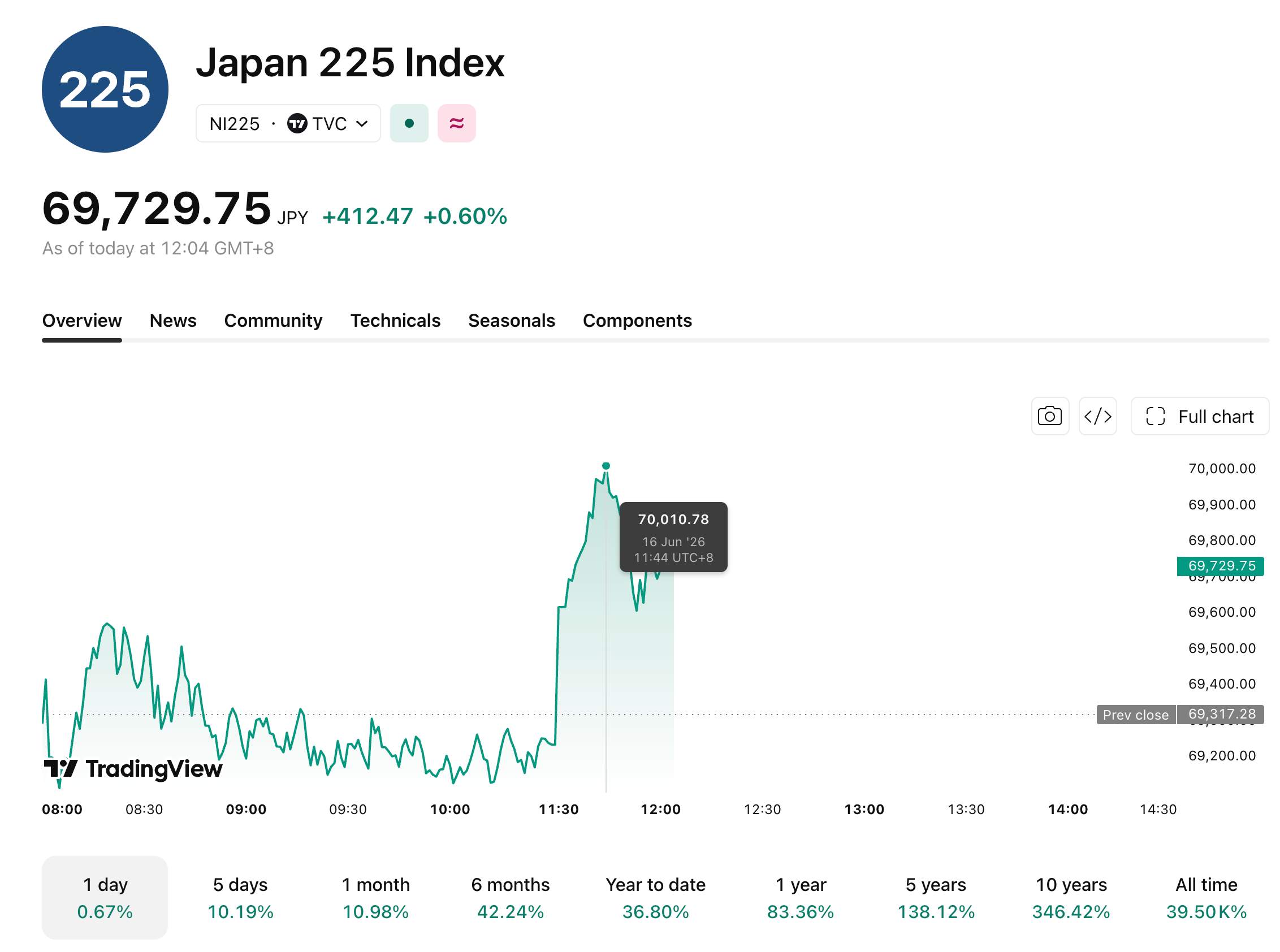
[Source: TradingView]
The immediate catalyst for this rally was a major breakthrough in U.S.-Iran geopolitical tensions. On June 14, U.S. President Trump announced on social media that the U.S. and Iran had reached a framework agreement to end military conflict, and both sides are set to officially sign a memorandum of understanding on a ceasefire in Switzerland on June 19.
Boosted by this, the Nikkei 225 index surged more than 3,000 points intraday on June 15, closing at 69,317.50, a 4.99% gain. This marked the first time the index closed above the 69,000 mark, paving the way for it to conquer 70,000 the following day.
Analysts pointed out that the deep-seated drivers of the sharp rise in Japanese stocks include the AI boom driving the semiconductor sector, large-scale inflows of foreign capital, and improved earnings of Japanese companies. Goldman Sachs ( GS) data shows that foreign investors have cumulatively poured approximately 16 trillion yen into the Japanese stock market since April 2025. Citigroup ( C) expects the Nikkei 225 index to potentially break 70,000 before the end of the year, with a projected peak of 72,000.
The Bank of Japan concluded its two-day policy meeting today, announcing a 25-basis-point interest rate hike to 1%. This marks the first return to the 1% rate level since 1995, a 31-year high. Market analysis suggests that Japan is gradually emerging from long-term deflation, as a virtuous cycle of wage growth and consumption recovery begins to take shape, providing fundamental support for the long-term bullish outlook of the stock market.
Recommended Articles


