




Could Eli Lilly's Next Weight Loss Drug Waylay Wegovy -- and Even Zap Zepbound?
Key Points
After stealing the show with Zepbound, Eli Lilly could further gain an edge in the market with its latest weight loss treatment, retatrutide.
In recent clinical trials, the drug has demonstrated that it can serve as a stronger diabetes and weight loss treatment than its predecessors, not to mention the competition.
Continued dominance in this space could help Eli Lilly shares sustain and grow their already premium valuation.
- 10 stocks we like better than Eli Lilly ›
After losing its market edge to Eli Lilly (NYSE: LLY) despite its first-mover advantage in weight-loss drugs, Novo Nordisk is trying to close the gap. The maker of the semaglutide GLP-1 weight loss drug Wegovy launched a pill-based version at the start of this year. Still, much suggests that Eli Lilly could still stay on top.
Last quarter, sales of its anti-obesity drug, Zepbound were up 80% from a year ago. The upcoming launch of newer, more powerful products could further cement its dominance. This will likely drive continued strong performance for the popular pharmaceutical stock.
Will AI create the world's first trillionaire? Our team just released a report on the one little-known company, called an "Indispensable Monopoly" providing the critical technology Nvidia and Intel both need. Continue »
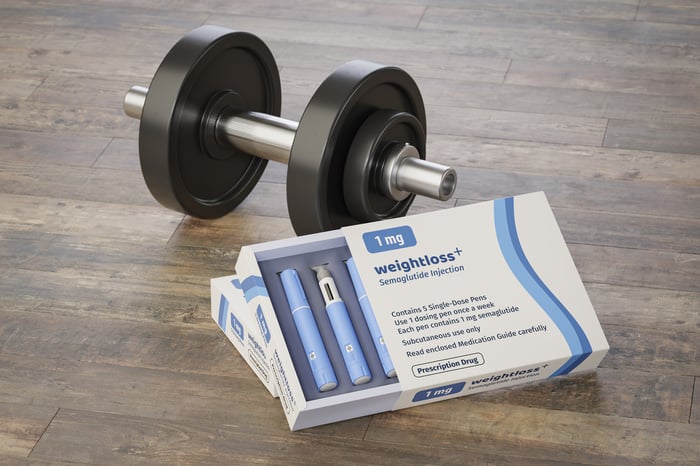
Image source: Getty Images.
Eli Lilly and its gambit to stay on top of the GLP-1 heap
By launching a pill-based version of Wegovy, Novo Nordisk is capitalizing on patients' preference for oral treatments over injectables.
However, Eli Lilly launched its own weight loss pill, orforglipron, marketed as Foundayo, in April. And the company has another drug candidate, retatrutide, that targets GLP-1 and GIP receptors, as well as glucagon receptors.
That's significant given Eli Lilly's other therapies. A key reason for the success of its Zepbound drug is its status as a "dual agonist." Wegovy targets only GLP-1 receptors, whereas tirzepatide (aka Zebound) targets both GLP-1 and GIP receptors, leading to greater overall weight loss. With retatrutide, Eli Lilly aims to bring to market a "triple agonist," targeting GLP-1 and GIP receptors, as well as glucagon receptors. Meanwhile, Novo Nordisk is still developing its own "dual agonist" product.
What this means for the stock
In March, Eli Lilly unveiled promising phase 3 clinical trial data for retatrutide. In this trial, the drug resulted in significant reductions in A1C and weight loss among participants.
Retatrutide remains months, if not a year, away from launch, but bullishness about its high commercial potential could help keep Eli Lilly at elevated prices. Trading for over $1,000 per share, the stock may seem pricey at over 26 times forward earnings. However, if Eli Lilly's follow-up products help it maintain its edge, the market will continue to consider it one of the top GLP-1 stocks, enabling it to sustain a premium valuation.
Should you buy stock in Eli Lilly right now?
Before you buy stock in Eli Lilly, consider this:
The Motley Fool Stock Advisor analyst team just identified what they believe are the 10 best stocks for investors to buy now… and Eli Lilly wasn’t one of them. The 10 stocks that made the cut could produce monster returns in the coming years.
Consider when Netflix made this list on December 17, 2004... if you invested $1,000 at the time of our recommendation, you’d have $469,293!* Or when Nvidia made this list on April 15, 2005... if you invested $1,000 at the time of our recommendation, you’d have $1,381,332!*
Now, it’s worth noting Stock Advisor’s total average return is 993% — a market-crushing outperformance compared to 207% for the S&P 500. Don't miss the latest top 10 list, available with Stock Advisor, and join an investing community built by individual investors for individual investors.
See the 10 stocks »
*Stock Advisor returns as of May 17, 2026.
Thomas Niel has no position in any of the stocks mentioned. The Motley Fool has positions in and recommends Eli Lilly. The Motley Fool recommends Novo Nordisk. The Motley Fool has a disclosure policy.
Recommended Articles


