




EUR/USD: How to Trade the World's Most Liquid Currency Pair

For Australian retail investors looking to trade foreign exchange, the sheer volume of available markets can be overwhelming. However, most traders begin with one specific asset: the EUR/USD.
Because it accounts for the highest number of daily transactions globally, the EUR/USD is widely considered one of the best forex pairs for beginners. The deep liquidity in this market ensures reliable order execution and tight, predictable spreads, which keep trading costs low for retail accounts.
Rather than exchanging physical cash, modern investors use Contracts for Difference (CFDs) to speculate on the exchange rate between the Euro and the United States Dollar. This approach allows traders to take positions whether the market is rising or falling.
This guide outlines the practical macroeconomic factors that move the EUR/USD, compares it to local Australian alternatives, and details the exact steps required to execute trades efficiently.
Why Trade EUR/USD?
The EUR/USD market offers distinct structural advantages for retail traders, largely driven by its high transaction volumes. As the two largest economic regions globally, the Eurozone and the United States generate consistent daily currency turnover.
For retail investors, this volume provides three specific trading benefits:
Deep Liquidity and Reliable Execution: High liquidity ensures a constant supply of buyers and sellers at any given price point. This allows traders to enter and exit positions rapidly, minimizing the risk of slippage, where an order executes at a different price than requested due to a lack of available buyers and sellers within a tight price range.
Cost Efficiency Through Tight Spreads: In CFD trading, the primary operational cost is the spread, representing the difference between the bid and ask prices. Because the EUR/USD is one of the most popular forex pairs, trading platforms can offer extremely narrow spreads. This cost efficiency makes the pair highly suitable for short-term trading strategies.
Predictable Volatility: While all financial markets carry inherent risk, the significant volume of the EUR/USD mitigates erratic price fluctuations compared to minor or exotic currency pairs. Price movements generally align with scheduled macroeconomic data releases rather than low-liquidity anomalies.
Traders who execute frequent, short-term positions often look to the EUR/USD market to help minimize operational costs. The combination of narrow spreads and reliable order execution reduces trading delays and pricing variations, offering a more predictable environment for managing risk across active strategies.
“Trade EUR/USD with an ASIC-regulated broker. Fast AUD funding via PayID. ”
EUR/USD vs. AUD/USD: The Global Benchmark Versus the Local Currency
For many Australian investors, the local currency often serves as the initial entry point into foreign exchange. Because domestic financial news heavily covers the Reserve Bank of Australia (RBA) and local export data, trading the AUD/USD feels familiar.
However, when analyzing the EUR/USD vs AUD/USD, traders are comparing two distinctly different market profiles. The Australian Dollar is widely classified as a commodity-linked, "risk-on" currency. Its value is closely tied to global growth expectations, specifically Asian economic performance and iron ore prices, making it highly sensitive to rapid shifts in market sentiment.
Conversely, the EUR/USD functions as a global economic baseline. As the pairing of the world's two major reserve currencies, it provides a highly liquid trading environment driven by broad macroeconomic data and central bank policies, rather than localized commodity prices.
Core Differences at a Glance
The table below outlines the distinct characteristics investors must consider when choosing between these two markets.
Traders should align their chosen currency pair with their specific analytical approach. The EUR/USD is highly effective for technical trading strategies based on scheduled interest rate announcements and broad market data, while the AUD/USD is better suited for strategies that monitor commodity market fluctuations and regional economic shifts.
What Impacts the EUR/USD in 2026?
Understanding what moves the EUR/USD comes down to tracking the relative economic health of the Eurozone versus the United States. Rather than analyzing every global news event, active traders focus their attention on a few specific drivers that consistently influence this market.
Central Bank Decisions: The interest rate policies set by the US Federal Reserve (the Fed) and the European Central Bank (ECB) remain the primary focus. When one central bank adjusts rates while the other maintains current levels, capital typically moves toward the region offering the higher yield. Traders monitor official statements from both institutions to assess broad market direction.
Scheduled Economic Data: Macroeconomic reports provide the factual basis for short-term price movements. Scheduled releases, such as the US Non-Farm Payrolls (NFP) and regional Consumer Price Index (CPI) figures, give investors a direct look at employment and inflation. These specific reports routinely trigger immediate adjustments in the EUR/USD exchange rate.
Energy and Geopolitics: Because the Eurozone imports a significant portion of its energy, the Euro is highly sensitive to global energy costs. Shifts in oil markets or ongoing geopolitical issues can alter the Euro's valuation, independent of domestic US data.
Ultimately, active traders often incorporate an integrated economic calendar into their daily routines rather than reacting to news events after the fact. Identifying the exact times for major central bank announcements and scheduled inflation reports helps investors anticipate volatility and plan their entry and exit points accordingly.
When is the Best Time to Trade EUR/USD in Australia?
While the foreign exchange market operates 24 hours a day during the trading week, the EUR/USD does not present the same trading conditions around the clock. For retail traders, identifying the periods of maximum liquidity is essential for managing execution costs and capturing clear price trends.
The Session Overlap: The highest transaction volume for the EUR/USD occurs when the two largest financial centers - London and New York - are open simultaneously. During this overlap, institutional capital from both Europe and North America enters the market, resulting in the tightest spreads and highest daily volatility.
Australian Time Conversion: For Australian investors, this peak liquidity window translates to the late evening hours. The London and New York overlap typically occurs between 10:00 PM and 2:00 AM Australian Eastern Standard Time (AEST), adjusting slightly to 11:00 PM to 3:00 AM during daylight savings (AEDT).
Daytime Trading Conditions: Conversely, during Australian daytime hours (the Sydney and Tokyo sessions), European and US markets are closed. Volume for the EUR/USD drops significantly during this period, which often leads to flat price action and slightly wider spreads compared to peak hours.
Traders operating from Australia should ideally schedule their EUR/USD market analysis and order execution for the late evening. By aligning trading activity with the London-New York overlap, investors access the most favorable pricing conditions and the highest probability of sustained directional price movements.
Start Trading in 3 Simple Steps
When you are ready to move from researching the markets to actively managing your own positions, getting started is straightforward. Setting up your access to the foreign exchange market requires just a few practical steps:
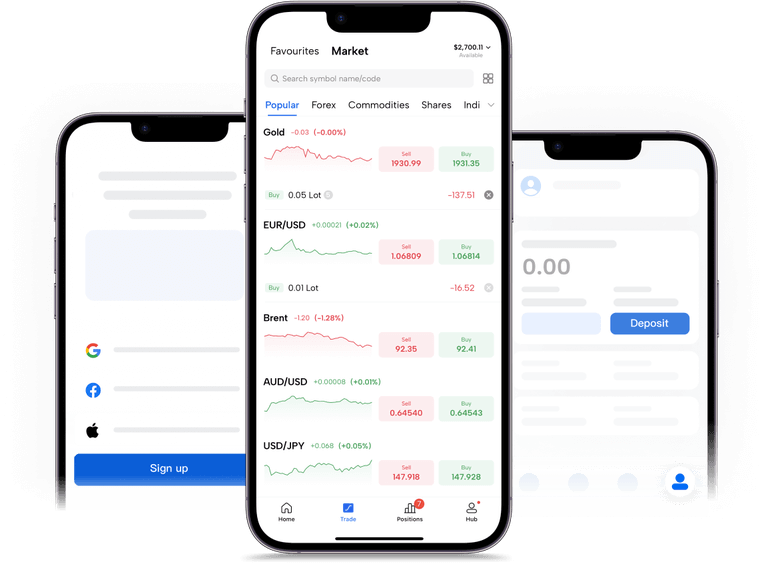
Open an Account: Register manually via the Mitrade homepage, or use the fast sign-up process by linking your existing Google or Facebook credentials.
Fund Your Account: Deposit your initial margin instantly using Australian payment methods like POLi or Visa/Mastercard. The minimum deposit requirement is $100.
Trade CFDs: Access the WebTrader platform, analyze the EUR/USD, establish your required stop-loss parameters, and execute your long or short position.
Put your analysis into practice, open your account today, and start trading the EUR/USD with Mitrade.


1. Is it legal to trade EUR/USD CFDs in Australia?
Yes. Trading foreign exchange CFDs is legal in Australia, provided investors use a broker holding an active Australian Financial Services License (AFSL). Platforms such as Mitrade operate strictly under ASIC regulation, ensuring compliance with Australian financial laws and mandatory client fund segregation.
2. What leverage is available for the EUR/USD?
Under current Australian Securities and Investments Commission (ASIC) regulations, the maximum leverage available to retail clients trading major forex pairs, including the EUR/USD, is 30:1. This structure allows traders to control a position value up to 30 times larger than their initial required margin.
3. Are profits on the EUR/USD subject to Australian tax?
Yes. The Australian Taxation Office (ATO) generally assesses CFD trading as a revenue-generating activity. Consequently, profits are classified as ordinary income and taxed at the individual's marginal tax rate rather than under capital gains rules. Investors should consult a registered tax agent to verify the exact reporting requirements for their specific circumstances.
Disclaimer: The content presented above, whether from a third party or not, is considered as general advice only. CFD trading involves significant risk of loss. Past performance does not guarantee future results. This article serves informational purposes only and does not constitute financial advice. Consider your risk tolerance before trading.


