




Have AST SpaceMobile's Ambitious 2026 Launch Plans Hit a Roadblock?
Key Points
AST aimed to deploy 45 to 60 satellites by the end of 2026 to provide continuous coverage to select markets.
It faced a setback when its BlueBird 7 satellite failed its launch on Blue Origin's New Glenn rocket.
However, AST SpaceMobile will continue to launch satellites with SpaceX's Falcon 9.
- 10 stocks we like better than AST SpaceMobile ›
AST SpaceMobile (NASDAQ: ASTS) is an up-and-coming satellite company aiming to build a mobile network from space, but its plans hit a snag in April following the unsuccessful launch of its BlueBird 7 satellite.
The space company entered 2026 with ambitions to have up to 60 satellites in orbit by the end of the year, enough to provide continuous coverage for its target markets. However, its recent setback may put those plans on the back burner. Here's everything investors need to know.
Will AI create the world's first trillionaire? Our team just released a report on the one little-known company, called an "Indispensable Monopoly" providing the critical technology Nvidia and Intel both need. Continue »
AST SpaceMobile entered the year with ambitious launch plans
Technological advancements and significantly cheaper launch services have made low-Earth-orbit satellites highly appealing to carriers. AST SpaceMobile provides direct-to-cellular broadband that can connect unmodified smartphones, essentially acting as a cellphone tower in space. In recent years, the company has entered into agreements with top carriers, including AT&T, Verizon Communications, and Vodafone, to eliminate global dead zones.
AST SpaceMobile has recently transitioned from early-stage research and development and dealmaking to satellite launches as it seeks to fulfill its contracts and provide customers with continuous coverage. Coming into this year, the company had ambitious plans to deploy 45 to 60 satellites to provide coverage to its high-priority markets.
Its recent launch with Blue Origin didn't go to plan
As part of its deployment plan, AST has deals with SpaceX and Jeff Bezos-backed Blue Origin to launch its satellites into space. Last month was its first commercial launch with Blue Origin's New Glenn launch vehicle, during which AST SpaceMobile attempted to deploy BlueBird 7, its seventh satellite, into orbit. However, the launch didn't go as planned when the New Glenn deployed the satellite too low in orbit. As a result, the satellite has been de-orbited and is essentially a loss, which AST SpaceMobile says is covered by insurance.
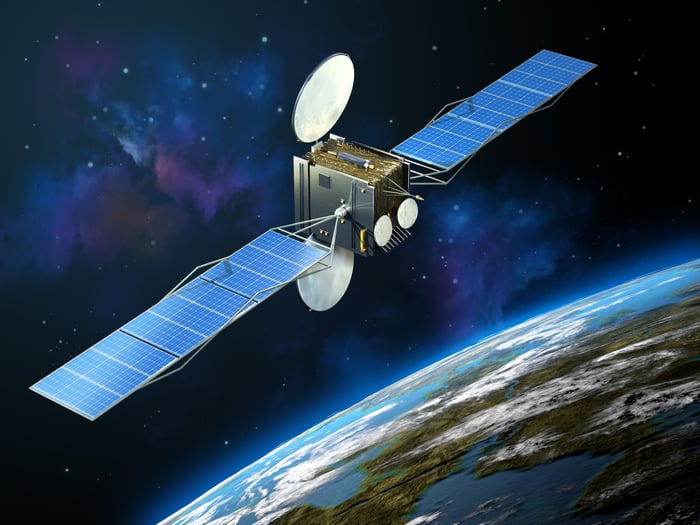
Image source: Getty Images.
The FAA has grounded the New Glenn rocket pending an investigation into the failure of one of its upper-stage engines, a process that could stretch on for months. While AST lost a satellite, the real setback is in the time lost. That's because the New Glenn launch vehicle can carry up to eight satellites at a time. In contrast, SpaceX's Falcon 9, which AST has used for previous launches, can only carry three to four satellites at a time.
The grounding of New Glenn puts pressure on AST's goal of 45 to 60 satellites. To reach this goal, AST would need approximately 13 Falcon 9 launches over eight months, which could prove more difficult. According to the company, it still expects to launch one orbital mission every one to two months. However, the longer New Glenn remains grounded, the less likely it is to reach its goal of 45 satellites.
Tim Farrar, satellite analyst and president of TMF Associates, has been skeptical for some time that AST SpaceMobile will meet its ambitious goal and thinks it will ultimately launch 21 to 42 satellites this year.
What's next for AST SpaceMobile investors
The recent failed launch shows that diversifying away from SpaceX in the near term could be difficult. Not only is New Glenn grounded, but Rocket Lab, which has a medium-lift rocket of its own (Neutron), has recently pushed back its launch plans to later this year. Until Blue Origin or Rocket Lab proves reliable, AST remains heavily dependent on its main competitor's launch vehicle.
For investors, it means a longer path to reaching certain milestones. Management aimed to earn $150 million to $200 million in revenue this year, based on a strong commercial launch cadence in the second half. Analysts have been forecasting $1 billion for 2027, but that's under the assumption that its fleet can provide continuous service to those select markets early on.
AST SpaceMobile's ambitious launch plans for this year are up in the air. At the same time, the company faces fierce competition from SpaceX's Starlink satellites, and time-to-market could be crucial for these early stage players. For a stock that has increased 2,689% over the past two years, this will likely be a headwind as investors weigh its earnings impact and competitiveness in the near term.
Should you buy stock in AST SpaceMobile right now?
Before you buy stock in AST SpaceMobile, consider this:
The Motley Fool Stock Advisor analyst team just identified what they believe are the 10 best stocks for investors to buy now… and AST SpaceMobile wasn’t one of them. The 10 stocks that made the cut could produce monster returns in the coming years.
Consider when Netflix made this list on December 17, 2004... if you invested $1,000 at the time of our recommendation, you’d have $473,985!* Or when Nvidia made this list on April 15, 2005... if you invested $1,000 at the time of our recommendation, you’d have $1,204,650!*
Now, it’s worth noting Stock Advisor’s total average return is 950% — a market-crushing outperformance compared to 203% for the S&P 500. Don't miss the latest top 10 list, available with Stock Advisor, and join an investing community built by individual investors for individual investors.
See the 10 stocks »
*Stock Advisor returns as of May 6, 2026.
Courtney Carlsen has positions in Rocket Lab. The Motley Fool has positions in and recommends AST SpaceMobile and Rocket Lab. The Motley Fool recommends Verizon Communications and Vodafone Group Public. The Motley Fool has a disclosure policy.
Recommended Articles


