




$12 Trillion US Giant Charles Schwab Launches Spot Crypto Trading
Charles Schwab has begun a phased launch of spot Bitcoin (BTC) and Ethereum (ETH) trading, opening direct crypto access to its retail brokerage clients for the first time.
The product, called Schwab Crypto and operated by Charles Schwab Premier Bank, SSB, will roll out in stages starting in Q2 2026. An initial cohort of employees and early-access registrants will trade first before the platform opens to the firm’s broader client base.
Schwab Integrates Crypto Into Its Brokerage Ecosystem
Unlike standalone crypto exchanges, Schwab is embedding digital asset trading within its existing brokerage, banking, and research infrastructure.
Clients will access crypto alongside equities, ETFs, and fixed-income products through a single platform.
Pricing is set at 75 basis points per trade. Paxos provides the regulated custody, execution, and settlement infrastructure underpinning the service.
The regulated trust company already holds a federal banking charter from the Office of the Comptroller of the Currency.
The service will be available across all US states except New York and Louisiana, which have stricter crypto licensing frameworks.
Clients cannot deposit BTC or ETH from external wallets, and crypto holdings are not eligible for SIPC or FDIC insurance.
How Schwab’s Entry Reshapes the Retail Crypto Market
Schwab’s entry intensifies the battle for retail crypto investors. The firm manages approximately $12 trillion in client assets, giving it a built-in distribution advantage over crypto-native competitors like Robinhood and Coinbase.
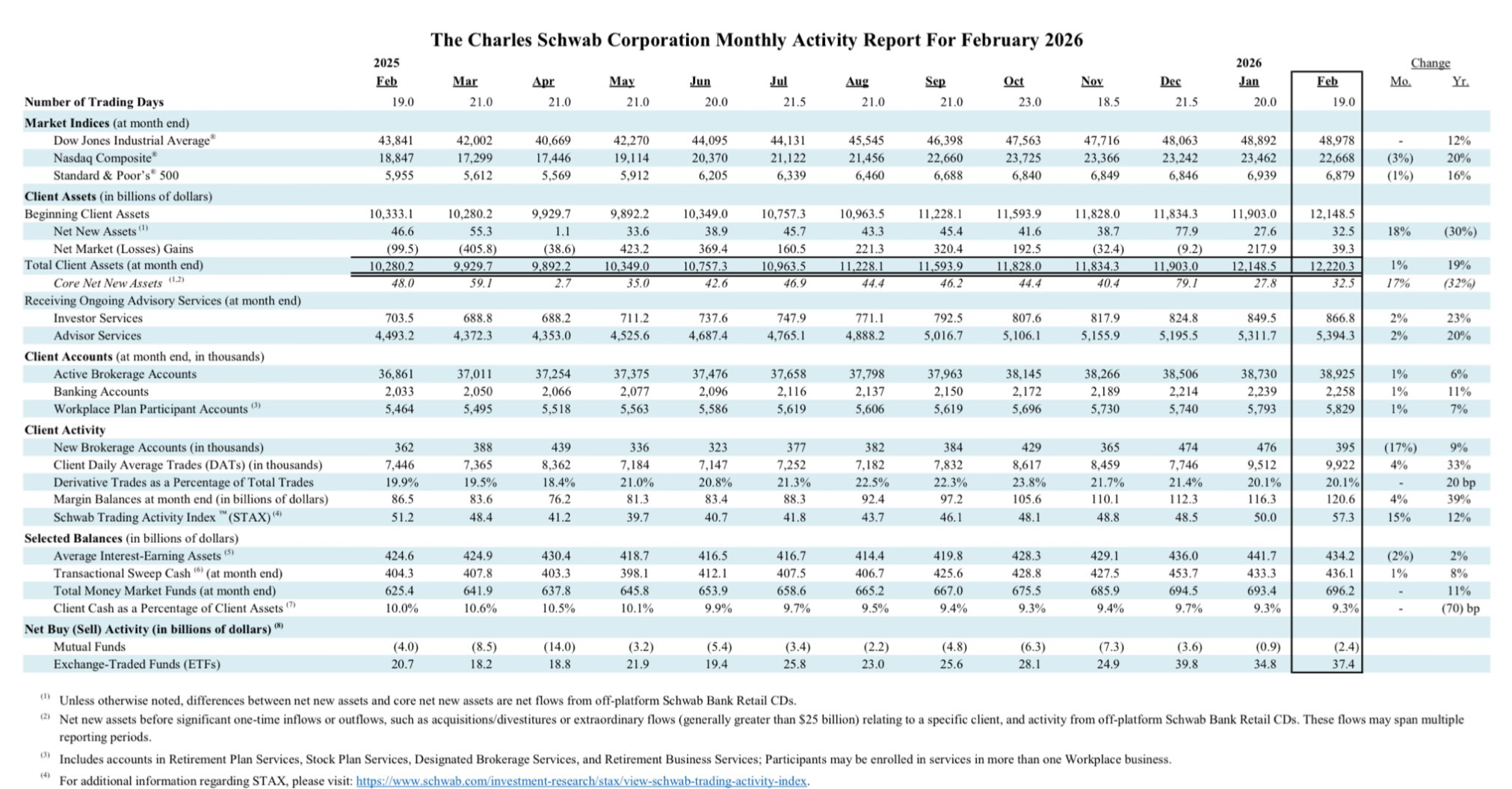 Charles Schwab AUM. Source: Feb Monthly Report
Previously, Schwab offered digital asset exposure only through crypto-linked stocks, futures, and spot exchange-traded products.
The shift to direct spot trading reflects broader institutional momentum. US spot crypto ETFs drew nearly $670 million in net inflows on the first trading day of 2026 alone.
Regulatory tailwinds have also accelerated the timeline. The SEC rescinded Staff Accounting Bulletin 121 in January 2025, removing the requirement for custodians to record client crypto as balance-sheet liabilities.
The OCC followed in March 2025 by reaffirming that crypto custody and stablecoin activities are permissible for national banks.
Whether Schwab’s conservative pricing and trusted brand can draw crypto volume away from lower-cost platforms with broader token selection remains the central question heading into the second half of 2026.
Recommended Articles


