




Saudi Arabia Boosts Crude Supply, WTI Crude Falls 4% to Four-Month Low
TradingKey - Vessel transit has resumed in the Strait of Hormuz, significantly cooling concerns over crude supply disruptions in the Persian Gulf. Catalyzed by the easing of geopolitical risks, international oil prices fell back to a four-month low, with the previously accumulated geopolitical risk premium rapidly unwinding.
According to the latest reports, Saudi Arabia is increasing its crude shipping volumes while boosting loading volumes at Red Sea ports.
Reportedly, the Port of Ras Tanura, which was closed due to the conflict, has resumed crude oil loading operations, with very large crude carriers (VLCCs) berthing to load one after another, marking the port's first return to normal operations since March. In addition, the Red Sea port of Yanbu maintained high-level operations, with all seven crude berths running at full capacity for the first time, and export volumes continuing to rise month-on-month.
Impacted by the recovery of crude supply, the two major oil futures benchmarks came under heavy pressure, with WTI crude futures falling 3.99% to $69.05 and Brent crude futures dropping 3.95% to $72.52.
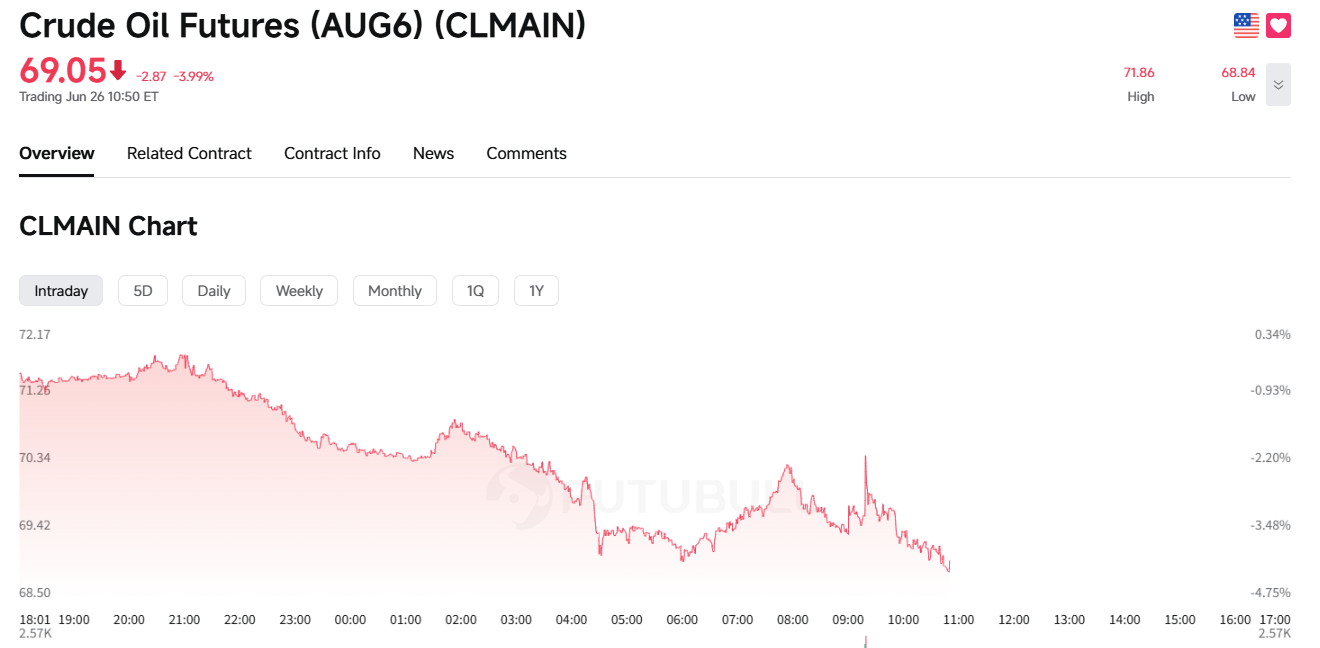
[Source: FutuBull]
Currently, crude exports from the Persian Gulf have recovered to 75% of pre-war levels. Although there are still security disruptions in the Strait of Hormuz, two-way transit remains basically stable.
Overall, Saudi Arabia's nationwide crude exports have yet to return to pre-war levels. Daily shipments from the port of Yanbu averaged 4.1 million barrels, which, despite a significant increase from May, still leaves a major gap compared to the pre-war daily export scale of 7 million barrels.
Notably, the strategic value of the Red Sea export route may rise in the long term. In the short term, Yanbu can serve as an alternative route to the Strait of Hormuz, hedging transit security risks.
In the long term, if the US and Iran reach a permanent peace agreement, Iran and Oman will jointly control transit rights through the strait. Consequently, Saudi Arabia is highly likely to continue expanding its Red Sea export capacity, reducing its sole reliance on the Strait of Hormuz, and the global crude shipping landscape will face long-term adjustments.
According to a Reuters survey, Saudi Arabia may sharply cut its official selling prices (OSPs) for crude to Asia in August to a four-month low.
Industry sources surveyed said the August OSP for the flagship Arab Light crude could be set at a premium of $1.50 to $3.00 a barrel to the Oman/Dubai average, which is $6.50 to $8.00 a barrel lower than July's OSP. OSPs for other Saudi crude grades are also expected to see similar declines.
Recommended Articles


