




NZD/USD (NZDUSD) Drops 0.51% on Oct 22: What You Need to Watch
NZD/USD (NZDUSD) is down 0.51% at Oct 22 07:30(ET), now at $0.5669, with a 7-day up of 0.88%.
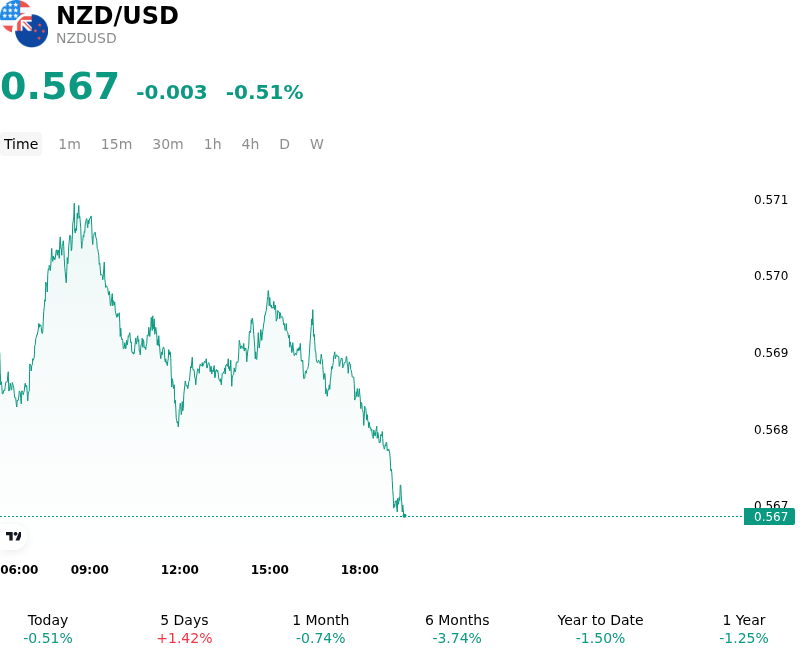
What is driving NZD/USD (NZDUSD)’s stock price down today?
The pullback in NZDUSD was primarily driven by softer-than-expected third-quarter consumer price index data from New Zealand, which prompted market participants to temper aggressive short-term tightening expectations for the Reserve Bank of New Zealand. The headline annual inflation rate slowed beneath consensus forecasts, accompanied by a notable deceleration in quarterly price growth. Although overall inflation remains above the RBNZ's official target band, the softer reading eroded immediate upward momentum for the Kiwi dollar by easing market pressure on policymakers for an overly aggressive rate path, triggering long-liquidation after a multi-session rebound.
Compounding downside pressure on the base currency was a modestly firmer US Dollar, supported by steady Treasury yields and a cautious global risk backdrop. Ongoing geopolitical tensions in the Middle East and subdued performance across global equity markets favored defensive capital flows toward the greenback. The relative stability of US yields across the front end of the curve tightened short-term interest-rate differentials against New Zealand debt, diminishing the immediate yield advantage for holding the high-beta Kiwi dollar.
From a structural perspective, the move represents an event-driven corrective pullback within a broader policy normalization cycle rather than a fundamental trend reversal. The RBNZ retains an underlying hawkish bias given elevated non-tradeable price pressures, which should keep medium-term interest-rate expectations supportive. However, in the near term, NZDUSD remains sensitive to shifts in global risk appetite, cross-asset sentiment, and upcoming central bank communication.
Technical Analysis of NZD/USD (NZDUSD)
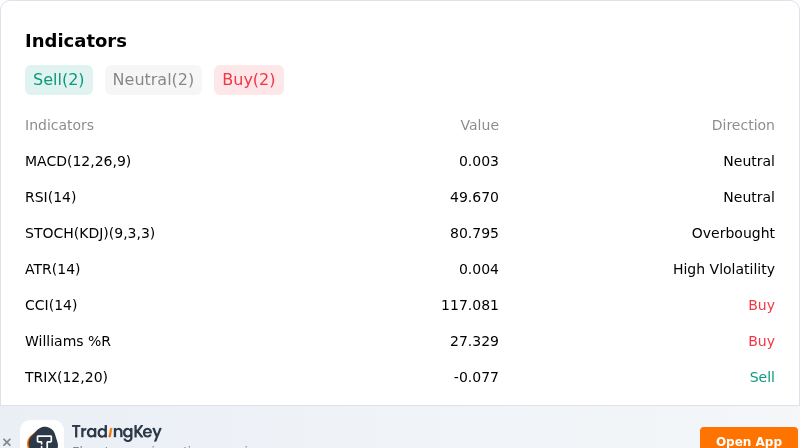
Technically, NZD/USD (NZDUSD) shows a MACD (12,26,9) value of 0.003, indicating a neutral signal. The RSI at 49.670 suggests neutral condition and the Williams %R at 27.329 suggests buy condition. Please monitor closely.
More details about NZD/USD (NZDUSD)
Recent Events and Risks:
- Dovish RBNZ Repricing Following Q3 CPI Miss: New Zealand's third-quarter CPI report undershot market and central bank expectations at 0.7% quarter-on-quarter and 3.7% year-on-year, dampening aggressive near-term Reserve Bank of New Zealand rate hike expectations and triggering immediate intraday selling pressure on the Kiwi.
- U.S. Dollar Yield Spread Advantage: Resilient U.S. Treasury yields and steady safe-haven demand for the Greenback maintain a wide short-term yield differential against New Zealand debt, heavily capping NZD/USD upside attempts and leaving the pair vulnerable to yield-driven sell-offs.
- Terms-of-Trade Pressure from Elevated Energy Costs: High global crude oil prices driven by Middle East geopolitical friction undermine New Zealand's terms of trade as a net energy importer, worsening trade balance risks while dampening national growth prospects.
- Commodity Currency Exposure to Risk-Off Sentiment: Fragile global risk appetite, equity market volatility, and lingering economic uncertainty in key trade partners like China keep high-beta commodity currencies like the NZD exposed to sharp intraday risk-off liquidations.
Recommended Articles


