




Brent (UKOIL) Is up 2.21% on Aug 6: What You Need to Watch
Brent (UKOIL) is up 2.21% at Aug 6 09:15(ET), now at $80.39, with a 7-day down of 7.42%.
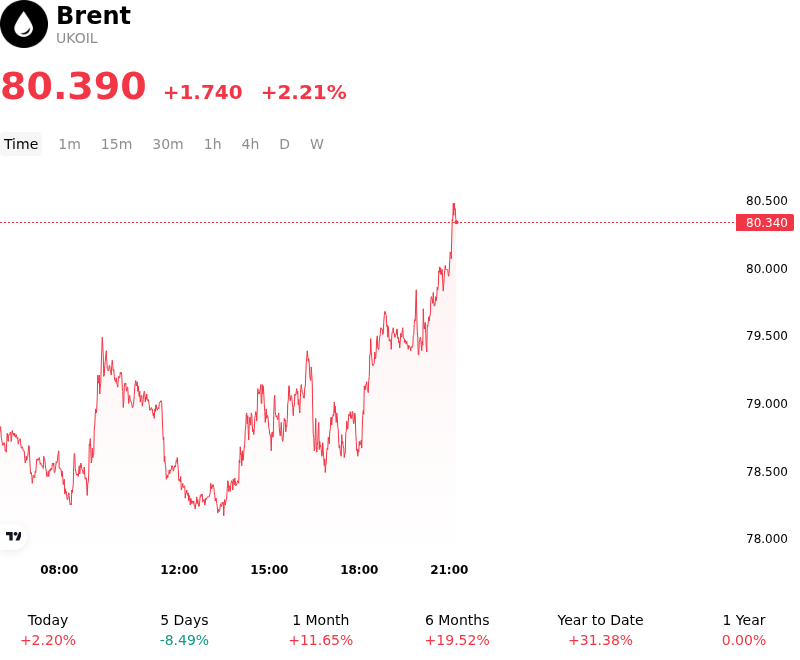
What is driving Brent (UKOIL)’s stock price up today?
The advance in Brent crude prices is primarily driven by a tightening physical market, exacerbated by an unexpected deepening of supply constraints from key OPEC+ producers. Recent production data suggests that voluntary output adjustments are being strictly enforced, while technical disruptions in West African loading terminals have further constrained immediate availability. This supply-side pressure coincides with the latest inventory data showing a significant draw in global commercial stockpiles, suggesting that demand is currently outpacing supply at a faster rate than the market had previously discounted.
Geopolitical risk premiums have also recalibrated higher following renewed escalations in key transit corridors. While physical flows have not yet been directly severed, the increased cost of shipping and insurance, coupled with the potential for further logistical bottlenecks, has prompted institutional long positioning. This shift reflects a move away from the bearish sentiment that dominated the previous month, as traders now account for a higher probability of prolonged supply-chain friction in the Middle East and the Black Sea region.
On the macroeconomic front, a shift in US dollar strength has provided a tailwind for energy prices. A softer-than-expected inflation print has reinforced market expectations for a more accommodative monetary policy stance from the Federal Reserve. As the dollar retreats, Brent crude—denominated in USD—becomes more attractive to international buyers, stimulating demand from non-dollar regions. Additionally, improved manufacturing PMI data from major Asian economies has offered evidence of a resilient industrial recovery, bolstering the long-term demand outlook for distillate fuels.
Market participants are also reacting to a sharp decline in refined product inventories, particularly gasoline and middle distillates. Refinery utilization rates have struggled to keep pace with seasonal consumption peaks, leading to tighter crack spreads and a stronger pull on crude feedstock. This fundamental imbalance suggests that the current price appreciation is not merely a technical bounce but is supported by a structural narrowing of the global supply-demand balance.
Looking ahead, the focus remains on the sustainability of OPEC+ compliance and the trajectory of global interest rates. While the immediate momentum is skewed to the upside, risks persist in the form of potential demand destruction should prices remain elevated, alongside the possibility of a faster return of spare capacity from non-OPEC producers. Institutional capital flows currently favor the long side as a hedge against geopolitical volatility and inflationary pressures in the energy sector.
Technical Analysis of Brent (UKOIL)
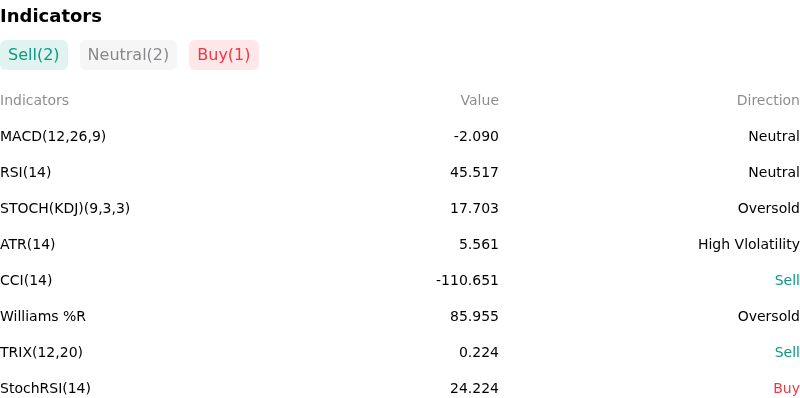
Technically, Brent (UKOIL) shows a MACD (12,26,9) value of -2.114, indicating a neutral signal. The RSI at 45.274 suggests neutral condition and the Williams %R at 86.822 suggests oversold condition. Please monitor closely.
More details about Brent (UKOIL)
Recent Events and Risks:
- Chinese Demand Contraction: Recent manufacturing and refinery throughput data from China continue to signal a structural slowdown in energy consumption, leading institutional analysts to downgrade global demand growth forecasts for the remainder of the year.
- OPEC+ Production Uncertainty: Market participants remain concerned that OPEC+ may proceed with planned production hikes starting in December, potentially creating a significant supply surplus in a market already struggling with lackluster industrial demand.
- Geopolitical Risk Premium Erosion: The absence of direct damage to energy infrastructure following recent escalations in the Middle East is causing a rapid unwinding of the war premium, as speculative traders liquidate long positions in favor of neutral or short biases.
- Inventory Build Concerns: Recent industry reports suggesting a build in crude oil inventories, combined with record-high production levels from non-OPEC producers like the United States, are exerting downward pressure on the Brent futures curve.
Recommended Articles


