




WTI Futures (USOIL-F) Is down 2.26% on Jul 9: Is the Market Repricing It?
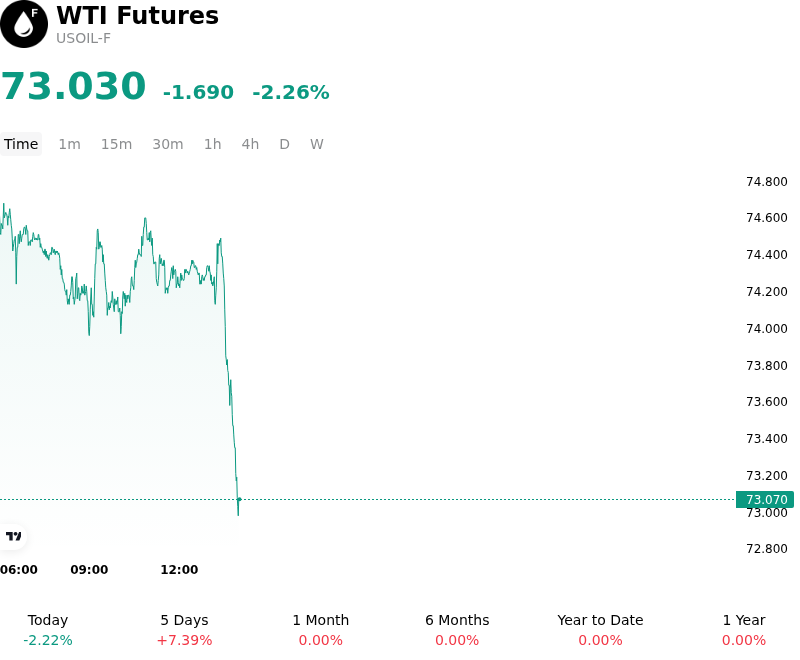
WTI Futures (USOIL-F) is down 2.26% at Jul 9 02:00(ET), now at $73.03, with a 7-day up of 6.77%.
What is driving WTI Futures (USOIL-F)’s stock price down today?
The downward pressure on West Texas Intermediate crude oil futures was primarily driven by a combination of domestic supply-side surprises, a broader structural shift toward market balance, and some profit-taking following a sharp geopolitical rally.
On the supply side, the most notable immediate catalyst was the weekly inventory report from the U.S. Energy Information Administration. The data revealed an unexpected build of approximately three million barrels in U.S. commercial crude oil inventories. This marked the first weekly increase in commercial crude inventories since April. The sudden build caught market participants off guard, as consensus estimates had anticipated a significant drawdown in the range of one to nearly two million barrels. Although total domestic petroleum stockpiles and distillate inventories fell, the rise in raw crude inventories signaled that domestic supplies remained highly resilient and easily accessible.
Furthermore, the overall market balance began repricing in response to a medium-term outlook that suggests a shifting supply-demand equilibrium. While geopolitical flare-ups in the Middle East—specifically escalating tensions between the United States and Iran in the Strait of Hormuz—had recently triggered short-term price spikes and injected a heavy risk premium into energy markets, structural factors continued to weigh on long-term expectations. Rising production expectations outside of localized conflict zones and forecasts from energy agencies pointing to smaller-than-anticipated global inventory draws in the coming quarters have started to anchor price gains. Concerns over long-term demand growth, especially from major importing economies in Asia, further limited the market's ability to sustain high-priced rallies.
From a technical and capital-flow perspective, the price decline also reflected a natural cooling and correction. After a series of consecutive sessions where geopolitical anxieties had driven futures sharply higher, momentum indicators reached overbought territory. This technical exhaustion prompted systematic traders and institutional investors to take profits, easing the extreme risk premium. Additionally, comments from political leaders that temporarily cooled immediate escalation fears allowed risk assets to stabilize, prompting a partial unwind of safe-haven bid flows in the energy sector.
While investors continue to closely monitor the ongoing friction in critical maritime chokepoints and the threat of cost-push inflation on global central bank policies, the immediate session's downward movement underscored a market grappling with an unexpected rise in domestic crude stocks amid a highly volatile macroeconomic backdrop.
More details about WTI Futures (USOIL-F)
Recent Events and Risks:
- Macroeconomic Demand Deterioration: Renewed fears of persistent global inflation and subsequent aggressive central bank tightening have dampened long-term energy consumption expectations. Concerns that the Federal Reserve and other major central banks will raise interest rates or keep them elevated longer are sparking fears of a broader economic slowdown, limiting immediate physical crude demand and weighing heavily on speculative commodity positioning.
- OPEC+ Quota Increases and Rising Non-OPEC Production: The OPEC+ alliance has ratified a collective production target increase of 188,000 barrels per day to ease market supply curbs. Combined with resilient, record-high seaborne crude exports from Russia and steady production gains from non-OPEC+ producers like the United States, Canada, and Brazil, the market faces downside pressure from a rapidly expanding global supply cushion.
- Post-Rally Technical Consolidation and Downside Targets: Following the sharp geopolitical-driven spike, WTI (USOIL-F) faces strong overhead technical resistance. Analysts warn that if the prompt contract fails to maintain its footing and breaks below the critical near-term pivot levels of $72.50 to $69.40, a rapid unwind of long positions could accelerate a technical decline back toward major support floors at $67.09 and $63.58.
Recommended Articles


