




After a Historic AI Rally, South Korean Tech Stocks Are Tumbling. Here’s Why
South Korea’s remarkable AI-fuelled stock market rally has stumbled. After becoming the world’s best-performing major share market earlier this year, the KOSPI has officially entered bear market territory, falling more than 20% from its late-June record high as investors aggressively sold semiconductor heavyweights Samsung Electronics and SK Hynix.
The reversal has been swift. Only weeks ago, the KOSPI had surged more than 120% in 2026, driven by global enthusiasm for artificial intelligence infrastructure and soaring demand for advanced memory chips. But concerns over stretched valuations, the sustainability of AI spending, and profit-taking have triggered a sharp rotation out of South Korean technology stocks.
For Australian traders, the sell-off is a reminder that some of the world’s biggest investment opportunities—and reversals—are increasingly unfolding well beyond the ASX.
What’s driving the sell-off?
The correction isn’t being driven by collapsing demand for AI infrastructure. Instead, markets are beginning to question whether the sector’s extraordinary share price gains had simply run too far ahead of fundamentals.
The shift became clear after Samsung Electronics reported a 19-fold increase in quarterly operating profit. Under normal circumstances, those results would have been celebrated. Instead, the shares sold off after earnings fell short of the market’s exceptionally high expectations, highlighting just how demanding investor sentiment had become.
The same reassessment has spread across the broader semiconductor sector. Despite remaining one of the world’s largest suppliers of High Bandwidth Memory (HBM) chips for AI processors, SK Hynix has also come under pressure as investors lock in profits following one of the strongest rallies in its history.
Beyond company earnings, several other developments continue shaping sentiment across South Korea’s technology sector:
The correction highlights how quickly capital can rotate once expectations become stretched. Investors have begun looking beyond memory-chip manufacturers towards cheaper technology opportunities elsewhere in Asia, while others are rotating into more defensive sectors after one of the strongest AI rallies in decades.
For Australian traders, volatility like this no longer means simply watching from the sidelines. Contracts for Difference (CFDs) make it possible to respond to international market moves without expensive brokerage costs and the flexibility to trade both rising and falling prices.
“Trade Tech Stocks with an ASIC-regulated broker. Fast AUD funding via PayID. ”
Why South Korea matters to the AI trade
South Korea occupies a unique position in the global AI supply chain. Samsung Electronics and SK Hynix are two of the world’s largest memory-chip manufacturers, producing the advanced DRAM and HBM chips powering AI processors from companies including Nvidia.
SK Hynix has become one of the biggest beneficiaries of the AI infrastructure boom, briefly becoming only the third Asian company to surpass a US$1 trillion valuation as demand for HBM chips surged.
Samsung, meanwhile, remains one of the world’s largest semiconductor manufacturers and one of the KOSPI’s most influential constituents.
These two companies alone dominate South Korea’s index, making up half of the benchmark; they have an outsized impact on the broader market.
The challenge of trading Korean technology stocks
South Korea’s AI leaders have become some of the world’s most closely watched semiconductor companies. But for Australian investors, gaining exposure to moves like these isn’t always as straightforward as buying an ASX share.
Several practical challenges often stand in the way.
Direct market access: Buying Korean shares typically requires an international brokerage account with access to the Korea Exchange, along with foreign currency conversion and additional administrative requirements.
News moves faster than markets: Samsung Electronics and SK Hynix can react sharply to earnings, AI infrastructure spending updates, and changes in memory-chip demand. By the time many investors have digested the news, prices may have already adjusted.
Concentrated market leadership: Samsung Electronics and SK Hynix represent around half of the KOSPI’s market capitalisation. A single earnings result or guidance update from either company can quickly reshape sentiment across the entire Korean market.
For traders looking to respond as global AI sentiment changes, these practical challenges can make timely execution more difficult.
How Mitrade helps remove these barriers
Mitrade uses CFDs to provide exposure to global technology markets without requiring investors to purchase overseas shares directly. That means many of the practical challenges of accessing Korean technology stocks can be managed more efficiently.
Respond as sentiment changes. Korean technology stocks don’t need to be rallying to create opportunities. CFDs allow traders to take either long or short positions, making it possible to respond whether optimism around AI infrastructure strengthens or investors continue rotating out of the sector.
Access global markets more efficiently. Rather than opening specialist international brokerage accounts, converting currencies and purchasing overseas shares directly, CFDs provide a simpler way to gain exposure to movements in global technology stocks (subject to ASIC leverage limits).
Be prepared when market-moving news arrives. Samsung earnings, SK Hynix updates, and announcements from major AI companies can quickly reshape sentiment across the Korean market. Entry orders, stop-losses, and take-profit levels can all be placed in advance, allowing trades to execute automatically if target prices are reached.
The recent correction has shifted attention away from how far Korean technology stocks have already fallen and towards the developments that could determine whether the sector regains its leadership—or whether the current rotation has further to run.
“Trade Tech Stocks with an ASIC-regulated broker. Fast AUD funding via PayID. ”
What could drive Korean tech next?
The recent sell-off has shifted the conversation from how high Korean technology stocks climbed to whether the next wave of AI demand can justify those valuations. After one of the fastest rallies in decades, investors are looking for fresh evidence that semiconductor demand and corporate earnings can continue keeping pace with expectations.
Several developments are likely to remain firmly in focus.
AI infrastructure spending: Continued capital expenditure from Microsoft, Amazon, Alphabet and Meta will remain critical for long-term demand across the semiconductor supply chain.
Samsung and SK Hynix earnings: Investors will be watching closely for updated guidance on memory-chip demand, pricing, and AI-related orders.
SK Hynix’s Nasdaq listing: The company’s US listing could broaden international investor participation while providing an important test of global appetite for AI semiconductor stocks.
Memory-chip pricing: High Bandwidth Memory (HBM) remains one of the most supply-constrained components in the AI ecosystem. Any changes in pricing, production capacity or customer demand could quickly influence sentiment across the sector.
For active traders, the next earnings season and round of AI infrastructure spending announcements will determine whether South Korea’s technology leaders can regain their market leadership—or whether investors continue seeking alternative markets after one of the year’s most dramatic reversals.
Be ready for the next rotation
With the next major move in Korean technology stocks likely to be driven by Samsung and SK Hynix earnings, AI infrastructure spending from the world’s largest technology companies, and fresh signals around demand for advanced memory chips.
Mitrade helps Australian traders stay prepared with:
AUD-based accounts.
0% commission trading, with costs incorporated into competitive spreads.
Advanced charting and integrated risk management tools.
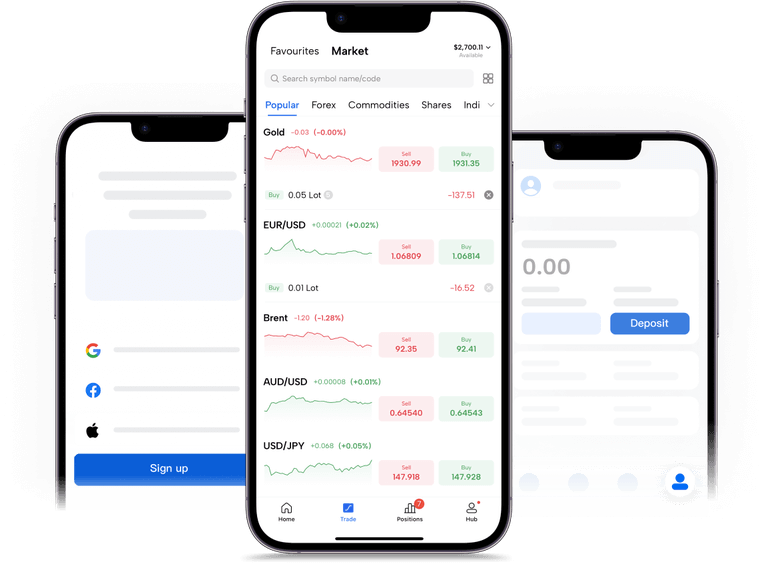
A mobile app designed for global markets.
ASIC regulation, with retail client funds held in segregated trust accounts.
A free $50,000 demo account to practise trading strategies before risking real capital.
Start Trading Global Technology CFDs in Three Simple Steps
Getting started takes only a few minutes.
Open an Account: Register manually via the Mitrade homepage, or use the fast sign-up process by linking your existing Google or Facebook credentials.
Fund Your Account: Deposit your initial margin using secure Australian payment methods, including POLi or Visa/Mastercard.
Trade CFDs: Access the platform, analyze your preferred technology stock, define your risk parameters, and execute your long or short position.
South Korea’s AI leaders remain at the centre of one of the world’s biggest investment themes. Open your account today and be ready for whatever comes next.


1. Can you still trade Korean technology stocks if they’re falling?
Yes. Markets don’t need to be rising to create trading opportunities. CFDs allow traders to take either long or short positions, meaning they can respond to both rising and falling share prices. However, losses can be amplified as well as gains.
2. Do I need to buy shares on the Korea Exchange to trade companies like Samsung or SK Hynix?
Not necessarily. Purchasing Korean shares directly typically requires access to the Korea Exchange, foreign currency conversion, and an international brokerage account. CFDs provide another way to gain exposure to price movements without owning the underlying shares.
3. What should traders watch before Korean technology stocks move?
The biggest catalysts are typically quarterly earnings from Samsung and SK Hynix, updates on AI infrastructure spending from major technology companies, changes in High Bandwidth Memory (HBM) demand and pricing, and guidance from semiconductor manufacturers about future orders.
Disclaimer: The content presented above, whether from a third party or not, is considered as general advice only. CFD trading involves significant risk of loss. Past performance does not guarantee future results. This article serves informational purposes only and does not constitute financial advice. Consider your risk tolerance before trading.


