




WTI (USOIL) Is down by 2.09% on Jul 9: Is the Demand Outlook Changing?
WTI (USOIL) is down 2.09% at Jul 9 01:55(ET), now at $73.135, with a 7-day up of 7.01%.
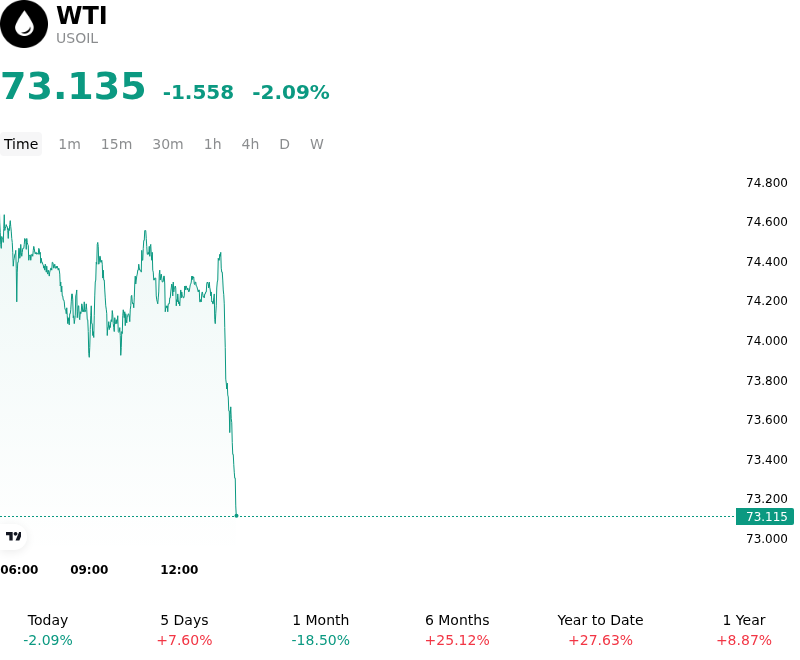
What is driving WTI (USOIL)’s stock price down today?
The decline in West Texas Intermediate crude reflects a combination of structural supply adjustments, localized inventory builds, and a natural technical cooling following a period of intense geopolitical volatility. While regional conflicts in the Middle East had previously driven a sharp premium in energy markets, the physical market balance began to reassert itself as key producers offset immediate supply fears.
On the supply side, broader market expectations have been shaped by efforts from major exporters to capture market share. Notably, Saudi Arabian crude exports have steadily recovered, returning to near pre-conflict levels, while the kingdom aggressively discounted its official selling prices to Asian customers. This pricing strategy from the world's leading exporter has signaled to physical traders that global supply remains highly resilient, partially neutralizing the fear of immediate, localized bottlenecks. Furthermore, OPEC+ production policies have continued to inject additional barrels into the global market, with recent decisions to increase monthly quotas gradually expanding the supply buffer.
This expectation of growing supply was reinforced by the latest weekly domestic inventory data from the U.S. Energy Information Administration. U.S. commercial crude stockpiles recorded an unexpected build, marking the first weekly increase in several months. This domestic accumulation was primarily driven by a substantial rise in raw crude imports alongside a slight reduction in refinery capacity utilization, as domestic processors trimmed operations more than market analysts had anticipated. While deep drawdowns in finished products like distillates and gasoline offered some offset, the headline build in raw inventory served as a near-term bearish catalyst for prompt crude contracts.
From a demand perspective, the structural outlook remains clouded by worsening macroeconomic indicators in major consuming economies. Recent weak employment and manufacturing data in the United States have heightened institutional concerns regarding a broader economic slowdown, raising the prospect of softer transport fuel consumption over the medium term. This demand erosion has put downward pressure on near-term pricing, prompting speculative traders to trim some of the risk premium embedded in the front-month contracts.
Technically, the decline also points to a period of consolidation and profit-taking by institutional investors. Following a rapid geopolitical rally fueled by aggressive short-covering and speculative buying, momentum oscillators reached overbought territory. With the physical market showing signs of comfortable supply and domestic inventories rising, market participants used the session to recalibrate their exposure, triggering a technical pullback toward established moving averages and support levels.
Technical Analysis of WTI (USOIL)
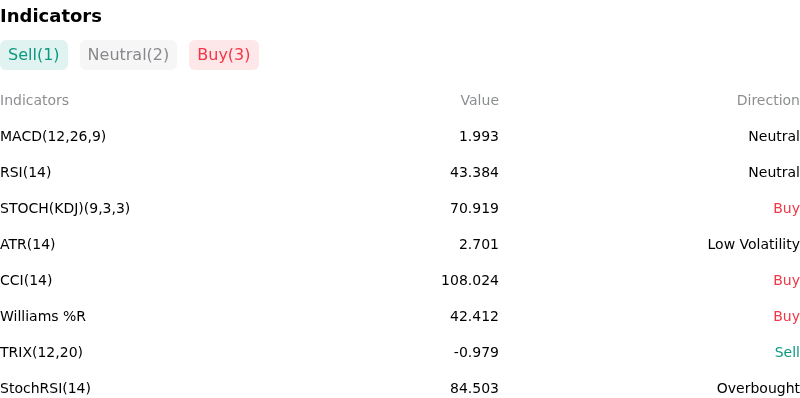
Technically, WTI (USOIL) shows a MACD (12,26,9) value of 1.993, indicating a neutral signal. The RSI at 43.384 suggests neutral condition and the Williams %R at 42.412 suggests buy condition. Please monitor closely.
More details about WTI (USOIL)
Recent Events and Risks:
- Surprise EIA Crude Inventory Build: The U.S. Energy Information Administration (EIA) reported a surprise increase in commercial crude oil inventories of 2.998 million barrels for the week ending July 3, reversing a ten-week streak of draws and catching the market off guard against consensus expectations of a 1.1 to 1.9 million-barrel draw.
- Accelerating Supply Normalization and OPEC Quotas: Despite short-term geopolitical volatility, the physical supply of crude is expanding as OPEC+ agreed to raise production quotas for August by 188,000 barrels per day, while recovering Gulf producers and accelerated bypass pipeline projects threaten to return the global market to an oversupply by September.
- Weakening Long-Term Global Demand Outlook: Severe macroeconomic headwinds have prompted the International Energy Agency (IEA) to sharply downgrade its global consumption outlook, projecting a world oil demand contraction of over 1.1 million barrels per day, which is accelerating the unwind of long-term speculative positions.
- Political Interference and Downside Price Targets: The U.S. executive branch continues to pressure domestic oil companies and refiners to drive down retail fuel costs, reinforcing broader institutional forecasts that project West Texas Intermediate (WTI) to retreat toward structural support near the $55-to-$67 per barrel range as the geopolitical risk premium deflates.
Recommended Articles


