




Trump’s 48-Hour Ultimatum to Iran Just Sent Markets Into Monday With No Exit Plan


US stock futures fell at Sunday’s open after President Trump gave Iran 48 hours to fully reopen the Strait of Hormuz, threatening to “hit and obliterate” the country’s power plants starting with the largest if Tehran does not comply.
Iran responded by warning it would completely close the strait and strike allied energy and water infrastructure across the Gulf, raising the stakes for Monday’s trading session with the deadline now hours away.
Trump Reverses Wind-Down Signals With Hormuz Deadline
Trump posted the ultimatum on Truth Social on Saturday, reversing signals from Friday that had briefly suggested a possible de-escalation. The threat marks the sharpest direct warning aimed at Iranian civilian infrastructure since the conflict began on February 28.
Iran’s response left no room for compliance. Tehran threatened retaliation against US, Israeli, and allied energy facilities, including Saudi and UAE water desalination plants. Iranian officials warned of a potential “Gulf blackout” if power infrastructure is hit.
Prediction markets show low odds of a quick resolution. No diplomatic channel is currently active between Washington and Tehran.
How Markets Reacted to the Iran Ultimatum
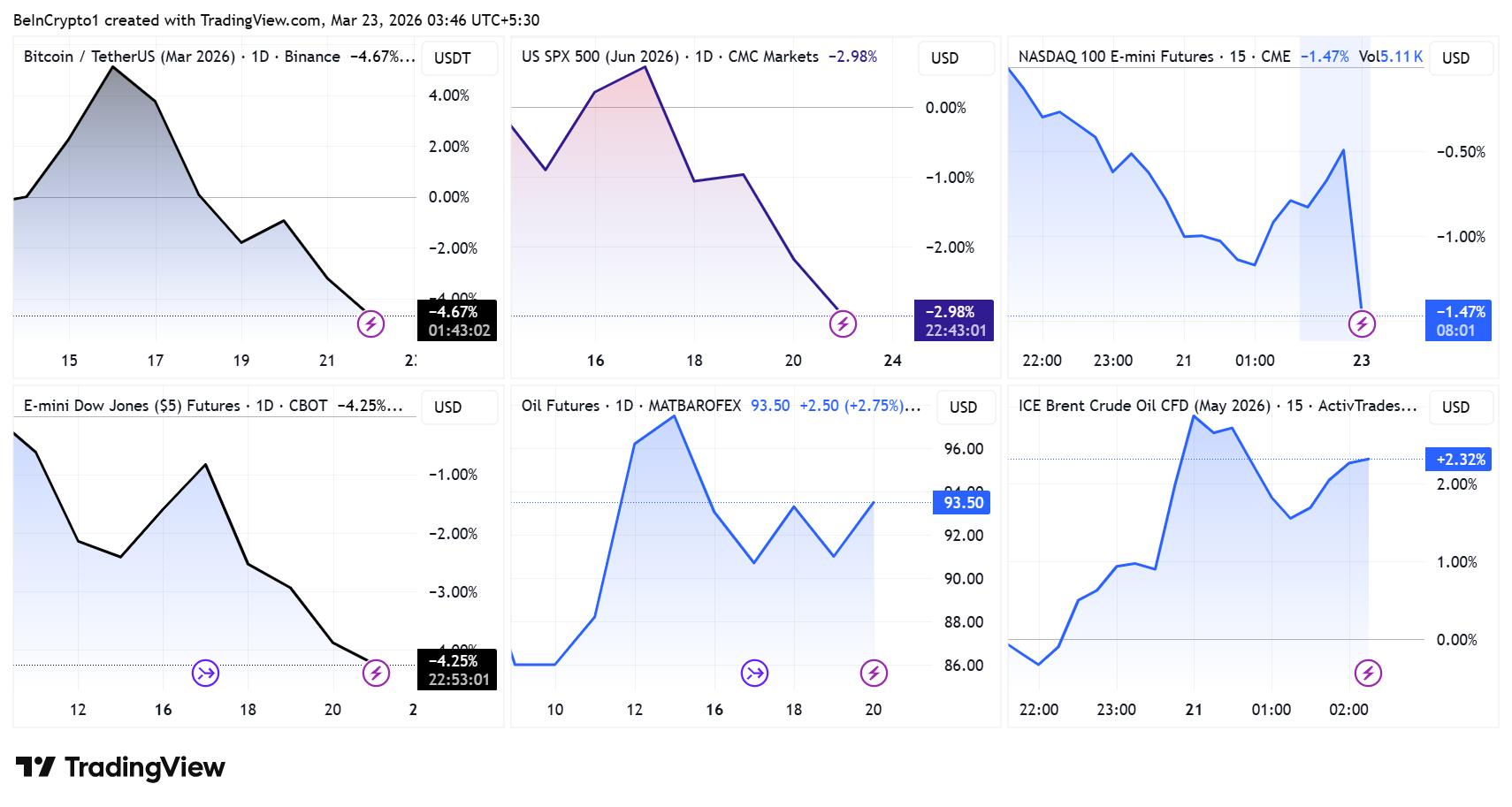
US equity futures dropped at Sunday evening’s open. The S&P 500 fell 0.7%, the Nasdaq 100 declined 0.7%, and the Dow Jones slid 0.6%.
Oil moved in the opposite direction. WTI crude rose 2.0% and Brent climbed 1.5%, pushing toward $114 per barrel as traders priced in the risk of a prolonged or total Hormuz shutdown.
Gold fell 2.5% despite the geopolitical crisis. The decline signals forced liquidation and dollar-strength positioning rather than traditional safe haven demand. Gold has now dropped more than 14% since the war began, its worst stretch since 1983.
Bitcoin (BTC) also came under pressure, dipping below $69,000 as crypto markets tracked the broader risk-off move. BTC has shown 89% correlation with the S&P 500 during the conflict, confirming that macro forces are driving crypto price action.
Why the Next 24 Hours Are a Binary Event
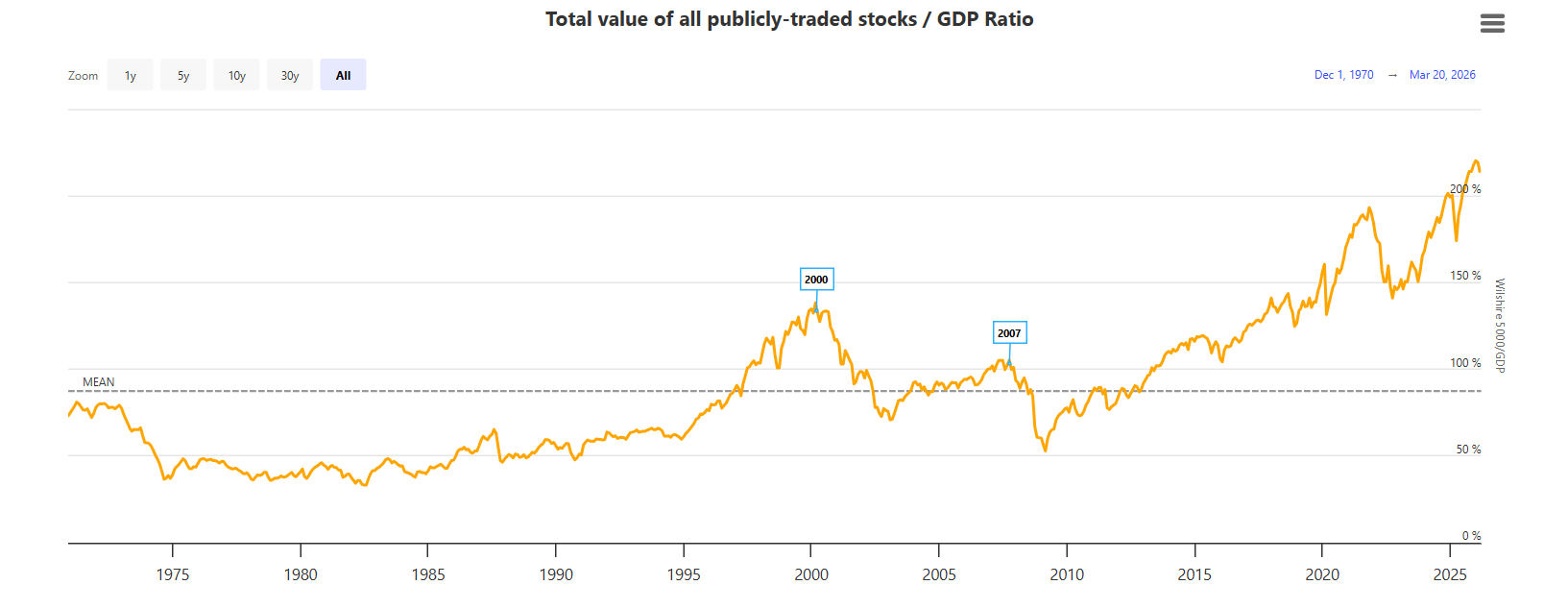
The stock market entered this crisis at stretched valuations. The Shiller CAPE ratio sits at multi-decade highs. The Buffett Indicator has reached roughly 220% of GDP, a level last seen during the dot-com era.
Leverage across institutional desks is at all-time highs while mutual fund cash reserves sit at historic lows.
The Fed faces policy paralysis. Oil-driven inflation prevents rate cuts as the economy shows signs of slowing, with rising consumer defaults and weakening employment data.
The central bank held rates at 3.5% to 3.75% at its March 18 meeting and projected only one cut for 2026.
If the deadline passes without Iranian compliance and the US follows through on the threat, the resulting strikes on power infrastructure could trigger:
A full closure of the strait
Retaliatory attacks on Gulf energy facilities, and
A further oil spike that analysts at Goldman Sachs and Citi have warned could push Brent past $150 per barrel.
For crypto markets, the outcome is equally consequential. BTC ETFs posted $90 million in outflows on March 19, breaking a seven-day inflow streak. Any further escalation risks could accelerate institutional de-risking across all asset classes.
The next 24 hours represent the highest-stakes binary catalyst for global markets since the war began. Either Iran reopens Hormuz under threat, which no current signal supports, or the conflict enters a phase that reprices energy, bonds, equities, and crypto simultaneously.
* The content presented above, whether from a third party or not, is considered as general advice only. This article should not be construed as containing investment advice, investment recommendations, an offer of or solicitation for any transactions in financial instruments.


