




How Trump’s Escalation With Iran Could Become the Catalyst for Declining Political Support

Israel and the United States have launched a joint attack on Iran, one that has an unclear expiry date and that has already caused reverberations across the rest of the Middle East. Though Israel’s intentions are clear, those of the United States are not.
In a conversation with Steve Hanke, former Reagan advisor and economics professor at Johns Hopkins University, the consequences for US President Donald Trump are risky, potentially costing him his Make America Great Again voter base.
Trump’s Unclear Motives in the Middle East
If America’s founding fathers were alive today, they would look at the situation that unfolded over the weekend and shake their heads.
During the 18th century, Benjamin Franklin laid out his belief regarding conflict and trade with the quote, “the system of America is universal commerce with all nations, and war with none.” Thomas Jefferson reinforced this vision of foreign policy through his own quote: “Peace, commerce, and honest friendship with all nations—entangling alliances with none.”
Today, quite the opposite vision is being carried out. Aware of Israel’s planned strike against Iran’s capital, the United States joined in preemptively.
“It was abundantly clear that if Iran came under attack by anyone – the United States or Israel, or anyone – they were going to respond, and respond against the United States,” Secretary of State Marco Rubio told reporters in a recent interview in Washington.
For Hanke, Israel’s intentions were also abundantly clear: to expand its influence across the Middle East. When it came to the United States, concrete reasons were harder to find. Hanke attributed this to Trump’s already unpredictable policymaking in other areas of his presidency.
“We don’t exactly know what the thinking of the president of the United States is because he changes his mind a lot,” Hanke told BeInCrypto in a recent interview held on X Spaces.
What’s more apparent, however, is Israel’s grip on Washington.
Israel’s Growing Influence Over US Policymaking
Israel-US relations can be best exemplified by the extensive lobbying efforts of certain political action committees (PACs), such as the American Israel Public Affairs Committee (AIPAC), during US election cycles.
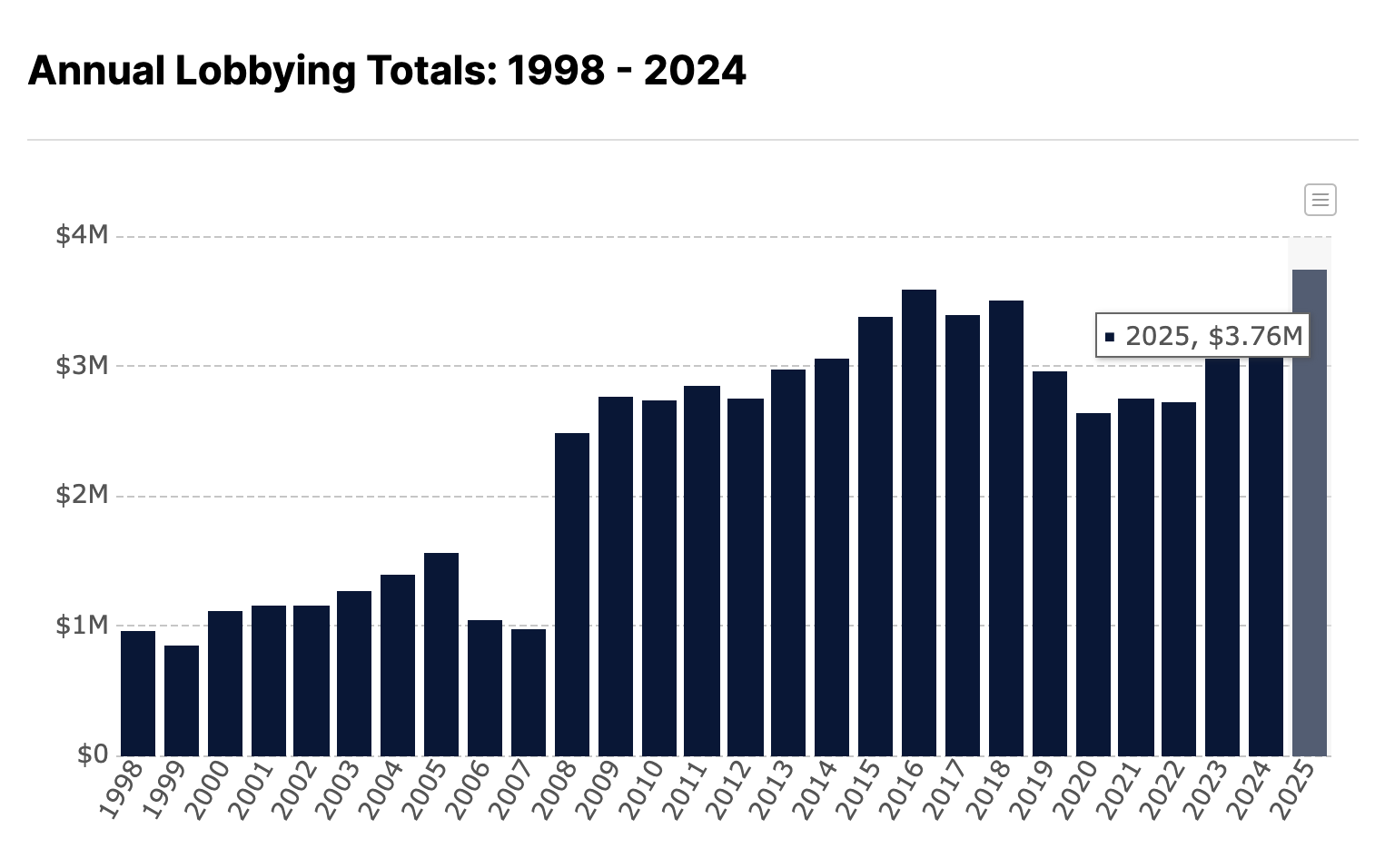
According to the nonpartisan research group OpenSecrets, AIPAC spent over $42 million on bipartisan contributions during the 2024 federal elections. In 2025, the committee spent $3.76 million on lobbying efforts. This figure marked the highest single-year spending to date.
“The lobby has an enormous influence on what goes on with regard to foreign policy that’s taken by the United States in the Middle East,” Hanke explained.
Beyond the increasingly entangled alliances between the United States and Israel, Trump may be using this latest attack on Iran as a distraction from certain unfolding events happening back home.
Trump’s Antiwar Image Begins to Fade
Trump jump-started 2026 with a series of controversial decisions. Three days into the new year, the United States captured and extradited Venezuelan leader Nicolás Maduro. Less than a month later, the president launched an aggressive campaign to acquire Greenland, sparking direct conflict with European allies.
These two decisions came amid a broader backdrop of constant tariff threats. At the same time, the Department of Justice released its latest batch of Epstein files.
This has placed the president at the center of a debate over his ties to billionaire socialite Epstein and his knowledge of the sex trafficking charges Epstein faced in 2019.
“The Jeffrey Epstein case is not going away— it’s still all over the press,” Hanke said, adding, “It’s an exit ramp from declining poll numbers. The best way to stay in power is to start a war… that’s a pretty big distraction.”
Meanwhile, Trump’s actions could pose a significant challenge to the future strength of his political power. One of Trump’s central promises on his campaign trail was to end ongoing wars, going so far as to declare himself the “president of peace.”
This narrative has begun to unravel.
“I think politically, he’s playing a very risky hand of cards with his base… his popularity is deteriorating rapidly in the United States because of his interventionist and threatening positions,” Hanke said. “Whether he’s going to be able to wind up [the Middle East conflict] in a short period of time… we don’t know.”
The next indicator of the president’s current popularity will be the November midterm elections, which will determine whether the Republican Party can maintain control of both chambers of Congress.
Though Trump’s foreign policy decisions may have significant domestic political repercussions, their impact on the global economy, especially oil prices, seems more limited than expected.
Iran Conflict Fails to Disrupt Oil, China Keeps Balance
Contrary to popular belief, Hanke does not believe that the war on Iran will catastrophically affect oil prices in the US.
In the 20th century, disruptions in oil production had a larger impact on global economies. However, today, the US has increased its oil production, while Iran and the Gulf have seen a decrease in theirs.
Hanke noted that, since events unfolded over the weekend, the price of American oil has risen by only about $10 per barrel, translating into a 25-cent-per-gallon increase.
“What’s happening today is a kind of modest reaction,” Hanke said, adding, “The oil intensity has gone way down. Even as the price goes up, it’s not going to be as large an impact on GDP as was the case in 1978.”
Trump’s efforts to disrupt oil supply to China through his interventions in both Venezuela and Iran may not achieve the intended result against the United States’ main rival. Hanke argued that even if the Strait of Hormuz remains closed, China’s strategic advantages must not be overlooked.
While the Organization of Petroleum Exporting Countries [OPEC] has oil, China has rare-earth minerals.
“If the US was wanting to play this game and cut off the Venezuelan oil and the exit of the Strait of Hormuz, believe me, the Chinese know how to play hardball,” he explained. “They would cut the rare earths off, and that would be the end. Within six months, Western economies would be in really bad shape.”
As the situation in the Middle East continues to unfold, the true impact of these geopolitical moves on global stability and US politics remains to be seen. The next few months will reveal whether Trump’s foreign policy gambles will strengthen or further erode his political standing.
* The content presented above, whether from a third party or not, is considered as general advice only. This article should not be construed as containing investment advice, investment recommendations, an offer of or solicitation for any transactions in financial instruments.


