


Indonesian Rupiah holds gains as manufacturing PMI expands in July
- Indonesian Rupiah strengthens as July manufacturing PMI rebounded to an expansionary 50.2, driving the USD/IDR pair lower.
- Indonesian inflation cooled to 2.88% in July, beating forecasts of 3.2% and reaching a multi-month low.
- The US Dollar weakens as Japan and the US confirmed joint yen-buying operations totaling up to $58.97 billion.
USD/IDR remains subdued for the fourth successive day, trading around 18,040 during the Asian hours on Monday. The pair experiences notable downside pressure as the Indonesian Rupiah (IDR) strengthens in response to encouraging domestic economic indicators.
Indonesia’s manufacturing sector returned to expansion territory in July, with the S&P Global Manufacturing PMI rebounding to 50.2 from June’s 46.9, its highest level since February. This growth was driven by a marginal uptick in factory output following four months of contraction, alongside a stabilization in new orders after June's sharp decline.
Indonesia’s inflation cooled significantly in July. Headline annual inflation eased to 2.88% from 3.34% in the previous month, undershooting market expectations of 3.2% and reaching its lowest level since April. This slowdown keeps inflation comfortably within Bank Indonesia’s target band of 1.5% to 3.5%. Core inflation held steady at 2.76%, while monthly consumer prices fell 0.14%, defying forecasts of a 0.1% increase and marking the first monthly deflationary reading since January.
Compounding the USD/IDR pair's decline was widespread weakness in the US Dollar (USD), which faltered against major global currencies following news of official foreign exchange operations. Japanese authorities confirmed they executed joint, coordinated yen-buying interventions alongside the United States, with Bank of Japan data indicating expenditures of up to $58.97 billion. Tokyo emphasized that active communication with US policymakers remains ongoing and signaled a readiness to intervene further if necessary.
Finally, the Greenback faced broader selling pressure as global risk sentiment improved on potential diplomatic developments in the Middle East. Market anxiety eased after reports indicated US President Donald Trump paused planned military strikes against Iran. In a social media post on Truth Social, President Trump noted that regional nations requested time to finalize a deal, which aims to address Iran's nuclear program and facilitate the full reopening of the Strait of Hormuz.
Barkin flags a close call on rates, keeping Dollar bulls cautious
Barkin’s latest remarks score 6.2/10 on the FXS Speechtracker, modestly above the 5.4/10 historical average and signaling a slightly firmer tone relative to the established baseline. Calling it a “close call” on whether rates are high enough, expressing uncertainty about joining recent hike dissents, and highlighting uneven price increases alongside skepticism on a stronger labor market together point to a nuanced stance that tempers outright hawkish conviction and leaves the Dollar sensitive to incoming data. The mix of caution on labor strength and acknowledgement of uneven inflation suggests policy patience rather than an imminent push for higher rates.
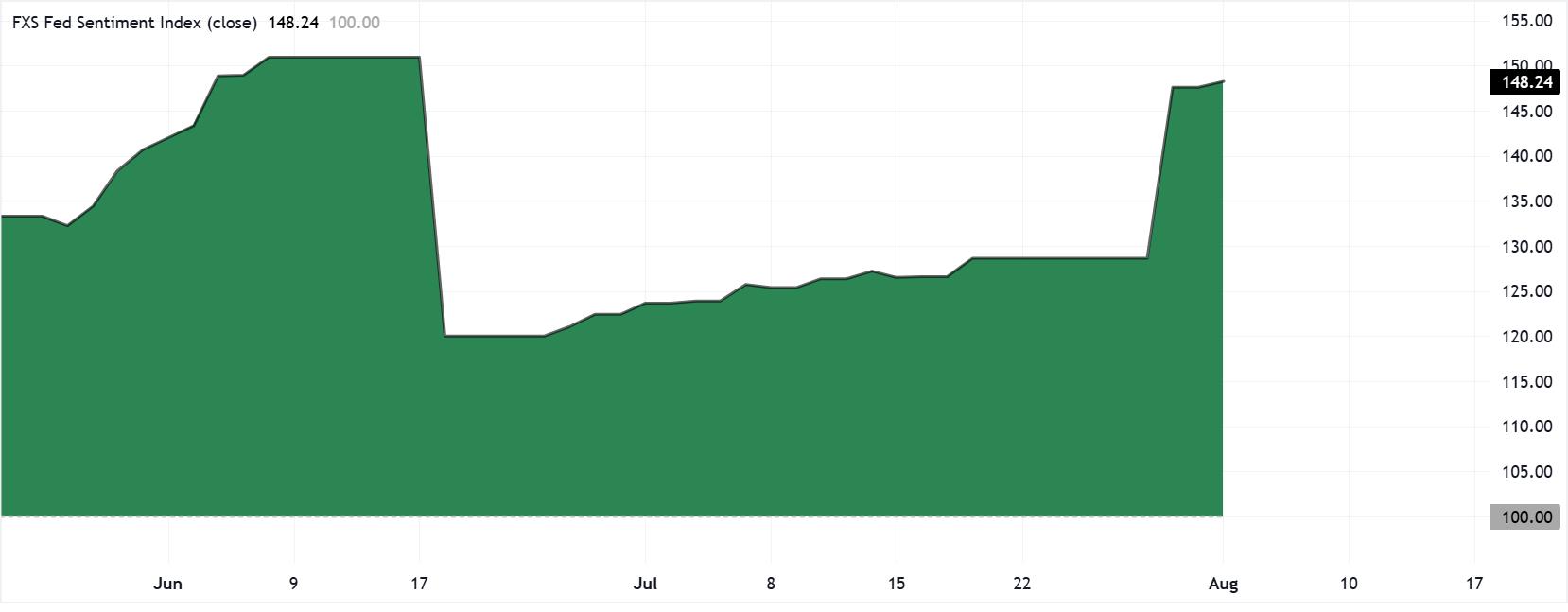
The FXS Fed Sentiment Index slipped by 0.46 points to 148.24, indicating a mild pullback in perceived hawkishness despite remaining firmly above the neutral 100 mark. This keeps the broader Fed tone in hawkish territory, but Barkin’s “close call” framing and reluctance to clearly endorse further hikes contribute to the slight softening captured by the FXS Fed Sentiment Index relative to the stronger readings implied by the FXS Speechtracker.
Risk sentiment FAQs
In the world of financial jargon the two widely used terms “risk-on” and “risk off'' refer to the level of risk that investors are willing to stomach during the period referenced. In a “risk-on” market, investors are optimistic about the future and more willing to buy risky assets. In a “risk-off” market investors start to ‘play it safe’ because they are worried about the future, and therefore buy less risky assets that are more certain of bringing a return, even if it is relatively modest.
Typically, during periods of “risk-on”, stock markets will rise, most commodities – except Gold – will also gain in value, since they benefit from a positive growth outlook. The currencies of nations that are heavy commodity exporters strengthen because of increased demand, and Cryptocurrencies rise. In a “risk-off” market, Bonds go up – especially major government Bonds – Gold shines, and safe-haven currencies such as the Japanese Yen, Swiss Franc and US Dollar all benefit.
The Australian Dollar (AUD), the Canadian Dollar (CAD), the New Zealand Dollar (NZD) and minor FX like the Ruble (RUB) and the South African Rand (ZAR), all tend to rise in markets that are “risk-on”. This is because the economies of these currencies are heavily reliant on commodity exports for growth, and commodities tend to rise in price during risk-on periods. This is because investors foresee greater demand for raw materials in the future due to heightened economic activity.
The major currencies that tend to rise during periods of “risk-off” are the US Dollar (USD), the Japanese Yen (JPY) and the Swiss Franc (CHF). The US Dollar, because it is the world’s reserve currency, and because in times of crisis investors buy US government debt, which is seen as safe because the largest economy in the world is unlikely to default. The Yen, from increased demand for Japanese government bonds, because a high proportion are held by domestic investors who are unlikely to dump them – even in a crisis. The Swiss Franc, because strict Swiss banking laws offer investors enhanced capital protection.
Artigos Recomendados


