


United States Dollar Index turns upside down on Fed rate hike doubts
- The US Dollar gives back early gains and turns negative amid doubts over the Fed’s credibility.
- Investors worry that the Fed could avoid interest rate hikes under US political pressure.
- The Fed is highly anticipated to raise borrowing rates in September.
The US Dollar gives back its opening gains and flips on its head during the European trading session on Thursday. At press time, the US Dollar Index (DXY), which gauges the Greenback’s value against six major currencies, trades 0.1% lower to near 100.70 after falling from its intraday high of around 101.00.
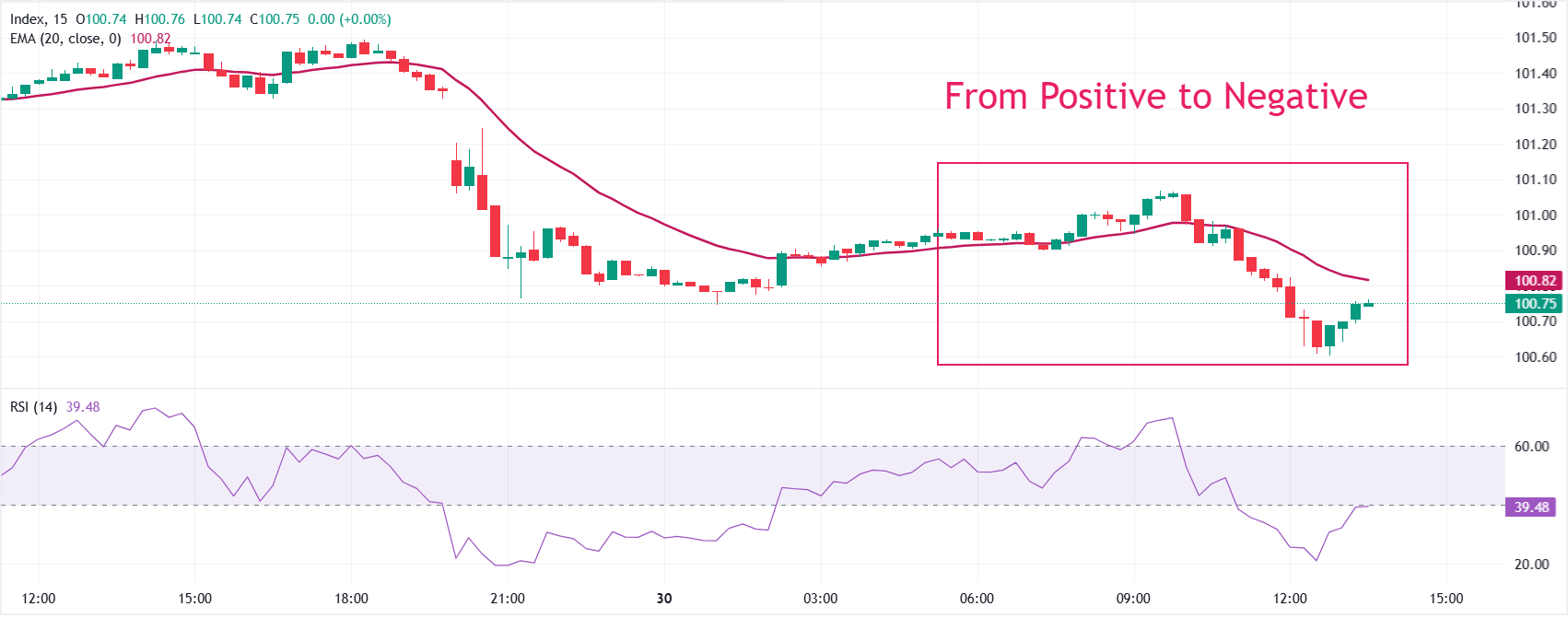
The Greenback faces selling pressure as investors doubt whether the Federal Reserve (Fed) will hike interest rates in the near term to grip over high United States (US) inflation, being under political pressure.
ING’s Chris Turner also characterizes “last night's FOMC press conference” as “a little confusing,” but notes that the market reaction was clear enough: investors concluded that “the Fed was not going to be as tough on fighting inflation as initially thought and might try to wriggle through this period of high inflation without hiking.”
In the monetary policy announcement on Wednesday, the Fed kept interest rates steady in the range of 3.50%-3.75% and warned upside inflation risks. Fed Chair Kevin Warsh said in the press conference that the central bank is committed to bring inflation down and won’t to act if needed.
On Monday, US President Donald Trump said Fed Chairman Kevin Warsh to lower interest rates, adding that there was a good inflation report recently, costs were falling rapidly and that prices should drop significantly once the Gulf War ends.
The scenario of the Fed refraining from reducing interest rates despite inflation remaining higher raise questions over the credibility of the central bank.
Brown Brothers Harriman’s Elias Haddad highlights that the Dollar’s latest setback reflects a reassessment of the Fed’s near-term policy path and its communication. He notes that the USD “dropped sharply for two reasons. First, markets unwounded the residual 30% odds of a July hike. Second, Fed Chair Kevin Warsh failed to turn tough inflation rhetoric into a credible policy.” This combination of diminished rate hike expectations and skepticism over the Fed’s inflation-fighting stance has left the Dollar struggling to regain traction despite the hawkish hold.
According to the CME FedWatch tool, the odds of the Fed raising interest rates in the September policy meeting are 63%.
Fed FAQs
Monetary policy in the US is shaped by the Federal Reserve (Fed). The Fed has two mandates: to achieve price stability and foster full employment. Its primary tool to achieve these goals is by adjusting interest rates. When prices are rising too quickly and inflation is above the Fed’s 2% target, it raises interest rates, increasing borrowing costs throughout the economy. This results in a stronger US Dollar (USD) as it makes the US a more attractive place for international investors to park their money. When inflation falls below 2% or the Unemployment Rate is too high, the Fed may lower interest rates to encourage borrowing, which weighs on the Greenback.
The Federal Reserve (Fed) holds eight policy meetings a year, where the Federal Open Market Committee (FOMC) assesses economic conditions and makes monetary policy decisions. The FOMC is attended by twelve Fed officials – the seven members of the Board of Governors, the president of the Federal Reserve Bank of New York, and four of the remaining eleven regional Reserve Bank presidents, who serve one-year terms on a rotating basis.
In extreme situations, the Federal Reserve may resort to a policy named Quantitative Easing (QE). QE is the process by which the Fed substantially increases the flow of credit in a stuck financial system. It is a non-standard policy measure used during crises or when inflation is extremely low. It was the Fed’s weapon of choice during the Great Financial Crisis in 2008. It involves the Fed printing more Dollars and using them to buy high grade bonds from financial institutions. QE usually weakens the US Dollar.
Quantitative tightening (QT) is the reverse process of QE, whereby the Federal Reserve stops buying bonds from financial institutions and does not reinvest the principal from the bonds it holds maturing, to purchase new bonds. It is usually positive for the value of the US Dollar.
추천 기사


