


US Dollar Index roils after Fed delivers expected interest rate moves
- Fed trims interest rates 25 basis points, as expected.
- Further QE drawdown has been confirmed, which was also anticipated.
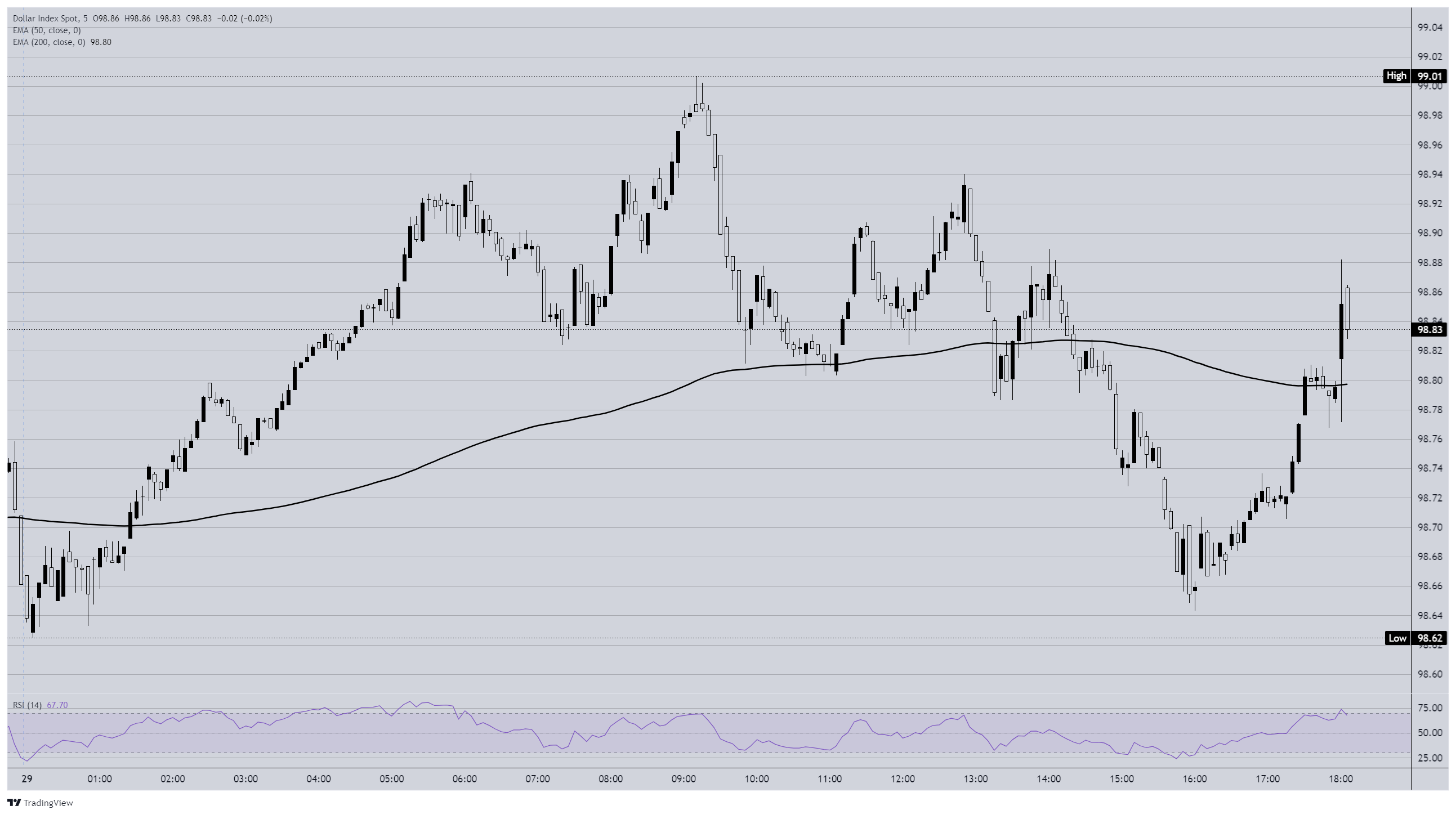
The US Dollar Index (DXY) churned after the Federal Reserve (Fed) delivered a widely-anticipated 25 basis point interest rate cut on Wednesday. The Federal Open Market Committee (FOMC) met investor expectations, but a notable lack of juicy headline-generating comments prevented market flows from spiraling out of control.
The Greenback caught a bit of a tailwind after the Fed acknowledged it would continue to ease back on Quantitative Easing (QE) practices, with the process of drawing down the Fed's mortgage-backed asset balance sheet into long-term Treasuries by December 1.
Two down, one to go
This marks the second straight interest rate cut from the Fed, albeit with some policymakers making a mental note of a general increase in some inflationary pressures through the second half of the year, but not enough to deter another leg down in interest rates.
With a second interest rate cut confirmed and in the books, investors will immediately be pivoting into ‘rate cut watch’ mode once again, looking for a third consecutive rate trim when the FOMC gathers for another interest rate deliberation announcement on December 10.
DXY 5-minute chart
Economic Indicator
Fed Interest Rate Decision
The Federal Reserve (Fed) deliberates on monetary policy and makes a decision on interest rates at eight pre-scheduled meetings per year. It has two mandates: to keep inflation at 2%, and to maintain full employment. Its main tool for achieving this is by setting interest rates – both at which it lends to banks and banks lend to each other. If it decides to hike rates, the US Dollar (USD) tends to strengthen as it attracts more foreign capital inflows. If it cuts rates, it tends to weaken the USD as capital drains out to countries offering higher returns. If rates are left unchanged, attention turns to the tone of the Federal Open Market Committee (FOMC) statement, and whether it is hawkish (expectant of higher future interest rates), or dovish (expectant of lower future rates).
Read more.Last release: Wed Oct 29, 2025 18:00
Frequency: Irregular
Actual: 4%
Consensus: 4%
Previous: 4.25%
Source: Federal Reserve
Fed FAQs
Monetary policy in the US is shaped by the Federal Reserve (Fed). The Fed has two mandates: to achieve price stability and foster full employment. Its primary tool to achieve these goals is by adjusting interest rates. When prices are rising too quickly and inflation is above the Fed’s 2% target, it raises interest rates, increasing borrowing costs throughout the economy. This results in a stronger US Dollar (USD) as it makes the US a more attractive place for international investors to park their money. When inflation falls below 2% or the Unemployment Rate is too high, the Fed may lower interest rates to encourage borrowing, which weighs on the Greenback.
The Federal Reserve (Fed) holds eight policy meetings a year, where the Federal Open Market Committee (FOMC) assesses economic conditions and makes monetary policy decisions. The FOMC is attended by twelve Fed officials – the seven members of the Board of Governors, the president of the Federal Reserve Bank of New York, and four of the remaining eleven regional Reserve Bank presidents, who serve one-year terms on a rotating basis.
In extreme situations, the Federal Reserve may resort to a policy named Quantitative Easing (QE). QE is the process by which the Fed substantially increases the flow of credit in a stuck financial system. It is a non-standard policy measure used during crises or when inflation is extremely low. It was the Fed’s weapon of choice during the Great Financial Crisis in 2008. It involves the Fed printing more Dollars and using them to buy high grade bonds from financial institutions. QE usually weakens the US Dollar.
Quantitative tightening (QT) is the reverse process of QE, whereby the Federal Reserve stops buying bonds from financial institutions and does not reinvest the principal from the bonds it holds maturing, to purchase new bonds. It is usually positive for the value of the US Dollar.
추천 기사


