


NVIDIA Stock Continues to Drop Over 5%, GTC Developer Conference Could Be a Turning Point!

TradingKey - NVIDIA's stock fell more than 5% to around $107, hitting its lowest level since September last year. Can it rebound near the $100 mark?
On Monday, U.S. stocks collectively declined, and NVIDIA was no exception, dropping over 5% to $106.98, its lowest level since September last year.
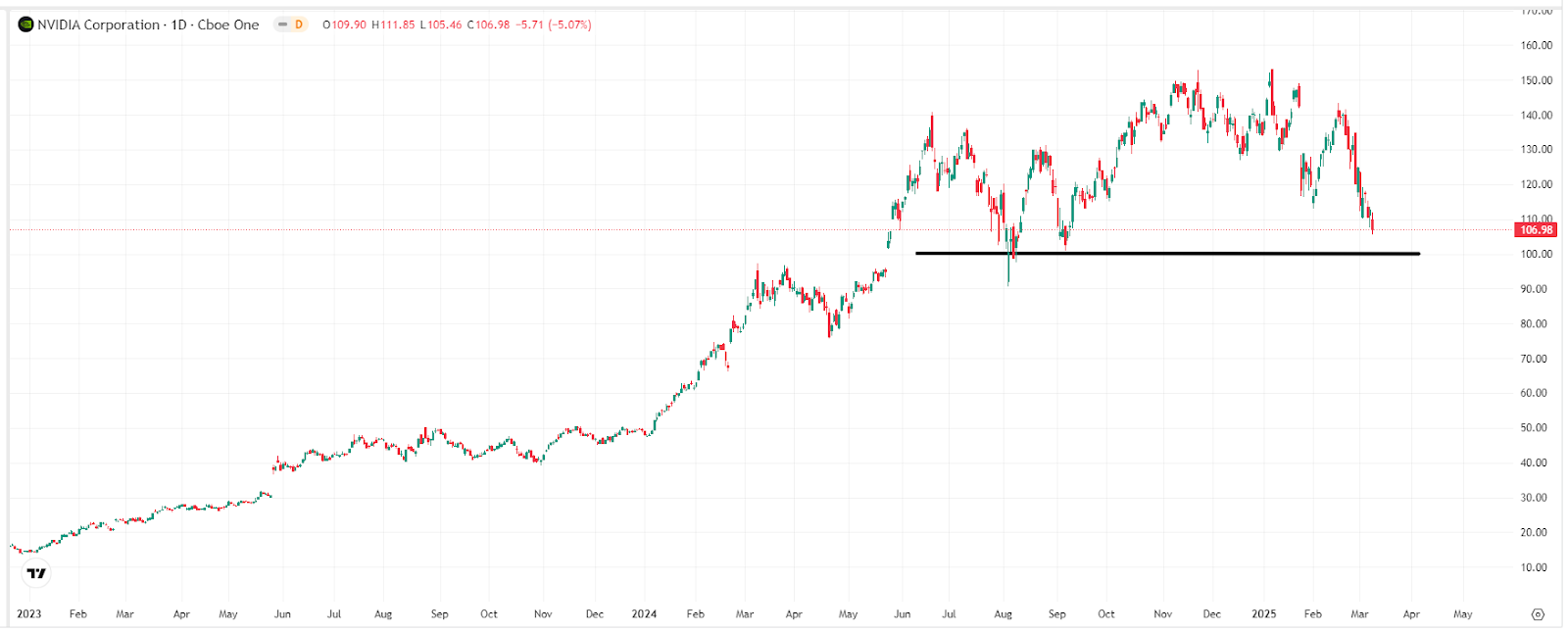
NVIDIA Stock Price Chart, Source: TradingView.
Earlier this year, NVIDIA's stock surged to a record high of $153 but has since continued to decline, falling more than 22% year-to-date. From a technical analysis perspective, NVIDIA has strong support near the $100 level, but will this mark the start of a rebound?
From March 18 to 21, NVIDIA will host the GTC Developer Conference, which could boost NVIDIA's stock and the AI sector. Melius analyst Ben Reitzes expects NVIDIA to discuss memory upgrades for its Blackwell Ultra products and preview its 2026 Rubin chip, possibly even revealing its 2027 technology roadmap.
Additionally, Ben Reitzes stated, "We expect NVIDIA to deliver major breakthroughs in computing speed, memory, and energy efficiency, technologies that will become increasingly critical in the future."
Read more
* The content presented above, whether from a third party or not, is considered as general advice only. This article should not be construed as containing investment advice, investment recommendations, an offer of or solicitation for any transactions in financial instruments.


