


Warren Buffett's Successor, Greg Abel, Has Inherited a $318 Billion Portfolio That Has 61% of Invested Assets in These 5 Unstoppable Stocks
Key Points
Berkshire Hathaway's longtime CEO, Warren Buffett, retired on Dec. 31, handing the reins to his successor, Greg Abel.
Abel is unlikely to touch the Oracle of Omaha's previously labeled eight "indefinite" holdings.
However, value is of the utmost importance to Abel, which means two core holdings are at risk of being significantly pared down.
- 10 stocks we like better than Apple ›
The midpoint of February is an exciting time on Wall Street, as it marks the filing deadline for Form 13Fs with the Securities and Exchange Commission. A 13F filing details which stocks Wall Street's prominent money managers bought and sold in the latest quarter (in this case, the fourth quarter).
For decades, Berkshire Hathaway's (NYSE: BRKA)(NYSE: BRKB) 13Fs have been among the most anticipated on Wall Street. But with Warren Buffett retiring, effective Dec. 31, Berkshire's $318 billion investment portfolio is now Greg Abel's responsibility.
Will AI create the world's first trillionaire? Our team just released a report on the one little-known company, called an "Indispensable Monopoly" providing the critical technology Nvidia and Intel both need. Continue »
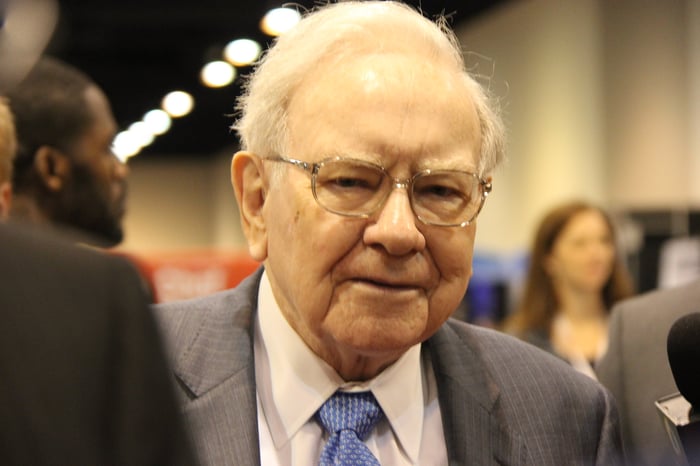
Warren Buffett retired as Berkshire Hathaway CEO at the end of 2025. Image source: The Motley Fool.
Based on Berkshire's fourth-quarter 13F filing, the Oracle of Omaha left his successor with a highly concentrated portfolio. Nearly 61% of invested assets can be traced back to just five unstoppable stocks (percentages as of Feb. 24, 2026):
- Apple (NASDAQ: AAPL): 19.5% of invested assets
- American Express (NYSE: AXP): 15.3% of invested assets
- Coca-Cola (NYSE: KO): 10.1% of invested assets
- Bank of America (NYSE: BAC): 8.2% of invested assets
- Chevron (NYSE: CVX): 7.6% of invested assets
Buffett's "indefinite" holdings aren't going anywhere
When Berkshire's now-retired billionaire boss penned his 2023 letter to shareholders, he highlighted eight companies he viewed as indefinite holdings, Coca-Cola and American Express among them. Coca-Cola and Amex have been continuous holdings in Berkshire's investment portfolio since 1988 and 1991, respectively.
Aside from exceptional brand recognition, both companies are paying a mouthwatering yield on cost to Berkshire Hathaway. With respective cost bases of around $3.25 for Coca-Cola and $8.49 for Amex, the company Greg Abel now oversees is raking in annual yields of 63% (Coca-Cola) and 39% (Amex), relative to cost. There's no logical incentive to sell these stocks.
Value is of the utmost importance
Although Abel will bring his own unique investment approach to the table, one trait he and his predecessor shared was an unwavering desire to get a good deal. While Buffett, in hindsight, made astute investments in Apple and Bank of America, neither is the bargain they once were.
Though Apple possesses a loyal customer base and has the most impressive share buyback program among publicly traded companies -- over $841 billion in stock repurchased since 2013 -- its trailing 12-month price-to-earnings (P/E) ratio has practically tripled from Buffett's initial purchase of shares in the first quarter of 2016. Years of weakness in Apple's physical device sales make its current P/E ratio of 34 arguably expensive.
Meanwhile, Berkshire's retired boss opened a position in Bank of America's preferred stock in August 2011. At the time, BofA's common stock was valued at a 62% discount to its book value. As of this writing, Bank of America trades at a 31% premium to book value.
Don't be surprised if Abel continues paring down Berkshire's exposure to both companies.
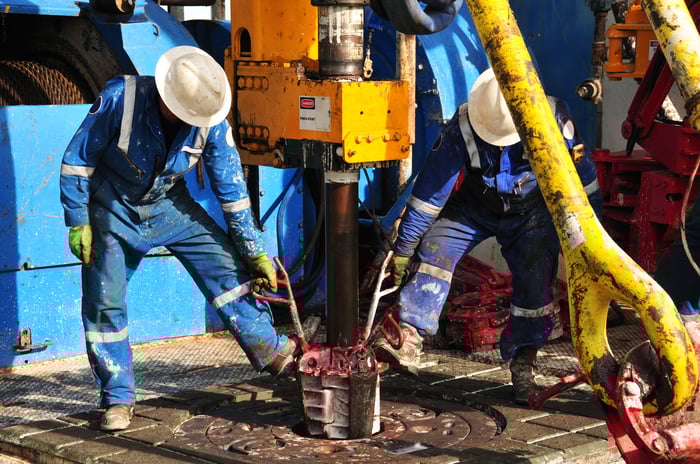
Image source: Getty Images.
Energy may become foundational
As for Chevron, it may receive the Coca-Cola and Amex treatment.
Abel previously served as CEO of MidAmerican Energy, which is now Berkshire Hathaway Energy. He's well aware of energy sector dynamics and likely appreciates Chevron's integrated operating model. Although Chevron generates its highest margins from drilling, the company's pipelines, chemical plants, and refineries can effectively hedge against weakness in the spot price of crude oil.
While some things are bound to be different with Greg Abel at the helm, the principles Berkshire was founded on will remain the same.
Should you buy stock in Apple right now?
Before you buy stock in Apple, consider this:
The Motley Fool Stock Advisor analyst team just identified what they believe are the 10 best stocks for investors to buy now… and Apple wasn’t one of them. The 10 stocks that made the cut could produce monster returns in the coming years.
Consider when Netflix made this list on December 17, 2004... if you invested $1,000 at the time of our recommendation, you’d have $445,995!* Or when Nvidia made this list on April 15, 2005... if you invested $1,000 at the time of our recommendation, you’d have $1,198,823!*
Now, it’s worth noting Stock Advisor’s total average return is 927% — a market-crushing outperformance compared to 194% for the S&P 500. Don't miss the latest top 10 list, available with Stock Advisor, and join an investing community built by individual investors for individual investors.
See the 10 stocks »
*Stock Advisor returns as of February 27, 2026.
Bank of America is an advertising partner of Motley Fool Money. American Express is an advertising partner of Motley Fool Money. Sean Williams has positions in Bank of America. The Motley Fool has positions in and recommends Apple, Berkshire Hathaway, and Chevron. The Motley Fool has a disclosure policy.
Recommended Articles


