




Where to Buy Shares in Australia (2026): 6 Best Platforms Compared

Figuring out where to buy shares in Australia isn't as simple as picking the first platform you come across.
The one you choose shapes what you pay per trade and which markets you can access. It also determines whether you actually own the shares you buy or just get exposure to their price.
In 2026, the number of options has grown, and so have the differences between them. Fees, market access, and how your shares are held can vary a lot from one platform to the next.
This guide covers six of the best places to buy shares, with an honest look at fees, features, and who each platform actually suits.
Quick Summary: Where to Buy Shares in Australia
Not every platform suits every investor. Here’s a quick filter to find the right fit for your situation:
Best for zero-commission trading: Mitrade, CMC Invest
Best for direct share ownership (CHESS-sponsored): CommSec, CMC Invest, Stake
Best for multi-asset access (shares, forex, indices, commodities): Mitrade, Interactive Brokers
Best for social and copy trading: eToro
Best for low-cost US stock access: Stake, CMC Invest
“Trade Stocks with an ASIC-regulated broker. Fast AUD funding via PayID. ”
What to Look For Before You Pick a Platform
Knowing where to buy shares is one thing. But knowing what to look for in a platform is another. These five factors should guide your decision on where to buy shares in Australia:
1. Regulation: All legitimate platforms in Australia must hold an Australian Financial Services Licence (AFSL) issued by ASIC. This means client funds are kept separate from the broker's own money. It also means leverage limits and negative balance protection apply to retail traders.
2. Fees: The headline brokerage figure rarely tells the full story. FX conversion fees and inactivity charges can quietly add to your costs over time. Always check the full fee schedule, not just the advertised brokerage rate.
3. Market access: Some platforms are limited to ASX stocks only. Others give you access to US markets, global indices, and ETFs, so check what a platform covers before committing.
4. Ownership model: CHESS-sponsored accounts register shares directly in your name. Custodian accounts hold shares on your behalf. CFD platforms give you price exposure without ownership but often come with more flexibility and broader market access.
5. Usability: A cluttered interface can lead to mistakes, especially early on. Look for clean design, a demo account, and learning tools. These small details make a real difference when you're still finding your feet.
Where to Buy Shares in Australia: Quick Comparison
Here's how all six platforms stack up at a glance:
*Fees and features are subject to change. Always verify current rates on each platform's official website before trading.
6 Platforms to Buy Shares in Australia (Reviewed)
The platforms below are reviewed individually across the same set of criteria features, pros, cons, fees, and usability. Each one has been researched and verified as of April 2026.
1. Mitrade
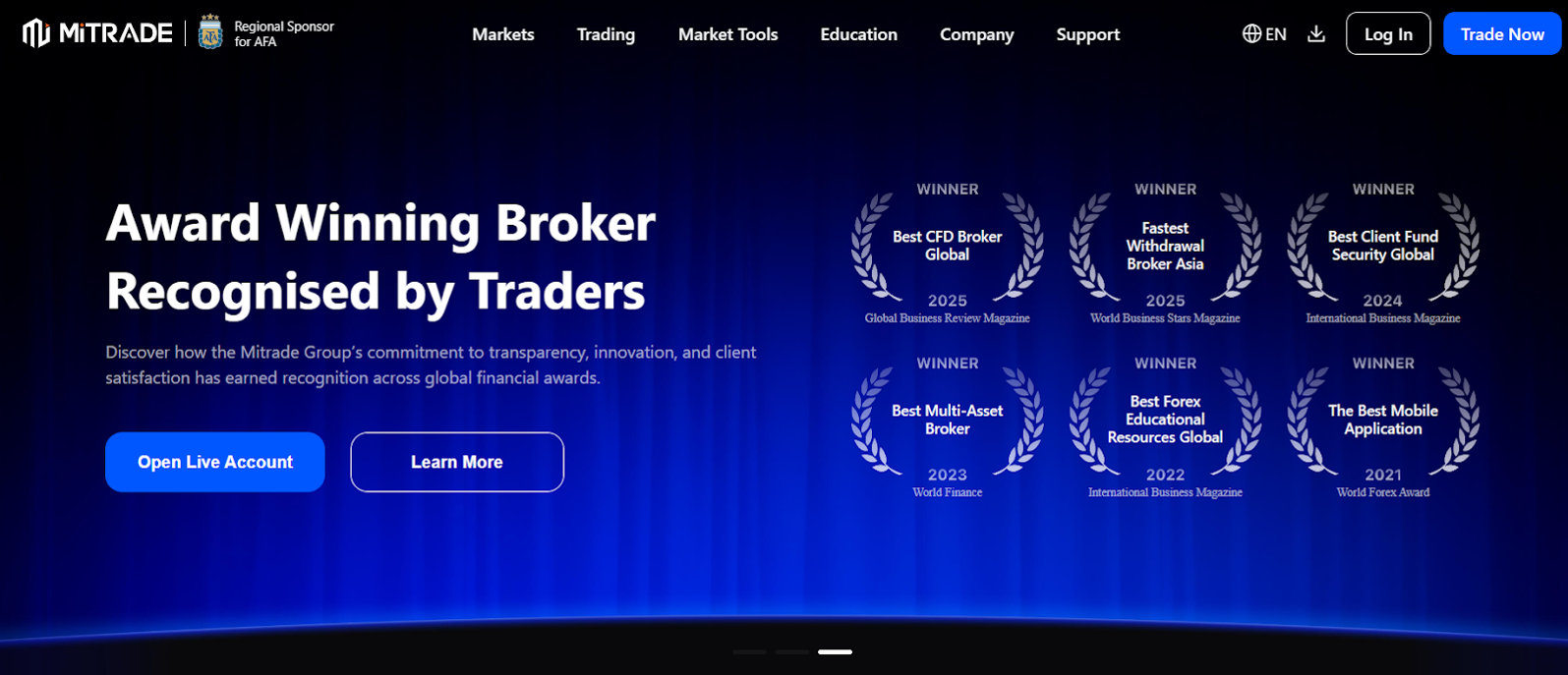
Image via Mitrade
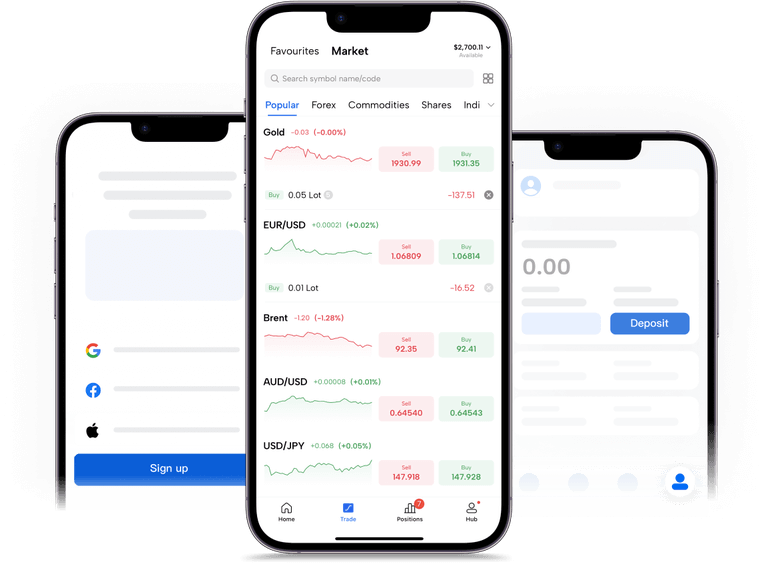
Mitrade is an ASIC-regulated CFD broker that was founded in Australia in 2011 and serves over 6 million users worldwide. It gives traders access to 900+ instruments across shares, forex, indices, commodities, and crypto.
Its zero-commission model and beginner-friendly design make it a strong starting point for new investors.
Key features
TradingView-powered charts with 130+ analytical tools, trading signals, and a built-in news screener
A free demo account loaded with $50,000 in virtual funds for practicing before going live
Supports both long and short positions on stock CFDs, so you can act on rising and falling markets
Negative balance protection and stop-loss tools are built into the platform as standard
Available on iOS, Android, web, and desktop with full feature parity across all versions
Pros
Zero commission makes frequent trading more cost-effective than per-trade brokerage platforms
Multi-asset access from one account removes the need to manage multiple brokers
The demo account lets beginners test strategies without risking real capital
Cons
No CHESS sponsorship
Fees
Commission: 0%
Cost model: Spread-based
Overnight funding fee: Applies to positions held past the daily rollover time
Deposit/withdrawal fees: None charged by Mitrade
Account maintenance fee: None
Inactivity fee: $10/month after extended period of no account activity
Usability: Clean interface with a short onboarding process.

 Enjoy simple and fast tradingFlexible leverage options available Follow real-time trading strategies

2. CommSec

Image via CommSec
CommSec is the share trading arm of Commonwealth Bank and Australia's largest online broker. It suits buy-and-hold investors who value research depth and direct share ownership over low fees.
Key features
CHESS-sponsored by default shares registered directly in your name on the ASX registry
Goldman Sachs research integration gives access to institutional-grade company analysis
Access to 25 international exchanges including US, UK, and Asia-Pacific markets
CommSec Pocket offers simplified ETF investing from $2 per trade for beginners
Pros
Goldman Sachs and Morningstar research tools go well beyond basic price data
Broad product range covers ASX shares, ETFs, warrants, and exchange-traded options
Cons
Fees are higher than platforms like Mitrade, which adds up for frequent traders
Fees
ASX trades (online, CDIA): $5 up to $1,000; $10 up to $3,000; $19.95 up to $10,000; $29.95 up to $25,000; 0.12% above $25,000
CommSec Pocket: $2 up to $1,000; 0.20% above
US shares: USD$5 or 0.12%, whichever is greater
FX conversion: 0.55% per conversion
Inactivity/custody fee: None
Usability: Functional for research-led investors.
3. CMC Invest
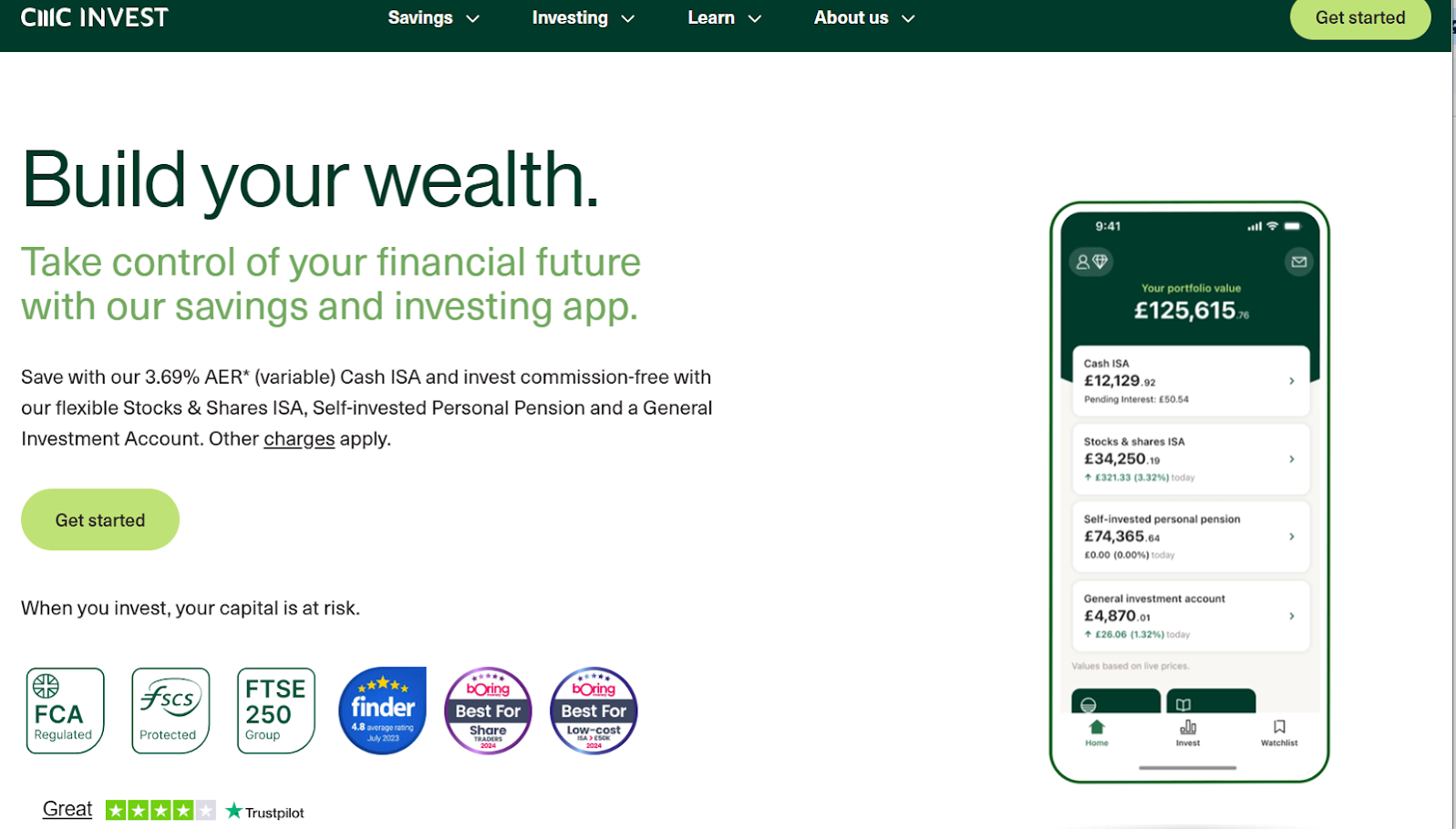
Image via CMC Invest
CMC Invest is the share trading arm of CMC Markets, a broker established in 1989. It has won the Finder Award for Best Overall Trading Platform four years running. It suits active investors who want broad global market access and low-cost US share trading.
Key features
Access to 45,000+ stocks and ETFs across 16 global exchanges
CHESS-sponsored for ASX trades, shares registered directly in your name
TipRanks integration gives access to analyst consensus and price forecasts
Supports share investing, managed funds, ETFs, and options under one account
Pros
One of the widest market selections among retail platform in Australia
Strong research suite combining in-house analysis, Morningstar ratings, and TipRanks data
Cons
The $0 ASX offer applies only to the first buy order per day up to $1,000, subsequent trades cost $11
Fees
ASX trades: $0 on first buy order per day up to $1,000; $11 or 0.1% after
US, UK, Canada, Japan: $0 brokerage
Other international markets: $59.95 or 0.59%, whichever is greater
FX conversion: approximately 0.6% on international trades
Inactivity fee: applies after 12 months of no trading
Usability: Well-built platform with more depth than some retail alternatives.
4. Stake
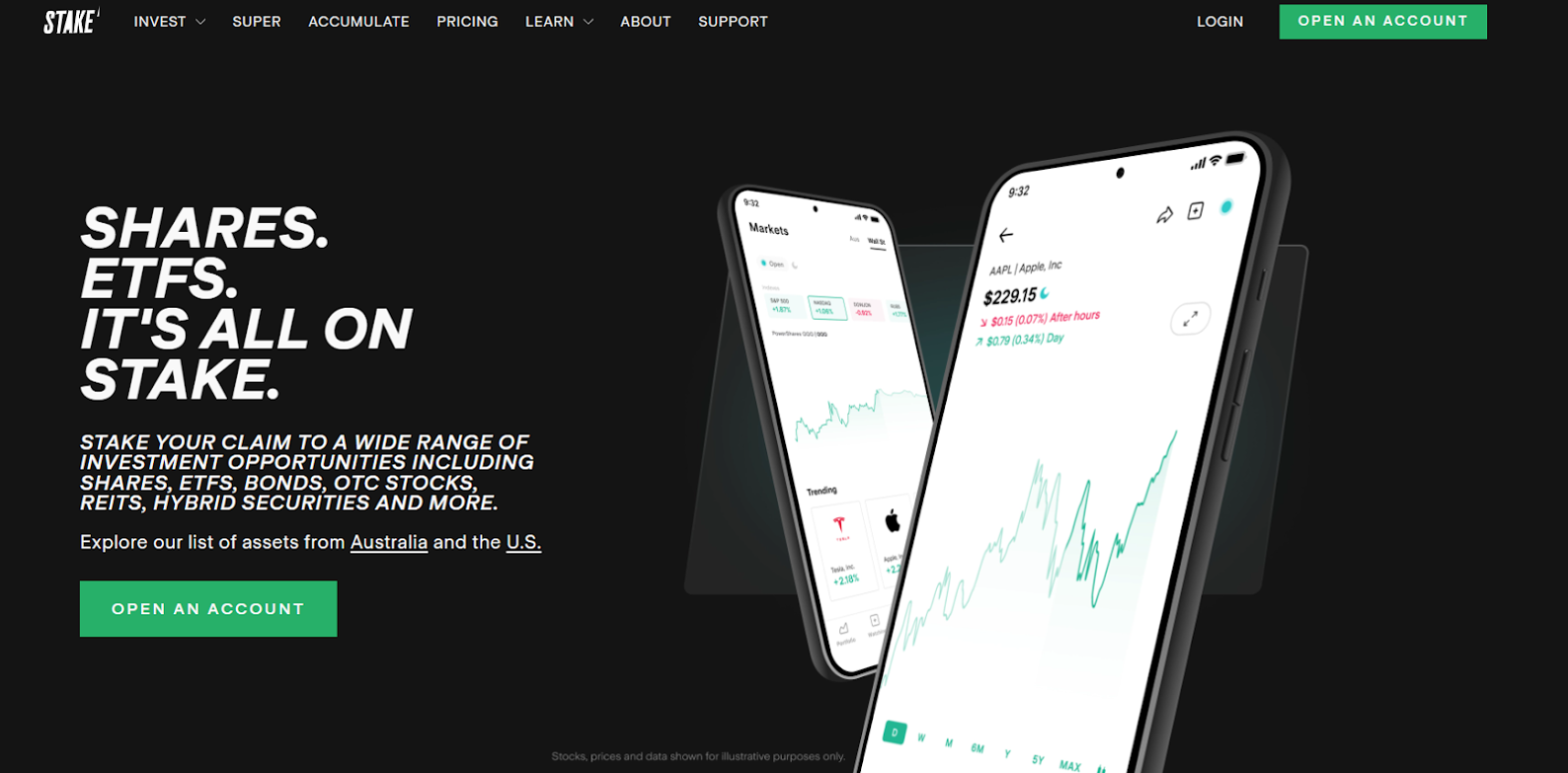
Image via Stake
Stake is a mobile-first investing platform launched in 2017, now serving 750,000+ users with over A$7 billion in assets under administration. It's built for investors who want clean, low-cost access to ASX and US shares without the complexity of a full-service broker.
Key features
Access to 12,000+ stocks and ETFs across the ASX and Wall Street exchanges
CHESS-sponsored ASX trading, shares held under your own HIN
Stake Super allows SMSF members to manage investments and admin in one place
Fractional US share investing available from as little as US$10
Pros
Flat $3 brokerage on all trades up to $30,000 is one of the most transparent fee structures
US shares protected by SIPC coverage up to US$500,000
Cons
No CFDs, forex, commodities, or crypto, compared to multi-asset options like Mitrade
Fees
ASX and US trades: $3 flat up to $30,000; 0.01% above $30,000
FX conversion: 0.55% on AUD to USD conversion
Stake Black membership: from $12/month for advanced tools
Inactivity fee: none
Usability: Polished and intuitive.
5. eToro
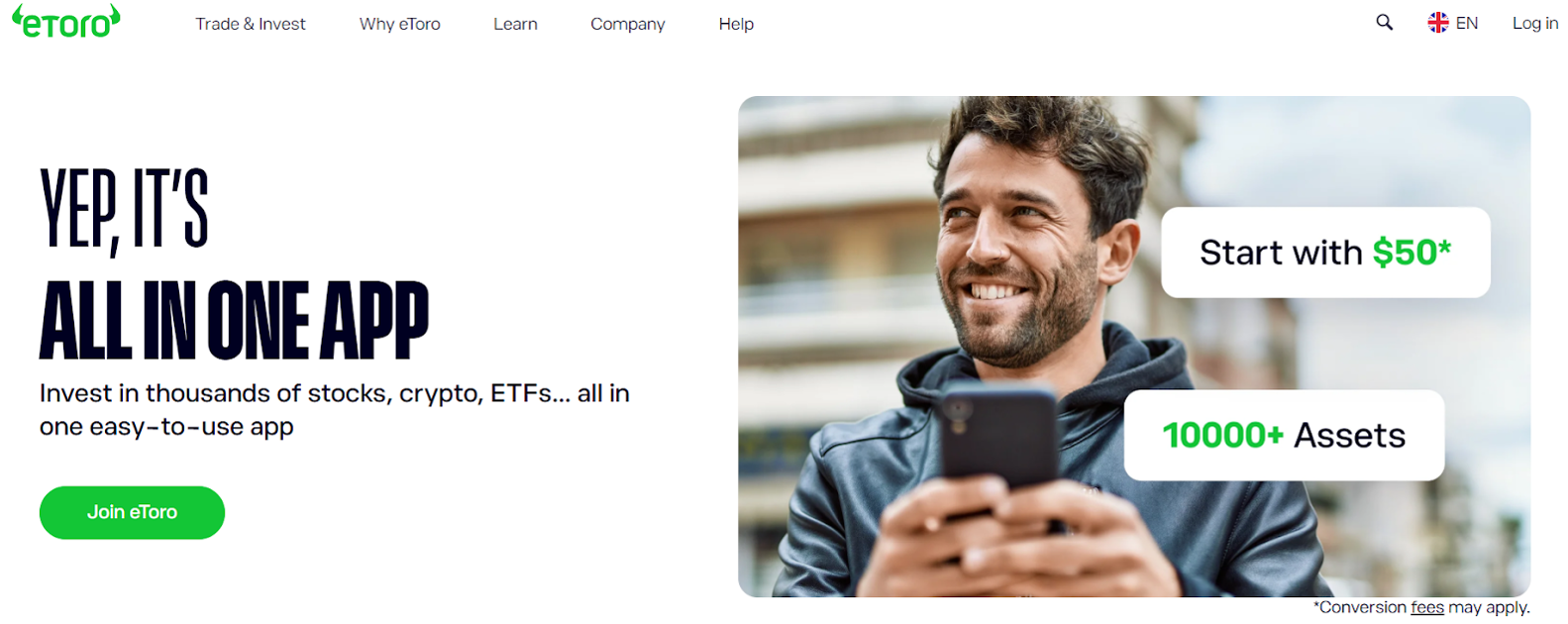
Image via eToro
eToro is a social trading platform regulated by ASIC in Australia, with over 40 million users worldwide. It's best known for its copy trading feature and suits beginners who want a guided entry into investing alongside access to a broad range of assets.
Key features
Copy trading lets you automatically replicate the positions of up to 100 experienced investors at once
Smart Portfolios offer ready-made, theme-based investment bundles
Access to stocks, ETFs, crypto, indices, commodities, and forex from one account
AUD accounts available, no conversion fees when trading ASX-listed stocks in local currency
Pros
Broad asset range covers most of what a retail investor needs from a single platform
Low minimum deposit removes a key barrier for first-time investors
Cons
Withdrawal fees and FX conversion costs add up for frequent traders
Fees
ASX and international shares: US$2 flat fee per trade
FX conversion: 0.5% via bank transfer; 1.5% via card or PayPal
Withdrawal fee: US$5 per withdrawal
Inactivity fee: US$10/month after 12 months of no login activity
Usability: Approachable and social-first, feels more like an app than a traditional broker.
6. Interactive Brokers
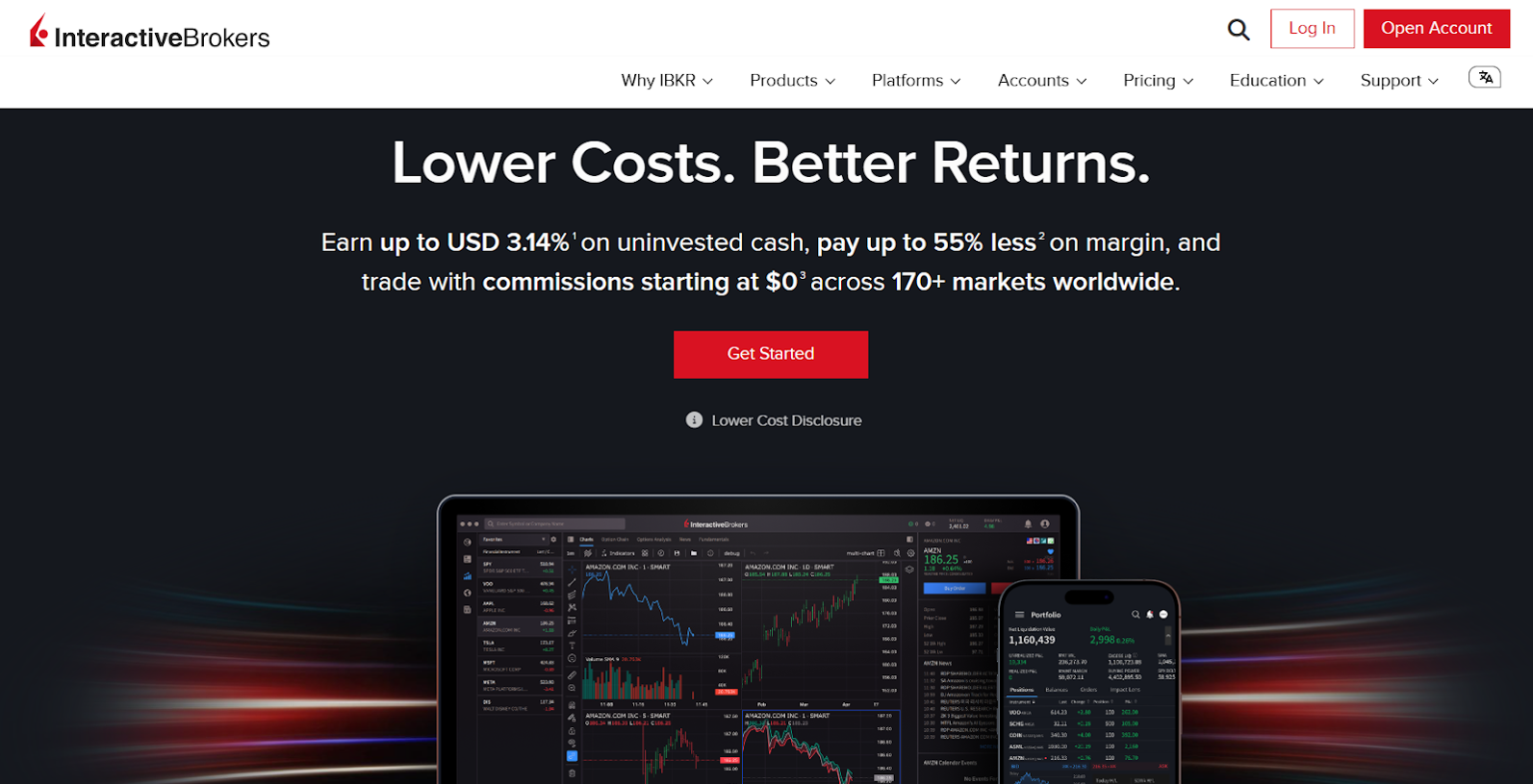
Image via Interactive Brokers
Interactive Brokers is one of the most advanced platforms on this list. It’s best suited to experienced investors managing large and internationally diversified portfolios. This platform won Best Global Stocks Trading Platform and Best Features Share Trading Platform at the 2026 Finder Awards.
Key features
Access to 170+ global markets covering stocks, ETFs, options, futures, bonds, and forex
Trader Workstation (TWS) provides institutional-grade tools for advanced strategies
Client Portal offers a simpler web interface for investors who don't need the full TWS toolkit
Supports SMSF and trust account structures
Pros
Tiered pricing reduces costs as trading volume increases, rewarding active traders
Covers the most complex instruments of any platform reviewed here
Cons
Trader Workstation has a steep learning curve
Fees
ASX shares: 0.08% of trade value; minimum AU$6 per trade
US shares: US$0.005 per share; minimum US$1 per order
FX conversion: 0.002%; minimum US$2.20
Withdrawals: one free per month; AU$15 per additional withdrawal
Inactivity fee: none
Usability: Powerful once configured, but has a steep learning curve.
Conclusion
The best platform comes down to what you need. If you want direct share ownership, CommSec, Stake, and CMC Invest are solid options. If you want multi-asset access, lower costs, and a clean experience, Mitrade stands out.
Figuring out where to buy shares in Australia is easier when you can try before you commit. Mitrade's free demo account gives you $50,000 in virtual funds to practice with no risk, no pressure. It's a practical first step before putting real capital on the line.
1. What is the cheapest platform to buy shares in Australia?
It depends on how often you trade. CMC Invest offers $0 on your first ASX buy order per day. Stake charges a flat $3 per trade. Mitrade charges 0% commission, with costs built into the spread.
2. Is it safe to buy shares through an online platform in Australia?
Yes, provided the platform is ASIC-regulated. All six platforms here hold an AFSL, meaning client funds are kept separate from the broker's own money.
3. What is the difference between buying shares and trading CFDs?
Direct share ownership means you hold the underlying asset. With CFDs, you get price exposure without ownership, offering flexibility but carrying higher risk.
4. Can I trade shares and other assets from the same account on Mitrade?
Yes, 900+ instruments, including share CFDs, forex, indices, commodities, and crypto, all from one account.
Disclaimer: The content presented above, whether from a third party or not, is considered as general advice only. CFD trading involves significant risk of loss. Past performance does not guarantee future results. This article serves informational purposes only and does not constitute financial advice. Consider your risk tolerance before trading.


