




Bond Market Storm Hits Japanese Stocks as Nikkei 225 Index Drops Over 3%, SoftBank Slumps 8% and Kioxia Falls Over 10%
TradingKey - During the Asian trading session on August 19, the Nikkei 225 Index fell for a second consecutive day, with early losses widening to 3%. As of press time, the Nikkei 225 Index traded around 65,734 points, down 2.56%. The Topix Index also weakened, dropping 2.76%.
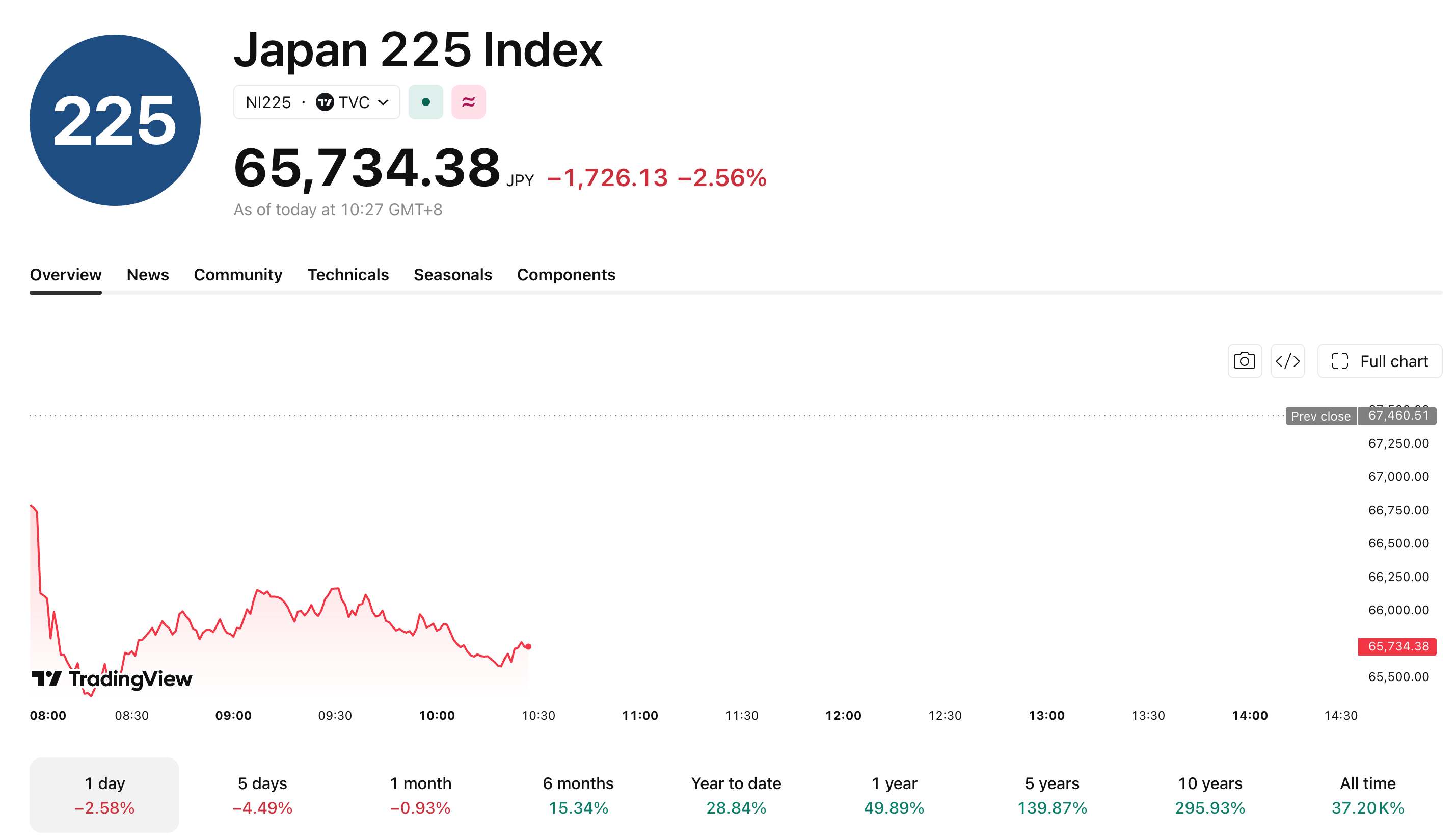
[Source: TradingView]
The semiconductor sector came under broad pressure. Memory chip maker Kioxia Holdings fell over 10% intraday and was down 9.13% as of press time, while semiconductor equipment giant Tokyo Electron dropped 4.4%. SoftBank Group slumped more than 8%, dragged down by market reports of sluggish second-quarter revenue growth at OpenAI, while its unit Arm (ARM) dropped over 6% in US trading overnight, compounding selling pressure.
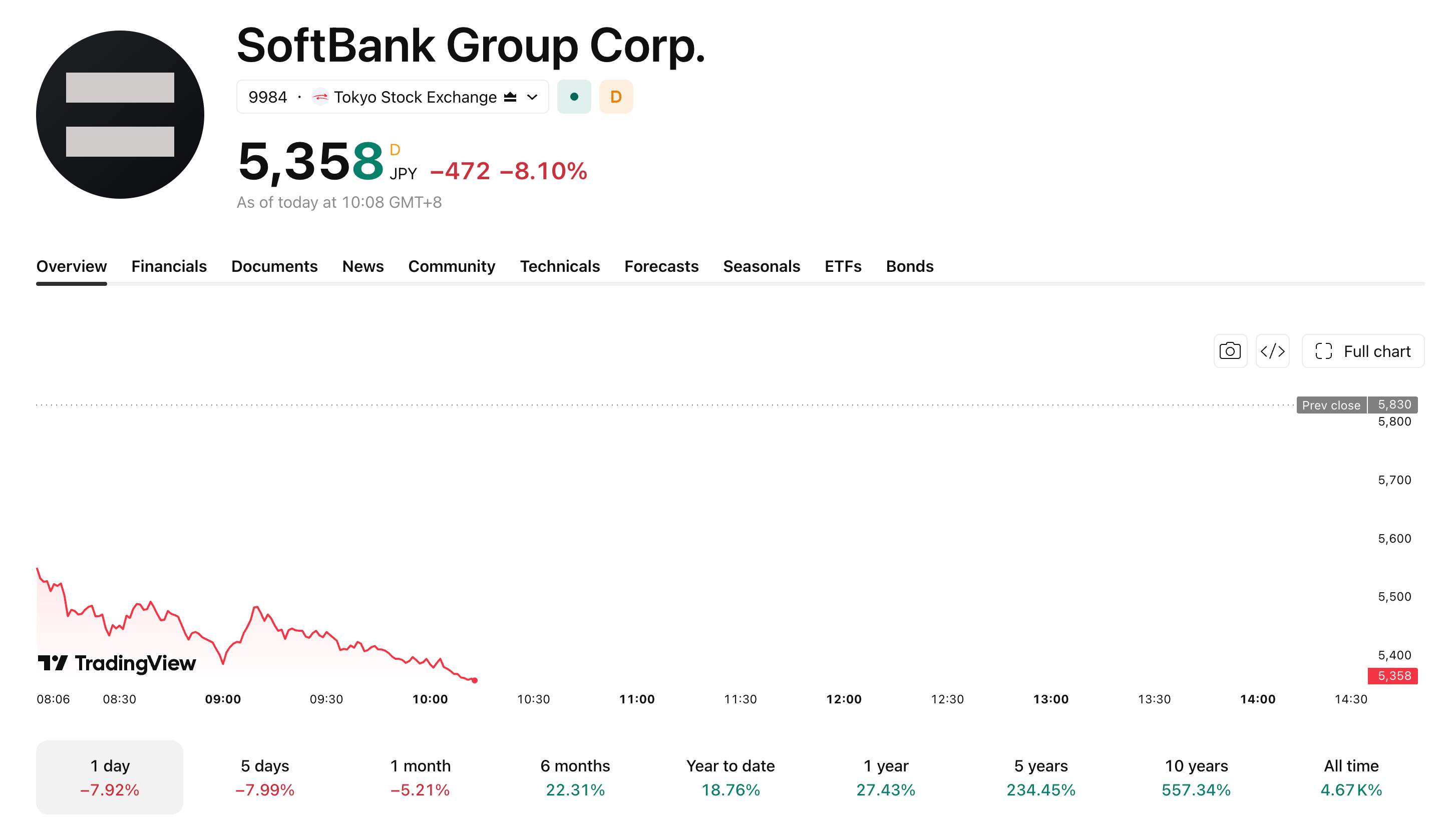
[Source: TradingView]
Behind the sell-off in individual equities lies the continued transmission of pressure from the bond market. Japan's 10-year government bond yield rose Tuesday to its highest level since 1996 amid market speculation that the Bank of Japan could raise interest rates next month. Meanwhile, the 10-year US Treasury yield also remained at high levels not seen since early 2025. Under this dual pressure, the AI infrastructure investment thesis—characterized by high valuations and long payback cycles—is facing challenges.
Kazunori Tatebe, chief strategist at Daiwa Asset Management, linked the AI sell-off to rising yields, noting that higher yields will push up borrowing costs for hyperscalers, triggering market doubts over capital expenditure prospects and potentially affecting infrastructure companies that benefited from the AI investment wave.
On August 19, Japan's 10-year government bond yield pulled back to 2.920%. Although bond market pressure has temporarily eased, the real variables lie ahead: the Bank of Japan's September decision and the direction of US Treasury yields will determine the upcoming course for Japanese tech stocks.
Recommended Articles


