




Japan and South Korea Stocks Plummet: Samsung and SK Hynix Drop 6% to Lead Declines, SoftBank and Kioxia Fall Slightly
TradingKey - Japanese and South Korean stock markets fell across the board, with the KOSPI index plunging over 5%, the Nikkei 225 falling over 2%, Samsung and SK Hynix tumbling around 6%, while SoftBank and Kioxia dropped slightly.
During the Asian trading session on July 8, Japanese and South Korean stock markets experienced a disastrous day. Among them, the KOSPI index triggered a "temporary trading halt" mechanism intraday, closing down 5.35% at 7,246.80 points, hitting its lowest level since May 20; the Nikkei 225 fell 2.11% to close at 66,819.05 points, a new low since June 15.
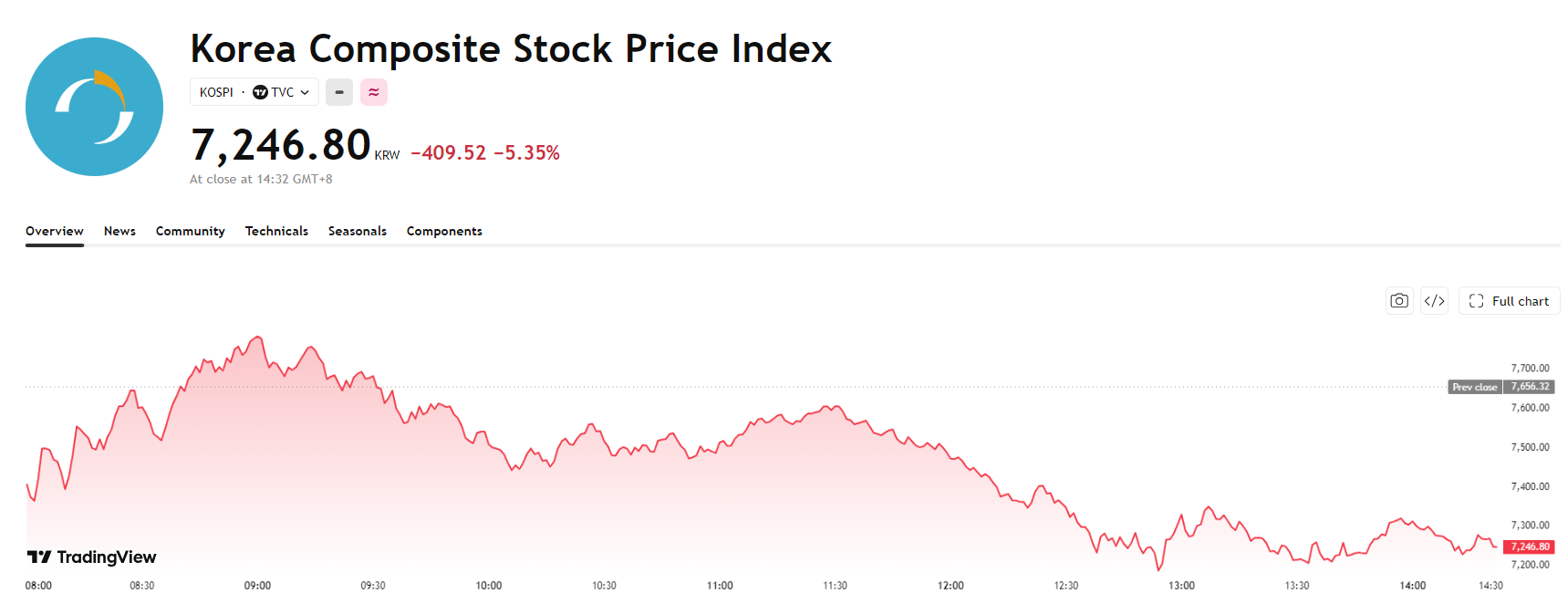 KOSPI Index Chart, Source: TradingView
In terms of individual stocks, SoftBank and Kioxia remained relatively resilient, while Samsung Electronics and SK Hynix suffered heavy losses. Among them, Samsung Electronics fell 6.25%, slipping below 280,000 won to close at 277,500 won, a new low in over a month; SK Hynix fell 5.68%, barely holding the 2 million won mark to close at 2,076,000 won; Kioxia fell 0.73% to close at 71,870 yen; SoftBank was relatively defensive, falling only 0.14% to 5,763 yen.
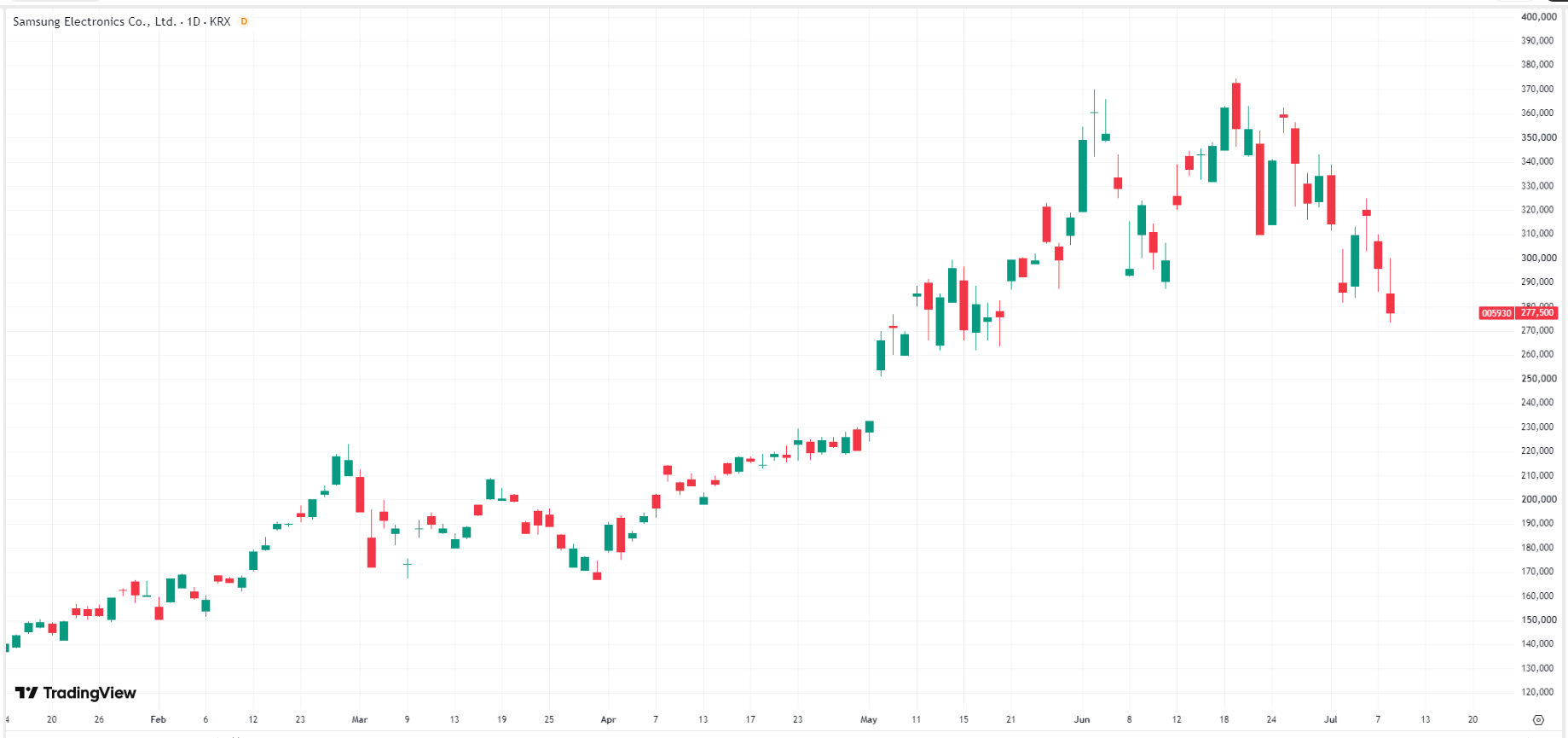 Samsung Electronics Stock Price Chart, Source: TradingView
In early trading today, the sudden outbreak of military conflict in the Middle East and the lifting of oil sanctions triggered market panic. Japanese and South Korean stock markets opened lower and continued to slide. However, during the session, a dramatic V-shaped reversal occurred, narrowing the losses and even briefly turning positive due to "bargain-hunting capital entering memory chip stocks." The most typical examples were SK Hynix and Kioxia, indicating that smart money still regards core AI hardware as a core asset.
However, the market ultimately closed lower under a massive wave of foreign capital selling. Nevertheless, this also suggests that the short-term long squeeze and wash-out are nearing an end. The market is now waiting for the pricing performance of SK Hynix's US listing this Friday, which will be the key bellwether determining whether Asia-Pacific semiconductor stocks can fully relaunch a second wave of bullish offensive.
Recommended Articles


