




1 ETF With a 31% Allocation to SpaceX
Key Points
The Baron First Principles ETF (RONB), a fund focused on disruptive, innovative companies, has 31% of its assets invested in SpaceX (SPCX).
While the stock is consistent with the fund's objective, its high concentration and lack of operating history make it less desirable as a long-term investment.
Investors should probably pass on this fund.
- 10 stocks we like better than Baron First Principles ETF ›
Space Exploration Technologies (NASDAQ: SPCX), better known as SpaceX, is one of the hottest initial public offerings (IPOs) ever. So it's not surprising that both investors and fund managers are scrambling to get their hands on shares.
Some of the professionals take that desire to extremes. Most index funds have rules that govern how quickly they can add IPO shares and how much they can buy. Actively managed funds don't have those constraints. That means managers can take big home run swings quickly if they choose.
Missed Nvidia in 2009? This Rare Signal Is Flashing Again. In 2009, a "Double Down" signal flashed for a little-known chipmaker called Nvidia. For the first time in years, that same "Total Conviction" signal is flashing for a company 1/100th the size of Nvidia. Continue »
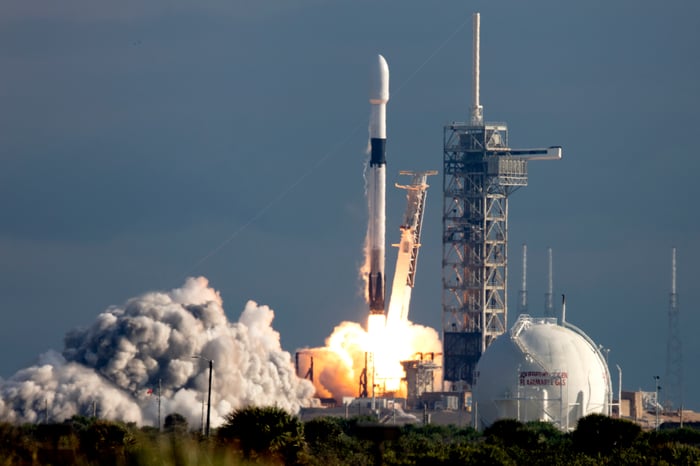
Image source: Getty Images.
The Baron First Principles ETF (NYSE: RONB) is one such fund. Its legendary head portfolio manager, Ron Baron, has put a massive 31% of the fund's assets in SpaceX, easily the largest allocation made to this stock in any ETF (exchange-traded fund).
The fund invests in what the company calls "first principles" businesses, those considered innovative companies pursuing large, disruptive opportunities. SpaceX certainly fits the bill. But the big question at this allocation is how much is too much.
I'm not sure this is ultimately about investment strategy as much as it is about grabbing assets. Prior to SpaceX's IPO, investors were looking for any means possible to get access to shares in the private markets. The Baron First Principles ETF offered that. By ratcheting up the exposure, it offered investors what few could -- a sizable allocation to SpaceX.
While that might be appealing to investors, it's not a sound strategy for the fund. By taking such a significant position in a single company, it runs the risk of a deep drawdown and heightened volatility should investors decide that valuation, company execution, or financial performance is questionable.
The fund's lack of diversification means it doesn't belong in the core of a portfolio. The short operating history means investors don't have a good handle on how the fund will perform in different economic cycles, either.
It all makes for an interesting ETF story, but not so much a long-term investment.
Should you buy stock in Baron First Principles ETF right now?
Before you buy stock in Baron First Principles ETF, consider this:
The Motley Fool Stock Advisor analyst team just identified what they believe are the 10 best stocks for investors to buy now… and Baron First Principles ETF wasn’t one of them. The 10 stocks that made the cut could produce monster returns in the coming years.
Consider when Netflix made this list on December 17, 2004... if you invested $1,000 at the time of our recommendation, you’d have $392,713!* Or when Nvidia made this list on April 15, 2005... if you invested $1,000 at the time of our recommendation, you’d have $1,227,782!*
Now, it’s worth noting Stock Advisor’s total average return is 897% — a market-crushing outperformance compared to 208% for the S&P 500. Don't miss the latest top 10 list, available with Stock Advisor, and join an investing community built by individual investors for individual investors.
See the 10 stocks »
*Stock Advisor returns as of June 25, 2026.
David Dierking has no position in any of the stocks mentioned. The Motley Fool has no position in any of the stocks mentioned. The Motley Fool has a disclosure policy.
Recommended Articles


