




Japanese Stocks Open Higher, Korean Stocks Dragged by Heavyweights, Samsung and SK Hynix Lead Losses
TradingKey - The Nikkei 225 index edged up 0.6% during the opening phase, with its intraday gains subsequently expanding steadily to 1%. In contrast, South Korea's KOSPI index showed a weak consolidation pattern; after dropping 1.2% early in the session, selling pressure intensified further, extending the decline to 2%.
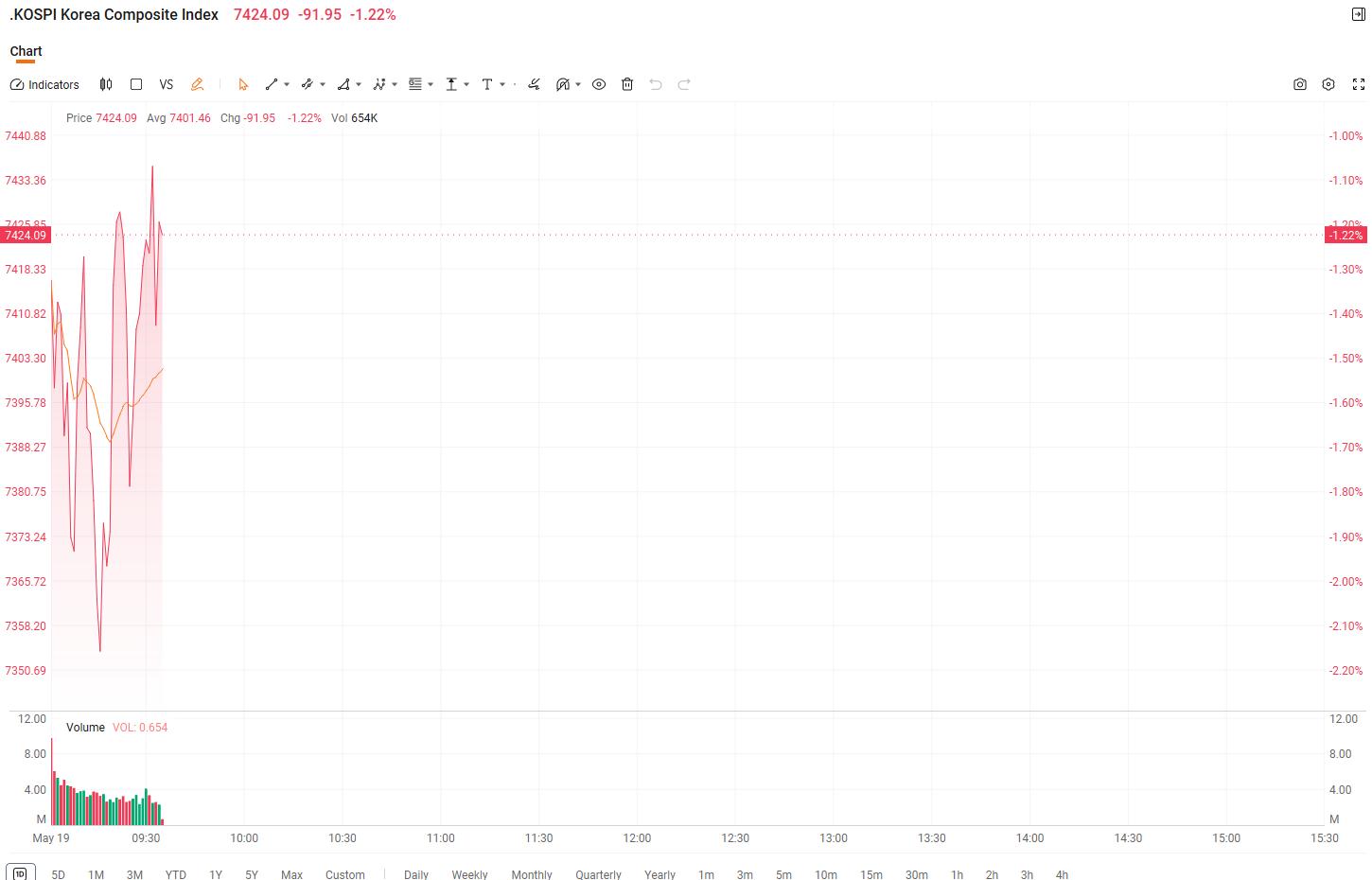
Regarding heavyweight stocks, Samsung Electronics fell by more than 3% and SK Hynix dropped 2.5%. The overall pressure on the semiconductor sector became a significant factor weighing down the index.
Volatility in the South Korean stock market has intensified significantly recently. On Monday, volatility indicators approached historic peaks at one point, causing sharp fluctuations in the KOSPI index and even briefly triggering exchange-mandated trading curbs.
However, taking a longer-term view, the KOSPI index has surged by a cumulative 236% over the past 12 months. Its upward momentum has not stemmed from traditional valuation expansion but rather from the substantial realization of earnings tied deeply to the global artificial intelligence supply chain.
South Korea's capital market has now formed a beneficiary ecosystem highly synchronized with AI hardware. From GPU support required for core computing power to dominance in High Bandwidth Memory (HBM) supply, mass production breakthroughs in advanced packaging, and the entire chain of servers, storage devices, and power infrastructure, South Korean companies occupy pivotal positions in the global division of labor.
This "hardware-driven" growth model has shifted market pricing logic from a "sentiment discount" to an "earnings revaluation." A once-undervalued regional market is now being reassessed by global capital due to improvements in industrial fundamentals.
Although the medium-to-long-term industrial logic remains clear, short-term disruptive factors still require cautious evaluation.
Markets are monitoring the evolving situation in the Middle East. If the conflict lasts longer than expected, energy prices and shipping costs could rise again, potentially fueling global stagflation concerns and dampening risk appetite for assets.
Furthermore, following the Senate's confirmation of Kevin Warsh as Fed Chair, if his advocated policy framework of "balance sheet reduction plus interest rate cuts" is implemented at a fast pace, it could exert temporary pressure on emerging market capital flows and exchange rate stability.
In terms of industrial supply chains, the Samsung Electronics labor union plans to launch an 18-day strike on May 21. As a core global supplier of HBM, any impact on its production stability could disrupt the delivery pace of global AI servers in the short term, thereby feeding back into supply chain sentiment.
Recommended Articles


