




Meta Acquisition Halted by China, Why Zuckerberg Won’t Let Go of Manus
TradingKey - Meta's acquisition of Manus failed, but the company has not given up. What exactly makes Manus so special?
On April 27, China halted Meta's ( META) acquisition of the Manus project, requiring relevant parties to rescind the deal. China's National Development and Reform Commission (NDRC) issued a statement saying, "The Office of the Working Mechanism for the Security Review of Foreign Investment (NDRC) has, in accordance with laws and regulations, made a decision to prohibit the foreign acquisition of the Manus project and requires the parties involved to cancel the transaction." Following the announcement, Meta's stock price performed flatly, rising 0.53% to close at $678.62.
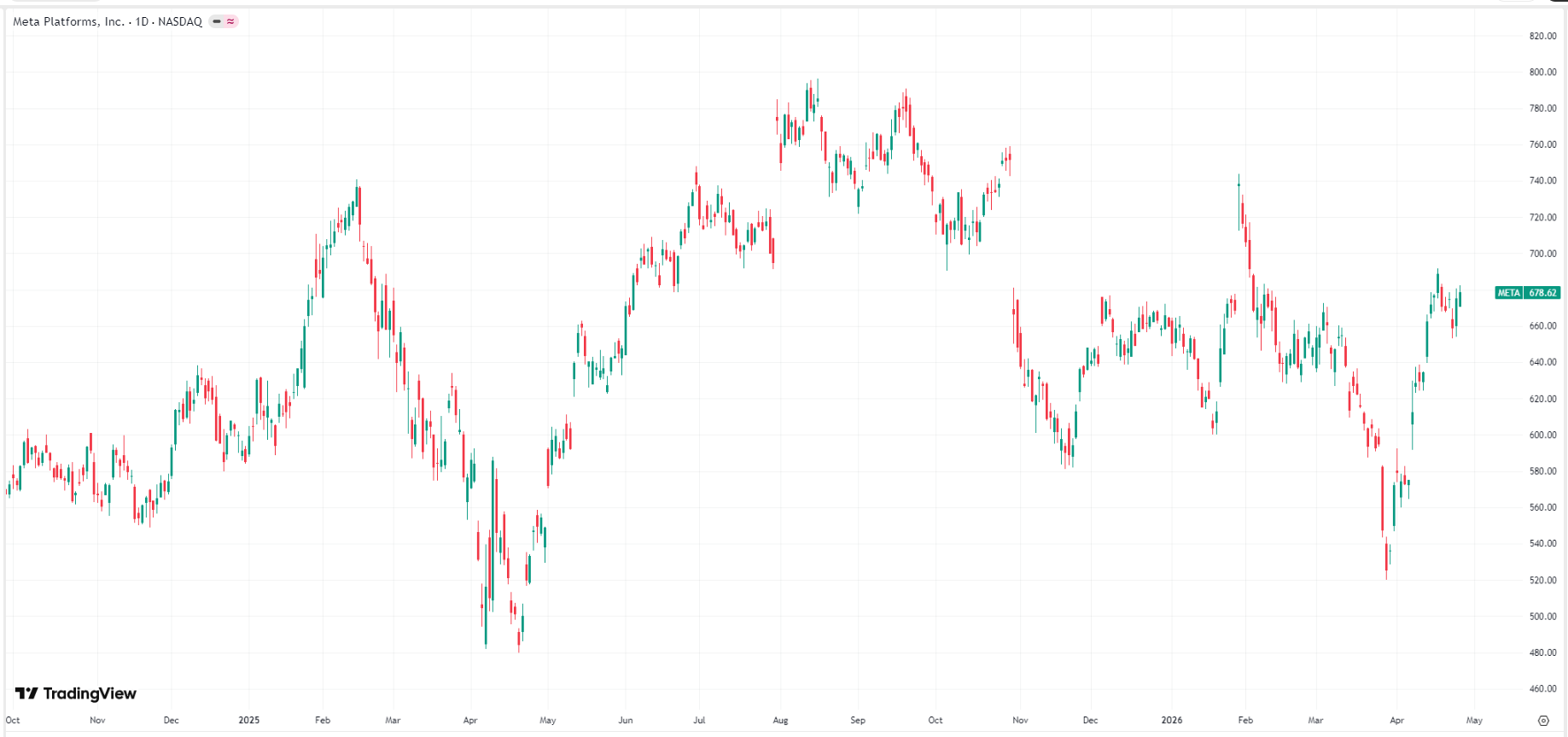 Meta stock price chart, Source: TradingView
Manus is the world's first general-purpose AI agent, launched in March 2025 and developed by a team led by Xiao Hong. In July of the same year, Manus secured $75 million in funding led by top Silicon Valley venture capital firm Benchmark, while announcing a shift in its revenue and R&D focus from China to Singapore. On December 17, Manus's Annual Recurring Revenue (ARR) surpassed $100 million. Two weeks later, Meta announced it would fully acquire Manus at a valuation exceeding $2 billion.
Although Meta's acquisition of Manus was rejected, the company is not backing down. Yesterday, Meta issued a statement claiming the transaction complies with relevant laws and expressed hope for a proper resolution from China. Why is Meta so persistent about acquiring Manus, and what exactly makes it so attractive?
For Meta, Manus holds immense strategic significance as its "ticket" into the era of General Artificial Intelligence. This is primarily reflected in three areas: AI capability, commercialization, and technology, as detailed below:
1. Addressing Llama's Shortcomings
Meta already possesses its open-source Large Language Model, Llama, but it remains essentially a "conversational AI." It excels at answering questions but lacks "agentic" capabilities—the ability to autonomously plan and execute tasks—which is the core attribute of Manus. In other words, while Meta has massive user data and distribution channels (FB, IG, WhatsApp), it lacks an operating system like Manus that can transform "ideas" into "actions."
2. An Urgent Need to Monetize AI Capital Expenditure
Just eight months after its launch, Manus's Annual Recurring Revenue (ARR) surpassed $100 million, far outpacing the time it took Slack (2.5 years) and Shopify (4 years) to reach that milestone. This demonstrates the market's high willingness to pay for "AI that can get work done," a key attraction for Meta as it seeks to convert its massive AI capital expenditures into revenue.
3. Strategic Talent and Technology "Acqui-hiring"
In the AI arms race, the Manus team is a scarce market resource. If Meta does not acquire Manus, Microsoft or Google could step in, posing a direct threat to Meta. Furthermore, Mark Zuckerberg has previously stated that he is a long-term user of Manus, signaling his high regard for the technology.
Simply put, if the acquisition succeeds, Meta could upgrade its social platform of 3 billion users into an "automated life operating system." However, the current rejection of the deal means Zuckerberg must either negotiate with China or find a new technological breakthrough; otherwise, Meta risks falling behind other giants in the AI race.
Recommended Articles


