




Worried About Market Volatility? Every Investor Should Hear What Warren Buffett Has to Say
Key Points
As oil prices come down and the Iran war ceasefire holds, the market is hitting new highs, led by tech stocks.
Buffett says the market could drop dramatically sometime in the next 20 years -- when no one expects it.
So investors should keep a diversified portfolio and the proper mindset for navigating these periods.
- 10 stocks we like better than S&P 500 Index ›
Investors are breathing a sigh of relief as the S&P 500 (SNPINDEX: ^GSPC) has rebounded from a war-related drop to hit new highs. But is it too soon?
The ceasefire has been holding steady, and oil prices are on their way down. Confident investors have been piling into tech stocks again, and the Nasdaq-100 index has gone back to beating the S&P 500.
Will AI create the world's first trillionaire? Our team just released a report on the one little-known company, called an "Indispensable Monopoly" providing the critical technology Nvidia and Intel both need. Continue »
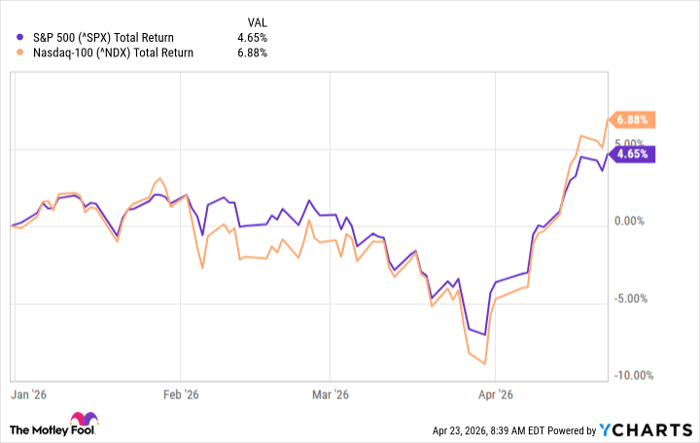
^SPX data by YCharts
This is a consistent sign that growth investors are fueling a bull market, and as valuations go up, investors should pause and make sure they're investing in great companies they believe in, and not just getting excited about hyped-up stocks.
The market could change course at any time, without prior warning. A hallmark of market crashes is that they don't happen when you're expecting them. You must be ready for them at all times.
Consider what Warren Buffett said last year in his last annual call as CEO of Berkshire Hathaway.
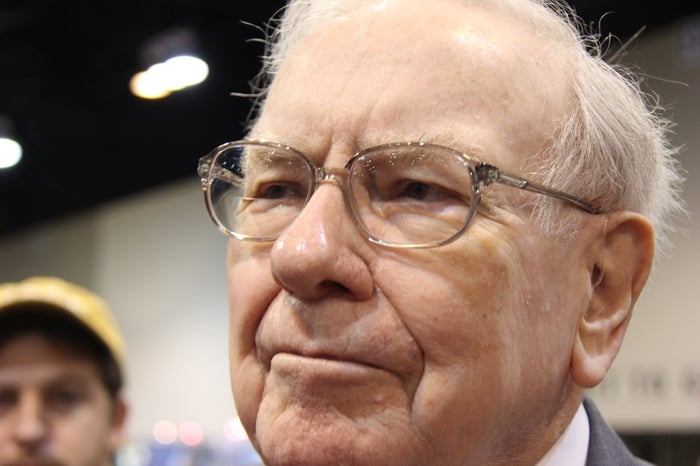
Image source: The Motley Fool.
Check your emotions at the door
In response to a question about market volatility and whether a 15% market drop had presented Buffett with buying opportunities, Buffett said, "If it makes a difference to you whether your stocks are down 15% or not, you need to get a somewhat different investment philosophy." He went on to caution listeners to expect a dramatic, "hair-curling" drop sometime over the next 20 years.
"The more sophisticated the system gets," he continued, "the more the surprises can be out of right field. That's just -- that's part of the stock market. And that's what makes it a good place to focus your efforts if you got the proper temperament for it, and a terrible place to get involved if you get frightened by markets that decline and get excited when stock markets go up."
When there's global uncertainty, like a war or rising oil prices, investors can panic, get out of the markets, and lose money. To be a successful investor, you need check your emotions at the door, as Buffett advises.
Consider that investors who sold stocks as the market began to drop in March may have lost money, turning paper losses into real losses. Whoever didn't panic and held on has seen the tide turn just a few weeks later, with the S&P 500 up nearly 5% year to date.
Investors should take heed of what he says, though, as the markets rise, too. Don't get overexcited to the point of irresponsibility. Keep your portfolio diversified, and make sure to hold onto those excellent anchor stocks that can protect your holdings when the next market drop comes around.
Should you buy stock in S&P 500 Index right now?
Before you buy stock in S&P 500 Index, consider this:
The Motley Fool Stock Advisor analyst team just identified what they believe are the 10 best stocks for investors to buy now… and S&P 500 Index wasn’t one of them. The 10 stocks that made the cut could produce monster returns in the coming years.
Consider when Netflix made this list on December 17, 2004... if you invested $1,000 at the time of our recommendation, you’d have $498,522!* Or when Nvidia made this list on April 15, 2005... if you invested $1,000 at the time of our recommendation, you’d have $1,276,807!*
Now, it’s worth noting Stock Advisor’s total average return is 983% — a market-crushing outperformance compared to 200% for the S&P 500. Don't miss the latest top 10 list, available with Stock Advisor, and join an investing community built by individual investors for individual investors.
See the 10 stocks »
*Stock Advisor returns as of April 27, 2026.
Jennifer Saibil has no position in any of the stocks mentioned. The Motley Fool has positions in and recommends Berkshire Hathaway. The Motley Fool has a disclosure policy.
Recommended Articles


