




Will Middle East Turmoil Kill Fed Rate Cuts? Latest Comments From Dovish Official Reveal Key Signal
TradingKey - Affected by the Middle East situation and U.S. inflation data, market expectations for the Federal Reserve's rate-cut path this year continue to converge, and investors' original bets on multiple rate cuts are gradually being revised.
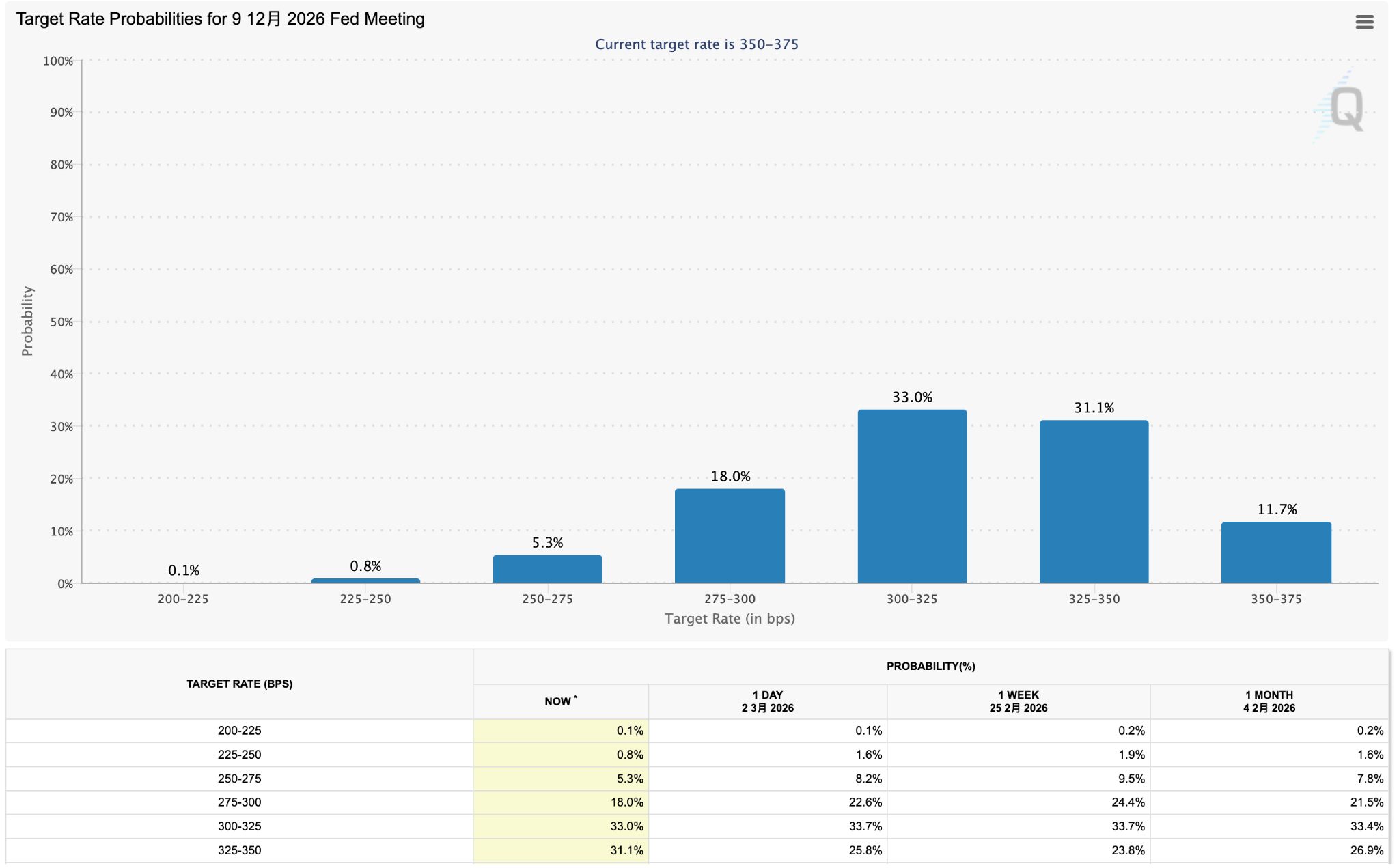
[Rate-cut expectations for the month and year continue to be pared back, Source: CME Group]
The deterioration of the situation in the Middle East has pushed up energy prices and inflation expectations, leading the market to bet that the Federal Reserve will be more cautious in its monetary policy pivot. Meanwhile, senior Fed officials have recently made dovish remarks in an attempt to reassure the market, emphasizing that policy will be data-dependent rather than driven by a single event. This stance has, to some extent, eased market fears regarding a sudden shift in monetary policy.
Previously, market consensus existed, but as U.S. actions related to Iran triggered a reassessment of inflation expectations due to rising energy prices, the scope for rate cuts has been narrowing.
Market pricing shows that traders have significantly pared back bets on the magnitude of rate cuts this year, and the implied market probability of multiple rate cuts has shrunk. The logic behind this trade is that rising energy prices could delay the disinflation process, and revisions to inflation expectations will directly impact the real interest rate path, preventing the central bank from being as accommodative as the market previously expected.
Notably, the sustained high international oil prices are exerting upward pressure on the CPI. As the Middle East is a key export region for crude oil and natural gas, the deteriorating situation there has further pushed up inflation expectations through end-user energy prices and transportation costs. Until the data shows a clear slowdown, the Fed's cautious stance on rate cuts will gradually be accepted by the market. This caution has not only driven a short-term strengthening of the U.S. dollar amid safe-haven sentiment but has also put pressure on the valuation of traditional safe-haven assets like gold.
Against this backdrop, speeches by Federal Reserve officials have become another major focus for the market.
New York Fed President John Williams emphasized in public on Tuesday that although Middle East risks may cause short-term disturbances to price levels, the Fed should not adjust policy based solely on the event itself, but should focus more on the persistence of employment and inflation data.
He also noted that U.S. dependence on imported crude oil has significantly decreased, and historical experience shows that periodic oil price fluctuations are unlikely to shake economic fundamentals. If inflation recedes as expected, the Fed still has the policy room to proceed with planned rate cuts to avoid a passive tightening of monetary conditions.
Williams' remarks were widely interpreted by the market as "relatively dovish," meaning he supports easing if conditions permit but will not alter the overall policy framework due to a single external shock.
Bloomberg previously noted that by strengthening "data-dependent" communication, the Fed is attempting to prevent the market from making excessive bets on the rate-cut path. This communication strategy can, to some extent, suppress the over-sensitivity of asset prices to rate-cut expectations, thereby reducing the risk of asset mispricing caused by sharp fluctuations in policy expectations.
Based on current data, the reduction in rate-cut expectations for the year has become a market consensus set in stone. For investors, attention still needs to be paid to major U.S. data; this Wednesday and Friday, the U.S. Department of Labor will release ADP and non-farm payroll data. If the employment data shows strong resilience, the market may again bet on an extension of the timeline for the rate-cut cycle.
Recommended Articles


