




How to Buy XRP in Australia Safely in 2026: Exchanges vs XRP CFDs Compared

Buying XRP in Australia has become significantly easier over the past few years — but choosing the right way to get exposure to XRP is now more important than ever.
In 2026, Australian investors face two main options:
buying XRP directly through a cryptocurrency exchange, or trading XRP via CFDs without owning the token itself. Each approach comes with very different risks, costs, and practical implications.
This guide explains how to buy XRP in Australia safely, how the rules work, and which option may make more sense depending on your investment goals.
Buying XRP in Australia in 2026: What Has Changed?
Australia’s crypto market has matured rapidly. What was once a lightly regulated, fragmented space is now far more structured, especially for retail investors.
Key changes Australian investors should be aware of:
Stronger compliance requirements across platforms
Greater scrutiny on custody and client fund protection
Broader access to crypto-linked derivatives such as CFDs
Increased focus on risk disclosures and suitability
XRP remains one of the most actively traded digital assets globally, largely due to its role in payment infrastructure and ongoing institutional interest. But how Australians gain exposure to XRP has diversified — and not all methods carry the same level of complexity or risk.
Is XRP Legal in Australia?
Yes — XRP is legal to buy and trade in Australia.
Cryptocurrencies are classified as digital assets rather than legal tender. Australians are allowed to buy, sell, hold, and trade XRP through compliant platforms.
That said, different rules apply depending on how you access XRP:
Crypto exchanges operate under AUSTRAC registration and AML/KYC requirements
CFD providers fall under the oversight of
Australian Securities and Investments Commission, with stricter conduct and disclosure standards
Understanding this distinction is crucial when evaluating safety, transparency, and investor protection.
“Trade xrp CFDs with an ASIC-regulated broker. Fast AUD funding via PayID. ”
Two Main Ways to Get XRP Exposure in Australia
Most Australian investors use one of the following approaches.
Buying XRP Through a Cryptocurrency Exchange
This is the traditional method.
When you buy XRP on an exchange:
You own the XRP
You can withdraw it to a personal wallet
You are responsible for custody and security
This approach appeals to long-term holders who want direct ownership and potential on-chain use.
Trading XRP via CFDs
XRP CFDs allow you to speculate on the price of XRP without owning the asset itself.
With CFDs:
You trade price movements only
No wallet or blockchain transfer is required
You can go long or short
Leverage may be available
This method is commonly used by active traders and investors focused on short- to medium-term price opportunities.
How to Buy XRP on an Exchange in Australia (Step by Step)
For Australian investors who want direct ownership of XRP, buying through a cryptocurrency exchange remains the most common approach. The process itself is not complicated, but the practical risks often become clear only after the first transaction.
Here is how buying XRP in Australia via an exchange typically works.
Step 1: Choose an Exchange That Supports Australian Users
Not all global crypto exchanges fully support Australian residents. A suitable platform should:
Accept AUD deposits
Comply with local AML/KYC requirements
Offer clear withdrawal rules for XRP
At this stage, many beginners focus only on fees and overlook operational reliability — which often matters more during periods of market stress.
Step 2: Complete Identity Verification (KYC)
Australian exchanges are required to verify user identity. This usually involves:
Government-issued ID
Proof of address
Basic personal information
Verification can take minutes or, in some cases, several days depending on platform volume.
Step 3: Deposit Funds in AUD
Most exchanges allow:
Bank transfer (often cheaper, slower)
Debit/credit card (faster, higher fees)
Funds are typically credited as AUD or converted into a stablecoin before purchasing XRP.
Step 4: Buy XRP
Once funded, investors can place a market or limit order for XRP using:
XRP/AUD
XRP/USDT
From this point, price exposure begins immediately.
Step 5: Store or Withdraw XRP
This is where many risks emerge:
Leaving XRP on the exchange exposes users to platform risk
Withdrawing to a wallet introduces technical risk (wrong address, network errors)
Network fees fluctuate and are often underestimated
Owning XRP means full responsibility for custody, which is manageable — but not passive.
How to Trade XRP CFDs in Australia
For investors who care more about price movement than token ownership, XRP CFDs offer a very different experience.
Rather than buying the asset itself, CFDs allow Australians to trade XRP as a financial instrument — similar to forex or commodities.
What Is an XRP CFD?
An XRP CFD (Contract for Difference) tracks the price of XRP without transferring or storing the cryptocurrency. You gain or lose based on price changes only.
This structure removes many technical barriers associated with crypto ownership.
How XRP CFD Trading Works
The typical workflow is simpler than using an exchange:
Open an account with a regulated CFD provider
Deposit funds in AUD
Select XRP from the trading platform
Choose to go long (buy) or short (sell)
Manage the trade using stop-loss and take-profit tools
No wallet setup. No blockchain transfers. No custody decisions.
Why Australian Traders Use XRP CFDs
XRP CFDs are particularly popular among Australian traders because they offer:
The ability to profit in rising and falling markets
Built-in risk management tools
Capital efficiency through leverage (where appropriate)
A familiar trading environment similar to forex
From a regulatory perspective, CFD providers operate under
Australian Securities and Investments Commission oversight, which introduces additional conduct and disclosure requirements compared to offshore crypto exchanges.

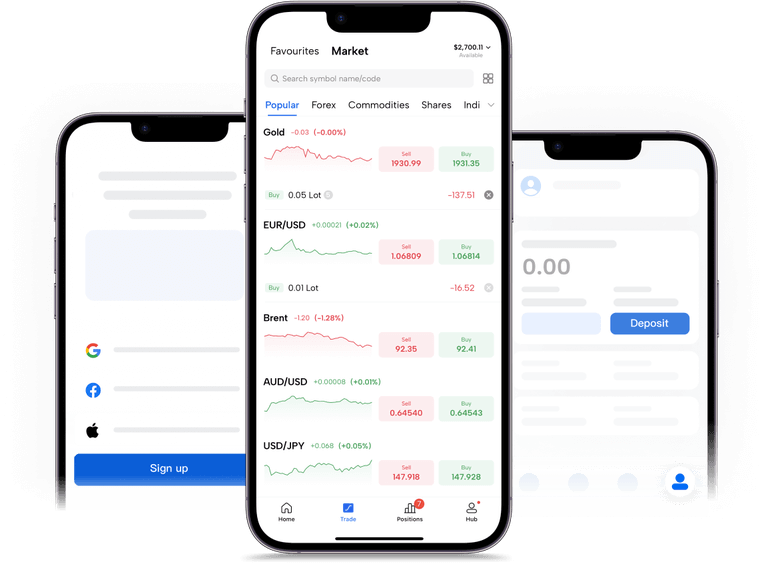
 Experience fast and seamless tradingLeverage your positions flexibly to capture market moves Track real-time strategies and adjust your trades instantly

Exchanges vs XRP CFDs: Which Makes More Sense for Australian Investors?
This is the point where most readers are no longer asking “how do I buy XRP?”
They are asking “which option actually fits me?”
Below is a practical comparison, focused on real-world use — not ideology.
XRP Exchange vs XRP CFD: Key Differences
The Real Decision Most Investors Face
In practice, the choice often comes down to intent:
If your goal is to hold XRP long term and potentially move it on-chain, direct ownership makes sense.
If your goal is to trade XRP price movements, manage risk actively, and avoid wallet complexity, CFDs are usually more efficient.
Many Australian investors start with exchanges — then migrate toward CFDs once they realize that price exposure does not require ownership.
“Trade xrp CFDs with an ASIC-regulated broker. Fast AUD funding via PayID. ”
Which Option Is Safer for Australians in 2026?
“Safety” means different things to different investors.
With exchanges, risks often include:
Custody and wallet errors
Exchange insolvency
Withdrawal restrictions
With CFDs, risks focus more on:
Leverage misuse
Market volatility
Overnight holding costs
In practice, safety depends less on the instrument itself and more on:
Platform regulation
Risk management tools
Investor experience level
Final Thoughts: The Smart Way to Get XRP Exposure in Australia
In 2026, Australian investors have more flexibility than ever when it comes to XRP.
Direct ownership offers control, but comes with technical responsibility.
CFDs offer efficiency and flexibility, but require disciplined risk management.
Before choosing how to buy XRP in Australia, be clear about your objective:
Holding the asset
Or trading the price
👉 If your goal is active trading without wallet complexity, XRP CFDs may offer a more practical entry point.
CFD Risk Warning:Trading via CFDs involves significant risk. Leverage can amplify losses dramatically, potentially exceeding your initial deposit.
1. Can I buy XRP with AUD in Australia?
Yes. Many platforms support AUD deposits via bank transfer or card.
2. Do I need a wallet to buy XRP?
Only if you buy XRP directly. XRP CFDs do not require a wallet.
3. Is XRP CFD trading legal in Australia?
Yes, when offered by licensed providers under Australian regulations.
Disclaimer: The content presented above, whether from a third party or not, is considered as general advice only. CFD trading involves significant risk of loss. Past performance does not guarantee future results. This article serves informational purposes only and does not constitute financial advice. Consider your risk tolerance before trading.


